March 2026

Miscellaneous

Consensus recommendations for the integration of critical care pharmacists on intensive care unit teams: Endorsed by the American Association of……

Summary This article presents consensus recommendations developed to optimize the integration of critical care pharmacists (CCPs) within multidisciplinary intensive care unit (ICU) teams. Recognizing the proven benefits of CCPs, including improved patient outcomes and enhanced medication safety, the recommendations focus on standards, infrastructure, and best practices for implementing CCPs effectively. Developed using a modified Delphi […]
,

Consensus recommendations for the integration of critical care pharmacists on intensive care unit teams: Endorsed by the American Association of…… Read Post »

Sepsis

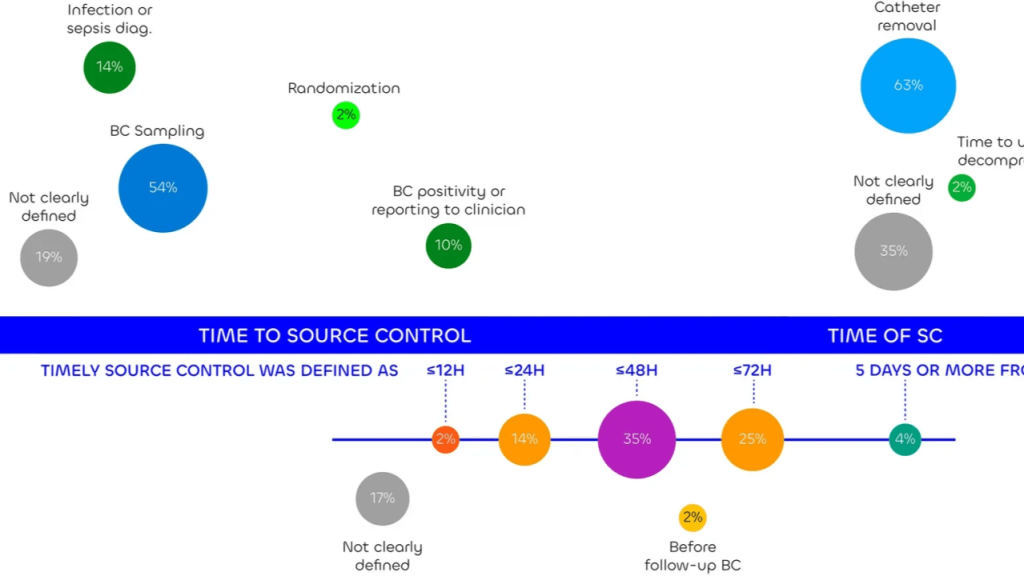
Source control in bloodstream infections in patients with sepsis, septic shock, or requiring ICU admission: a scoping review with recommendations…..

Summary This scoping review examines source control (SC) in bloodstream infections (BSI) among critically ill patients with sepsis, septic shock, or intensive care unit (ICU) admission, highlighting the substantial variability in definitions, interventions, timing, and adequacy reporting. The review analyzed 77 studies, finding significant methodological inconsistencies and an overrepresentation of catheter-related infections and candidemia. It

, ,

Source control in bloodstream infections in patients with sepsis, septic shock, or requiring ICU admission: a scoping review with recommendations….. Read Post »

Miscellaneous

Choosing wisely: who really benefits from critical care EEG monitoring?

Summary This commentary explores the clinical utility and challenges associated with critical care continuous electroencephalogram (cEEG) monitoring, particularly focusing on critically ill patients experiencing seizures and status epilepticus. The authors examine recent evidence suggesting limited differences in outcomes between cEEG and routine EEG approaches, highlighting uncertainties around whether seizures observed in critical illness independently contribute

Choosing wisely: who really benefits from critical care EEG monitoring? Read Post »

Respiratory

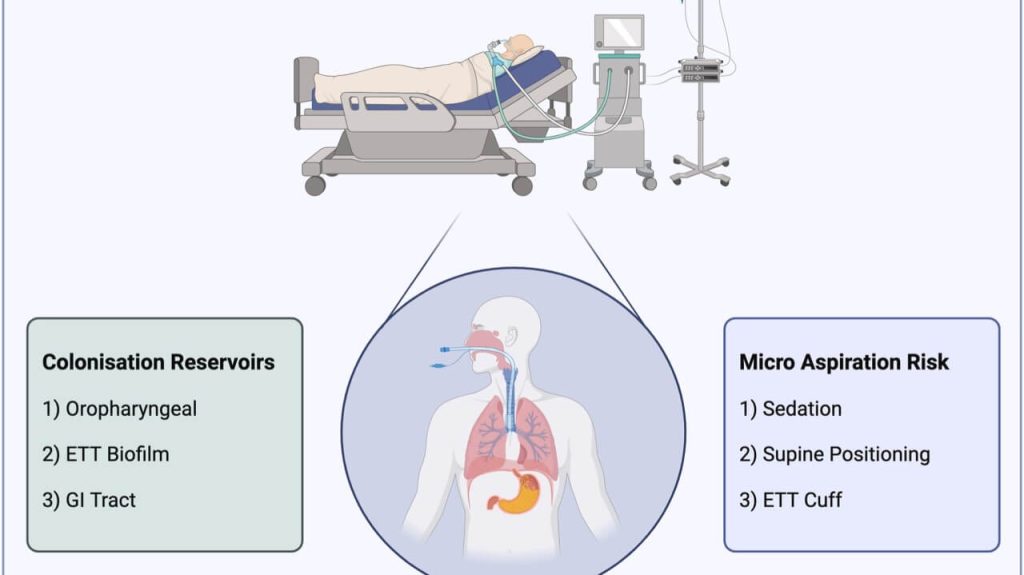
Ventilator-associated pneumonia: mechanisms, an appraisal of current therapies and the role for inhaled antibiotics in prevention and treatment

Summary Ventilator-associated pneumonia (VAP), the most common healthcare-associated infection in the ICU, significantly increases healthcare costs and negatively impacts patient outcomes. The review outlines complex VAP pathophysiology, involving abnormal microbiota colonization and micro-aspiration associated with mechanical ventilation. Traditional intravenous antibiotic therapies face challenges such as systemic complications and antibiotic resistance, while inhaled antibiotics offer a

, , , ,

Ventilator-associated pneumonia: mechanisms, an appraisal of current therapies and the role for inhaled antibiotics in prevention and treatment Read Post »

Mechanical Ventilation

Individualized Lung-Protective Ventilation Strategy Based on Esophageal Pressure Monitoring in Patients With ARDS Associated With Severe Acute….

Summary This randomized controlled trial investigated the effectiveness of an individualized lung-protective ventilation strategy guided by esophageal pressure (Pes) monitoring compared to conventional ventilation in patients with acute respiratory distress syndrome (ARDS) secondary to severe acute pancreatitis (SAP). The individualized Pes-guided strategy significantly improved respiratory mechanics, oxygenation, and clinical outcomes, demonstrating reduced transpulmonary driving pressure,

, , , ,

Individualized Lung-Protective Ventilation Strategy Based on Esophageal Pressure Monitoring in Patients With ARDS Associated With Severe Acute…. Read Post »

Cardiovascular

Prognostic implication of venoarterial extracorporeal membrane oxygenation in acute myocardial infarction-related cardiogenic shock

Summary This retrospective study aimed to evaluate clinical outcomes in patients receiving veno-arterial extracorporeal membrane oxygenation (VA-ECMO) for cardiogenic shock (CS), comparing acute myocardial infarction-related cardiogenic shock (AMI-CS) with non-AMI-CS. Analysis of data from 667 patients treated between 2008 and 2023 showed that AMI-CS was associated with significantly lower in-hospital mortality compared to non-AMI-CS. Independent

, , ,

Prognostic implication of venoarterial extracorporeal membrane oxygenation in acute myocardial infarction-related cardiogenic shock Read Post »

Cardiovascular

The role of serial point-of-care ultrasound during cardiac arrest to predict termination of resuscitation

Summary This prospective cohort study evaluated the utility of serial point-of-care ultrasound (POCUS) during cardiopulmonary resuscitation (CPR) to determine optimal timing for terminating resuscitation efforts in patients presenting with non-shockable cardiac arrest rhythms. Conducted in two academic hospitals, serial ultrasounds every two minutes were used to measure cardiac standstill duration and predict return of spontaneous

, , ,

The role of serial point-of-care ultrasound during cardiac arrest to predict termination of resuscitation Read Post »

Respiratory

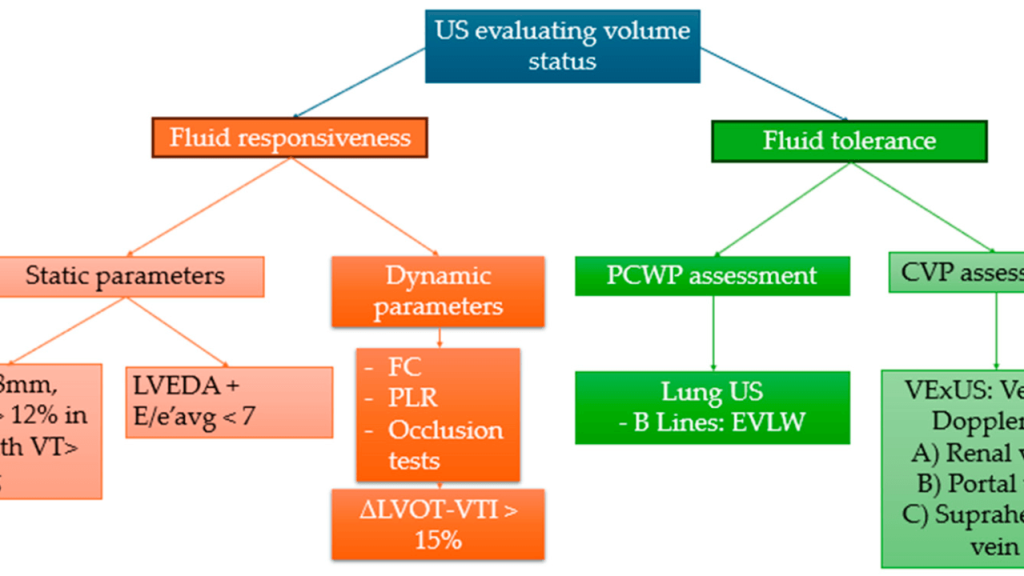
Echocardiography in the Ventilated Patient: What the Clinician Has to Know

Summary This review discusses echocardiographic evaluation in mechanically ventilated (MV) patients, highlighting the complex heart–lung interactions influenced by positive pressure ventilation, especially focusing on the right ventricle (RV). Echocardiography serves as a crucial bedside tool to assess RV dimensions, function, and response to mechanical ventilation. Given the challenges in assessing fluid responsiveness and diaphragmatic function

Echocardiography in the Ventilated Patient: What the Clinician Has to Know Read Post »

Miscellaneous

Electrical impedance tomography in congenital heart disease: advancing non-invasive pulmonary perfusion assessment at bedside

Summary This article explores the use of electrical impedance tomography (EIT) for assessing pulmonary perfusion in critically ill pediatric patients with congenital heart disease (CHD). The study demonstrates the reliability and accuracy of EIT, a non-invasive, real-time, bedside, and radiation-free technique, through three complex clinical cases. The results from EIT were consistent with those obtained

,

Electrical impedance tomography in congenital heart disease: advancing non-invasive pulmonary perfusion assessment at bedside Read Post »

Cardiovascular, Circulatory

Ethical Considerations for Patients Requiring Extracorporeal Cardiopulmonary Resuscitation

Summary The article explores ethical considerations surrounding extracorporeal cardiopulmonary resuscitation (eCPR), highlighting its potential as an advanced intervention to improve survival and neurological outcomes in cardiac arrest patients. Despite its promising clinical advantages, integrating eCPR into routine advanced life support (ALS) protocols poses significant ethical challenges, including increased demand for long-term care, resource allocation dilemmas,

, , , , ,

Ethical Considerations for Patients Requiring Extracorporeal Cardiopulmonary Resuscitation Read Post »

Scroll to Top