Electric Impedance Tomography

Miscellaneous

Electrical impedance tomography in congenital heart disease: advancing non-invasive pulmonary perfusion assessment at bedside

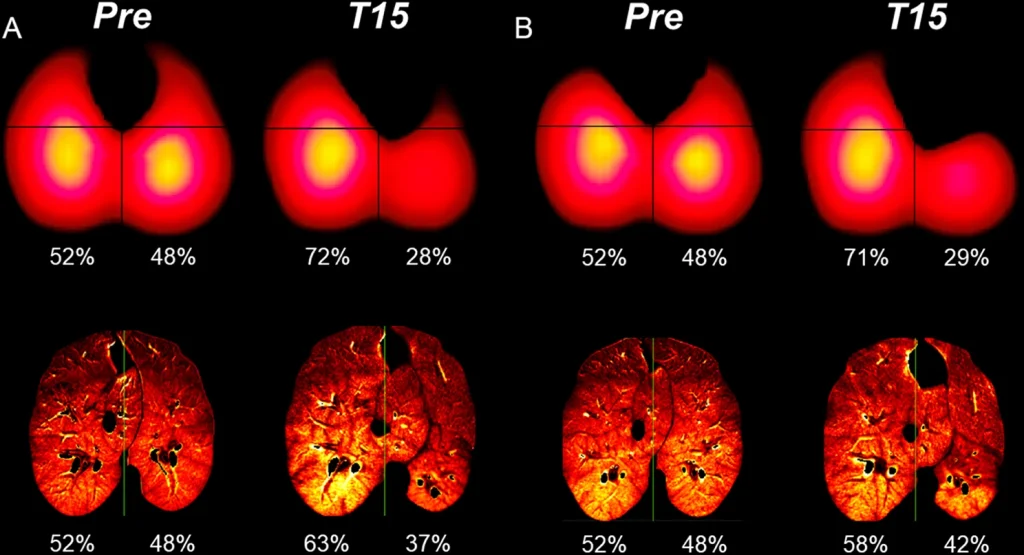
Summary This article explores the use of electrical impedance tomography (EIT) for assessing pulmonary perfusion in critically ill pediatric patients with congenital heart disease (CHD). The study demonstrates the reliability and accuracy of EIT, a non-invasive, real-time, bedside, and radiation-free technique, through three complex clinical cases. The results from EIT were consistent with those obtained […]
,

Electrical impedance tomography in congenital heart disease: advancing non-invasive pulmonary perfusion assessment at bedside Read Post »

Pulmonary

First real-time imaging of bronchoscopic lung volume reduction by electrical impedance tomography

Summary: “First real-time imaging of bronchoscopic lung volume reduction by electrical impedance tomography” Abstract Summary: This study investigated the real-time effects of inspired oxygen fraction (FIO₂) on regional lung volumes and ventilation/perfusion during bronchoscopic lung volume reduction (BLVR) using endobronchial valves (EBVs), utilizing electrical impedance tomography (EIT). The findings demonstrate that higher FIO₂ significantly accelerates

,

First real-time imaging of bronchoscopic lung volume reduction by electrical impedance tomography Read Post »

Respiratory

Electrical impedance tomography-guided the optimal awake prone position in a moderate ARDS patient

Awake prone positioning (APP) has gained prominence as a therapeutic intervention for acute respiratory distress syndrome (ARDS), particularly in COVID-19-related respiratory failure due to its proven survival benefits [1, 2]. However, the clinical applicability of APP in non-COVID-19 ARDS populations remains controversial, with patient tolerance and heterogeneous lung recruitment responses posing significant challenges [3]. To address

, , , ,

Electrical impedance tomography-guided the optimal awake prone position in a moderate ARDS patient Read Post »

Mechanical Ventilation

Ventilator induced lung injury: a case for a larger umbrella?

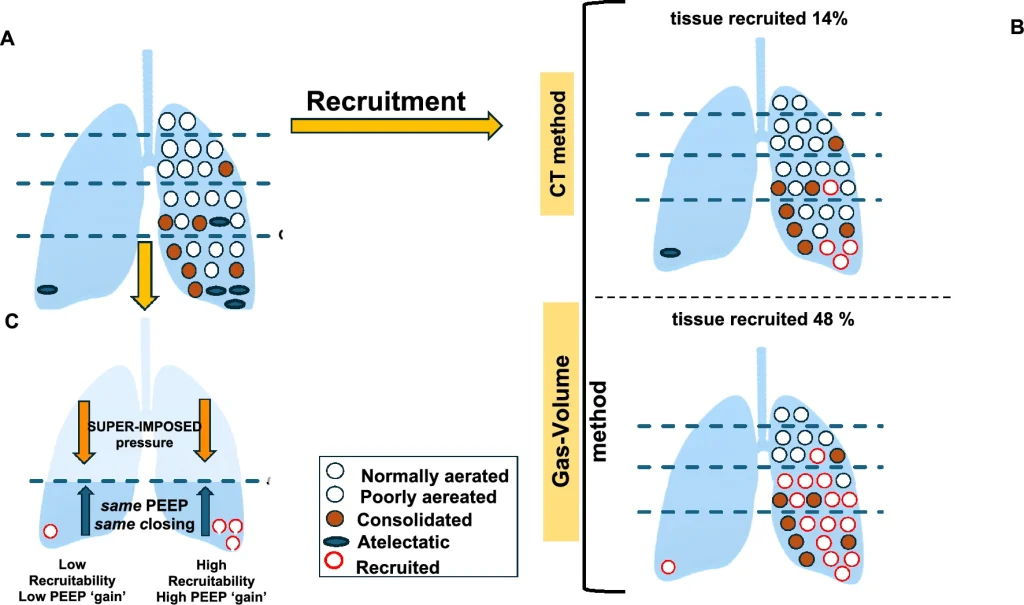
Summary of “Assessing lung recruitability: does it help with PEEP settings?” This editorial examines the relationship between lung recruitability and the selection of positive end-expiratory pressure (PEEP) settings in acute respiratory distress syndrome (ARDS) management. While recruitability measures the potential to reinflate atelectatic lung regions, PEEP must prevent their collapse while considering additional factors like

, , , , , , , , , , , , , ,

Ventilator induced lung injury: a case for a larger umbrella? Read Post »

Scroll to Top