Mechanical Ventilation

Cardiovascular, Mechanical Ventilation

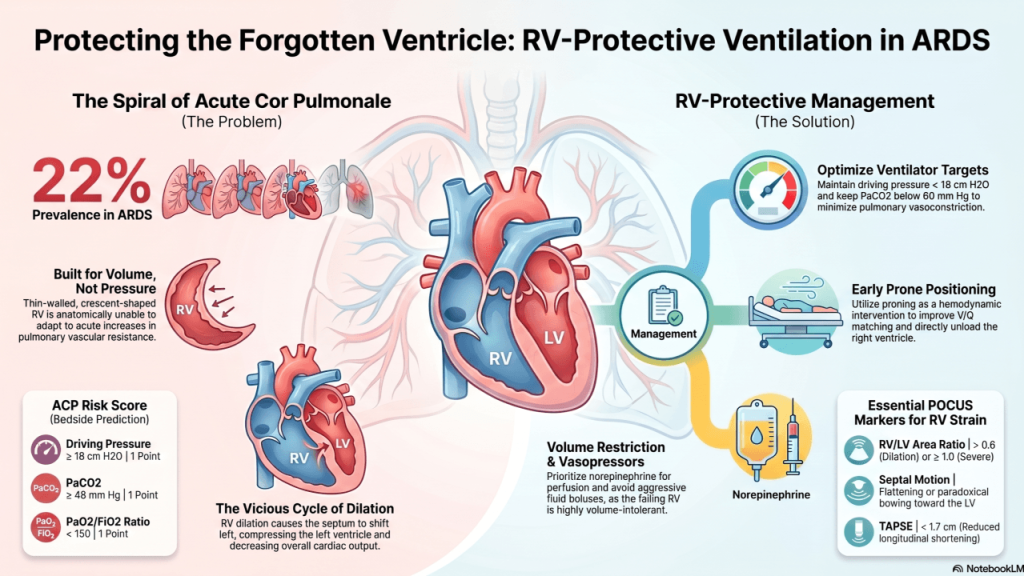
The Forgotten Ventricle Is Killing Your ARDS Patients — and the Ventilator You Are Using to Save Them May Be the Reason Why.

22% of patients with moderate-to-severe ARDS develop acute cor pulmonale on protective ventilation. The right ventricle was never designed to handle pressure — and every PEEP increase, every hypercapnic minute, and every overdistended breath you deliver is loading a chamber that was built to fail. Here is how to recognize it, prevent it, and treat […]

,

The Forgotten Ventricle Is Killing Your ARDS Patients — and the Ventilator You Are Using to Save Them May Be the Reason Why. Read Post »

Mechanical Ventilation, Respiratory

Invasive ventilator exhaust in critical care: aerosol transmission risks and management strategies-a narrative review

1. Why This Article Matters Invasive mechanical ventilation is the cornerstone of critical care. Yet, one major risk remains overlooked in daily practice: Ventilator exhaust can carry infectious aerosols, biofilm fragments, volatile anesthetics, and VOCs into the ICU environment — posing real risks for patients and staff. This review synthesizes decades of microbiology, aerosol physics,

, ,

Invasive ventilator exhaust in critical care: aerosol transmission risks and management strategies-a narrative review Read Post »

Mechanical Ventilation

Individualised treatment effects of enhanced early mobilisation in mechanically ventilated patients: a secondary analysis of the TEAM trial

1. Why This Study Matters — Why You Should Read This Early mobilization is one of the most widely endorsed ICU practices. We repeat it daily: “Mobilize early. Mobilize often.” But what if that guidance is too simple? This new secondary analysis of the landmark TEAM trial challenges one of the core assumptions in ICU

, ,

Individualised treatment effects of enhanced early mobilisation in mechanically ventilated patients: a secondary analysis of the TEAM trial Read Post »

Mechanical Ventilation

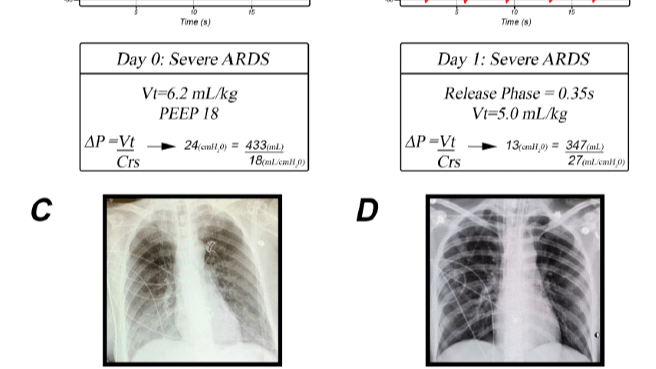
Toward optimal mechanical ventilation of the injured lung: the role of expiratory duration

Abstract This perspective challenges one of the most fundamental assumptions in ARDS ventilation: that only inspiratory forces (tidal volume, driving pressure, plateau pressure, mechanical power) shape lung injury. The authors argue that expiratory time—specifically, the rate of lung emptying—is an overlooked determinant of stress and strain. In injured lungs with low compliance and heterogeneous time

, ,

Toward optimal mechanical ventilation of the injured lung: the role of expiratory duration Read Post »

Mechanical Ventilation

Stepwise positive end-expiratory pressure titration modulates respiratory mechanics and mechanical power in mechanically ventilated adults

Abstract This physiological study evaluated how ascending PEEP titration (0 → 4 → 8 → 12 → 16 cmH₂O) alters respiratory mechanics and mechanical power (MP) in deeply sedated adults without lung injury. Key findings show that increasing PEEP consistently and significantly raises: Total mechanical power Plateau pressure Static elastic power Total elastic workload …while

, ,

Stepwise positive end-expiratory pressure titration modulates respiratory mechanics and mechanical power in mechanically ventilated adults Read Post »

Mechanical Ventilation

Two Strategies for Reducing Mechanical Power: Adjust Ventilator Settings or Reopen the Lung? – Gary Nieman.

In the last newsletter, we discussed the roles of driving pressure (DP) [DOI: 10.1056/NEJMsa1410639] and mechanical power (MP) [DOI 10.1007/s00134-016-4505-2] as factors contributing to ventilator-induced lung injury (VILI) in patients with acute respiratory distress syndrome (ARDS). Neither DP nor MP directly causes lung damage; instead, they serve as markers indicating that VILI (excessive strain) is

Two Strategies for Reducing Mechanical Power: Adjust Ventilator Settings or Reopen the Lung? – Gary Nieman. Read Post »

Mechanical Ventilation

Association between controlled mechanical ventilation and systemic inflammation in acute hypoxemic respiratory failure: an observational cohort study

Summary Why This Study Matters This study provides rare human clinical data linking spontaneous breathing during AHRF, ventilation distribution on EIT, and systemic inflammation (IL-6). It helps clarify when transitioning from non-invasive support to controlled mechanical ventilation may reduce physiologic stress and potential P-SILI. 1. What the Investigators Wanted to Know The study examined whether

, ,

Association between controlled mechanical ventilation and systemic inflammation in acute hypoxemic respiratory failure: an observational cohort study Read Post »

Mechanical Ventilation

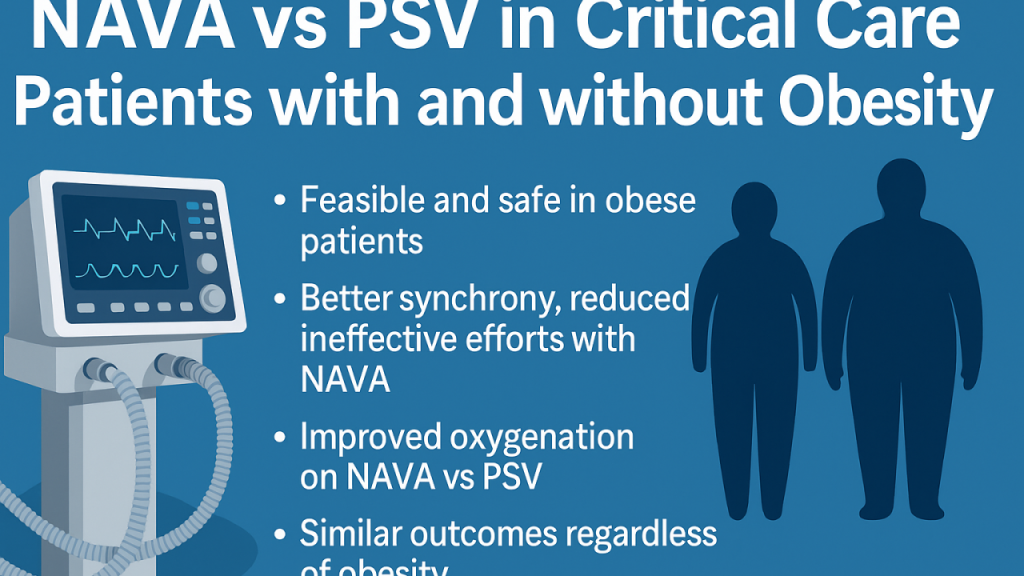
Neurally adjusted ventilatory assist in critical care patients with and without obesity: a prospective randomized crossover study

NAVA vs PSV in Obese ICU Patients: First Evidence of Safety and Benefit Abstract: This randomized crossover study is the first to test Neurally Adjusted Ventilatory Assist (NAVA) in critically ill obese patients. Twenty-one ventilated patients (10 obese, 11 non-obese) underwent 30 minutes of NAVA and PSV each. Researchers assessed safety, patient-ventilator synchrony, oxygenation, and

, ,

Neurally adjusted ventilatory assist in critical care patients with and without obesity: a prospective randomized crossover study Read Post »

Mechanical Ventilation

Evaluation of the mean airway pressure – Minute ventilation (mM) Equation for mechanical power during spontaneous breathing

Simplifying Mechanical Power: Can the mM Equation Work During Spontaneous Breathing. Abstract: Mechanical power (MP) quantifies the energy delivered to the lungs during ventilation, integrating pressures, volumes, and rates. The minute ventilation–mean airway pressure (mM) equation was designed as a simple surrogate for MP. This study used 3,000 simulated scenarios (PCV & VCV, with/without spontaneous

, , ,

Evaluation of the mean airway pressure – Minute ventilation (mM) Equation for mechanical power during spontaneous breathing Read Post »

Mechanical Ventilation

Effect of Automated Closed-loop ventilation versus conventional Ventilation on duration and quality of ventilation in critically ill patients (ACTiVE)

Abstract The MVENT trial is a multicentre, assessor-blinded, parallel-group pilot RCT designed to compare a “minimal ventilation” strategy—daily one-hour spontaneous breathing trials (SBT) with minimal pressure support or CPAP—versus usual care in critically ill adults mechanically ventilated for ≥24 hours. The hypothesis is that minimal support SBTs may better assess readiness for extubation, avoid over-assistance,

,

Effect of Automated Closed-loop ventilation versus conventional Ventilation on duration and quality of ventilation in critically ill patients (ACTiVE) Read Post »

Scroll to Top