ARDS

Cardiovascular, Mechanical Ventilation

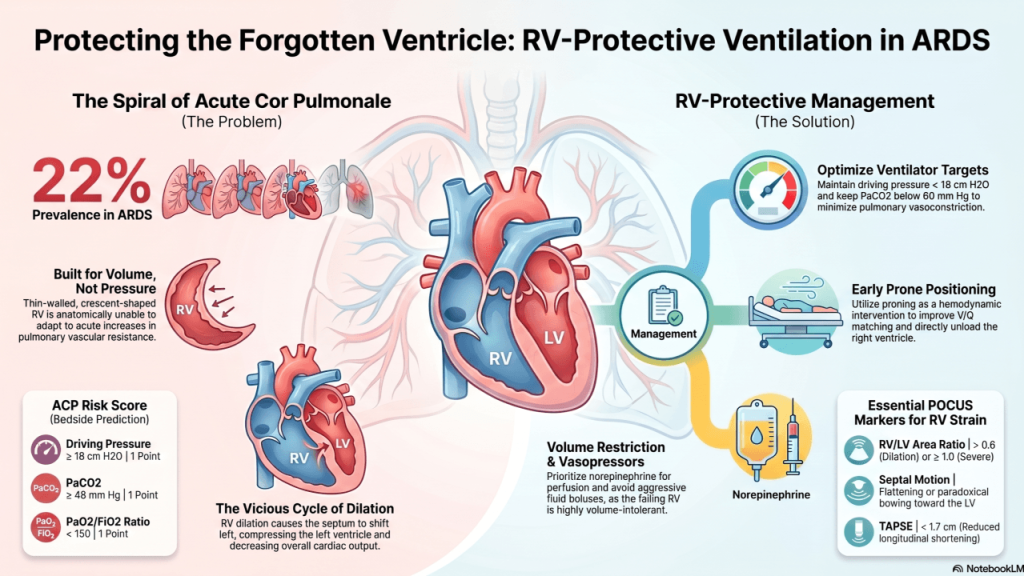
The Forgotten Ventricle Is Killing Your ARDS Patients — and the Ventilator You Are Using to Save Them May Be the Reason Why.

22% of patients with moderate-to-severe ARDS develop acute cor pulmonale on protective ventilation. The right ventricle was never designed to handle pressure — and every PEEP increase, every hypercapnic minute, and every overdistended breath you deliver is loading a chamber that was built to fail. Here is how to recognize it, prevent it, and treat […]
,

The Forgotten Ventricle Is Killing Your ARDS Patients — and the Ventilator You Are Using to Save Them May Be the Reason Why. Read Post »

Respiratory

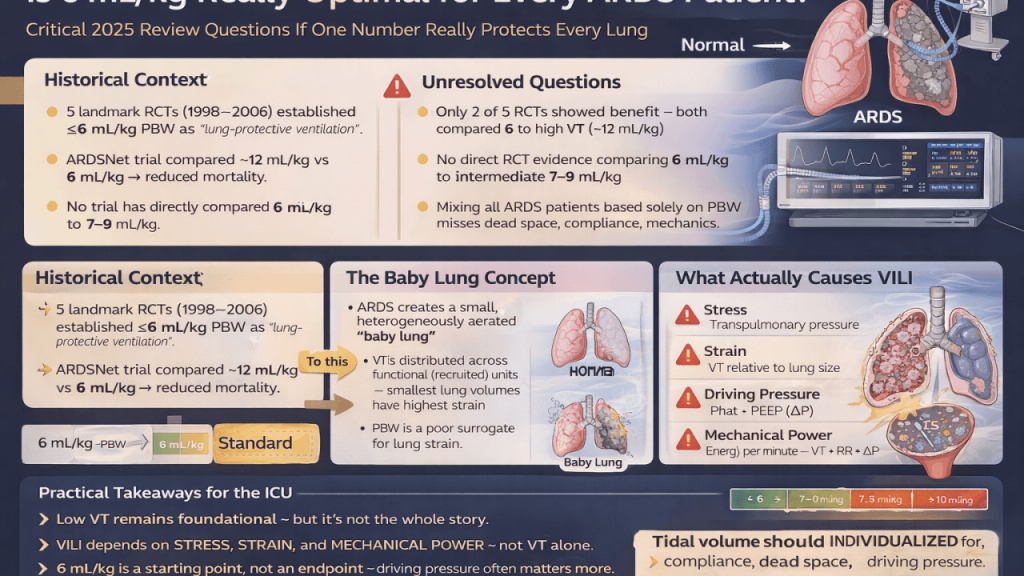
Lung-protective ventilation strategy in acute respiratory distress syndrome: a critical reappraisal of current practice

Why This Article Matters For more than 20 years, lung-protective ventilation has been synonymous with a single number: 6 mL/kg predicted body weight (PBW). This target has been taught, audited, benchmarked, and enforced across ICUs worldwide. Yet despite near-universal endorsement, real-world adherence remains inconsistent—and outcomes have plateaued. This 2025 review asks an uncomfortable but necessary

, , ,

Lung-protective ventilation strategy in acute respiratory distress syndrome: a critical reappraisal of current practice Read Post »

Respiratory

Patient-specific prediction of regional lung mechanics in patients with ARDS with physics-based models: a validation study

1. Why This Study Matters — Why You Should Read This Physiology at the bedside is often guesswork. We titrate PEEP. We adjust driving pressure. We interpret compliance as a global signal, even though ARDS is intensely regional. But imagine if we had a patient-specific digital model — a “virtual twin” — that could simulate

Patient-specific prediction of regional lung mechanics in patients with ARDS with physics-based models: a validation study Read Post »

Respiratory

The impact of PEEP-guided electrical impedance tomography on oxygenation and respiratory mechanics in moderate-to-severe ARDS: a randomized…..

Why this study deserves your click Every ARDS patient forces us to answer the same question: “How much PEEP is enough—and how much is too much?” We usually lean on ARDSNet tables, “PEEP ladders,” or our own bias. This trial asks a different question: What happens if we let the lung tell us the right

, ,

The impact of PEEP-guided electrical impedance tomography on oxygenation and respiratory mechanics in moderate-to-severe ARDS: a randomized….. Read Post »

Mechanical Ventilation

Toward optimal mechanical ventilation of the injured lung: the role of expiratory duration

Abstract This perspective challenges one of the most fundamental assumptions in ARDS ventilation: that only inspiratory forces (tidal volume, driving pressure, plateau pressure, mechanical power) shape lung injury. The authors argue that expiratory time—specifically, the rate of lung emptying—is an overlooked determinant of stress and strain. In injured lungs with low compliance and heterogeneous time

, ,

Toward optimal mechanical ventilation of the injured lung: the role of expiratory duration Read Post »

Circulatory, Respiratory

Radiomics-enhanced modelling approach for predicting the need for ECMO in ARDS patients: a retrospective cohort study

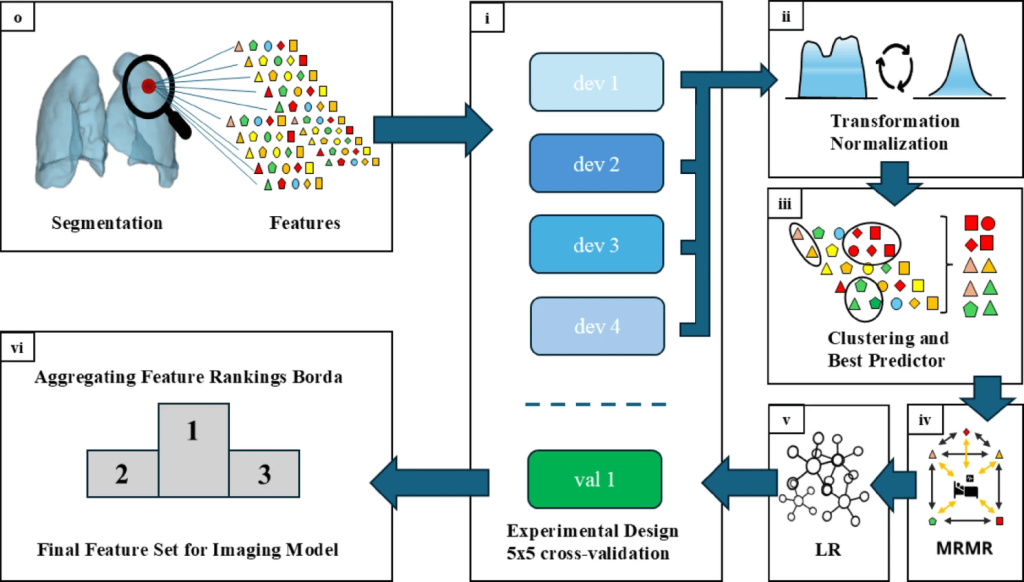
Predicting ECMO Before It’s Too Late: When Radiomics Meets Critical Care 🩺 Abstract The decision to initiate ECMO in patients with severe ARDS remains one of the most challenging and time-sensitive in critical care. In this retrospective cohort of 375 adults with COVID-19–associated ARDS, researchers from Germany explored whether combining quantitative CT radiomics with clinical

, , ,

Radiomics-enhanced modelling approach for predicting the need for ECMO in ARDS patients: a retrospective cohort study Read Post »

Respiratory

Acute Respiratory Distress Syndrome: Pathophysiological Insights, Subphenotypes, and Clinical Implications—A Comprehensive Review

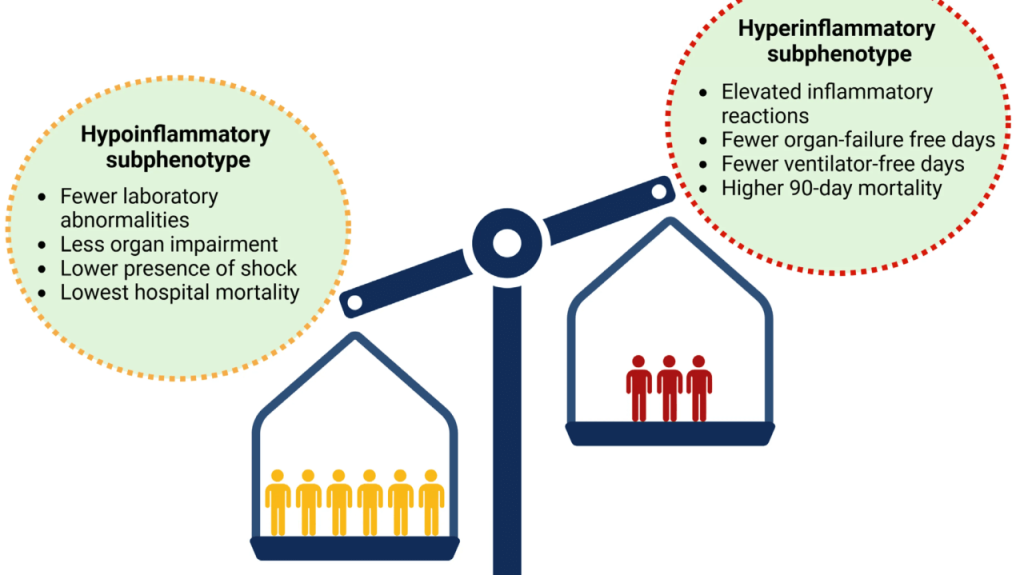
ARDS: Pathophysiological Insights, Subphenotypes, and Precision Medicine Abstract: ARDS is a syndrome of hypoxemic respiratory failure caused by alveolo-capillary barrier dysfunction, dysregulated inflammation, and mechanical injury. Despite 60 years of research, mortality remains near 40%. The heterogeneity of ARDS has driven interest in subphenotypes—biological, clinical, physiological, and radiographic—that may explain variable responses to therapies. This

, ,

Acute Respiratory Distress Syndrome: Pathophysiological Insights, Subphenotypes, and Clinical Implications—A Comprehensive Review Read Post »

Pulmonary, Respiratory, Sepsis

Crosstalk between lung and extrapulmonary organs in sepsis-related acute lung injury/acute respiratory distress syndrome

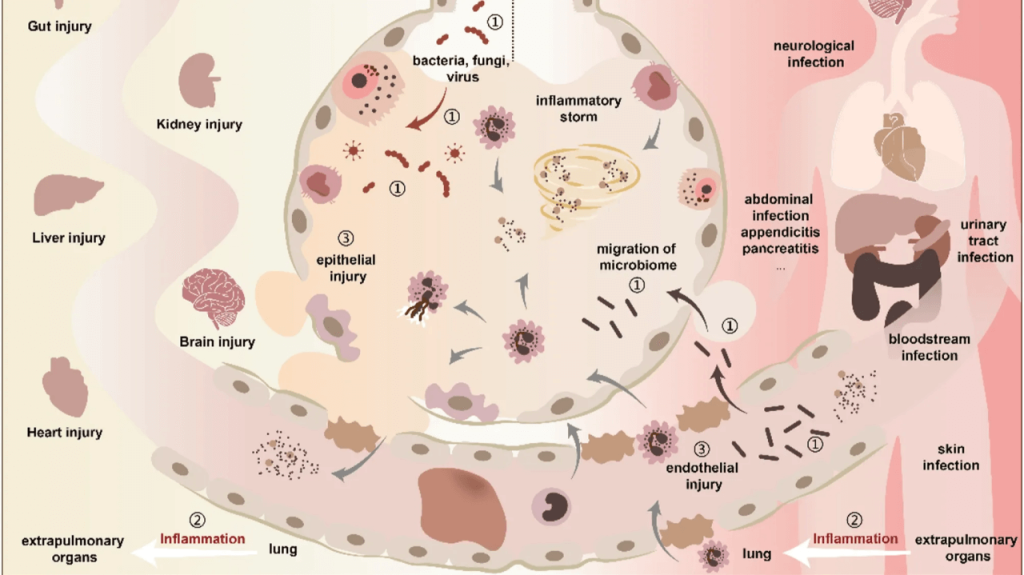
Organ Crosstalk in Sepsis-Related ALI/ARDS: New Insights into Lung–System Interactions Abstract: Sepsis-related ALI/ARDS remains highly lethal (>30% mortality), and most research has historically focused only on the lung. This review highlights organ crosstalk as a central mechanism in sepsis pathophysiology. The authors differentiate pulmonary sepsis-associated ALI/ARDS (PSA) from extrapulmonary sepsis-associated ALI/ARDS (ESA), outline systemic inflammation,

, , ,

Crosstalk between lung and extrapulmonary organs in sepsis-related acute lung injury/acute respiratory distress syndrome Read Post »

Circulatory, Respiratory

Physiological and clinical effects of two ultraprotective ventilation strategies in patients with VV-ECMO: the ECMOVENT study

ECMOVENT: Comparing Two Ultraprotective Ventilation Strategies on VV-ECMO Abstract: The optimal ventilatory strategy for ARDS patients on VV-ECMO remains debated. This single-center, before-and-after study compared two ultraprotective approaches: VT1 strategy: Assist-controlled volume mode, VT 1 ml/kg PBW, RR 5/min, Pplat 20–25 cmH₂O. ΔP8 strategy: Pressure-controlled mode, ΔP 8 cmH₂O, PEEP 14 cmH₂O, RR 10/min. Among

, , , ,

Physiological and clinical effects of two ultraprotective ventilation strategies in patients with VV-ECMO: the ECMOVENT study Read Post »

Respiratory

Demographics and outcome of Legionella pneumonia in the intensive care unit: a retrospective multicenter cohort study

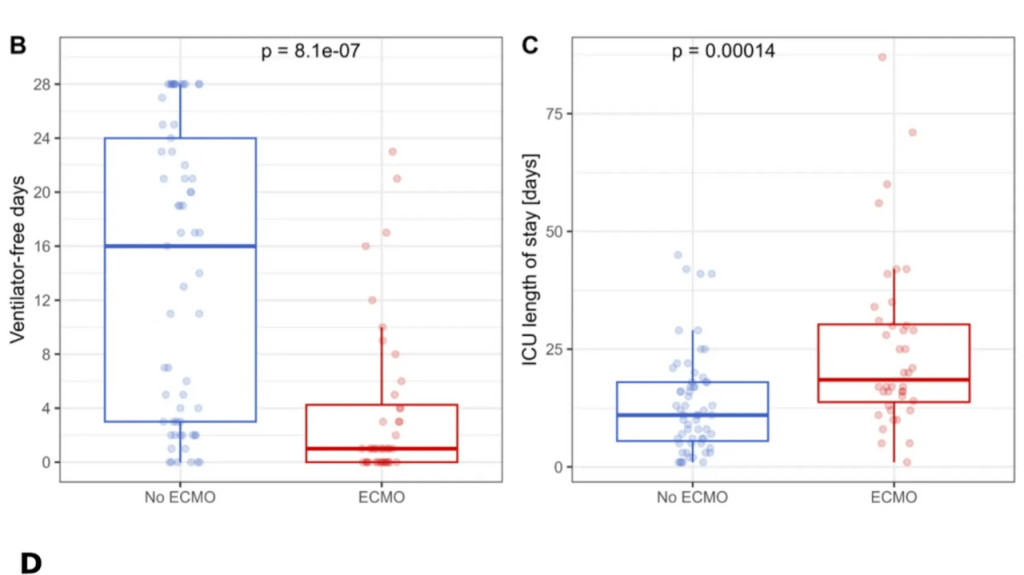
Legionella Pneumonia in the ICU: Does ECMO Improve Outcomes? Abstract: This multicenter, retrospective cohort study (Zurich, Hannover, Bonn; 2013–2023) evaluated 110 ICU patients with Legionella pneumonia (LP). Severe LP frequently progressed to ARDS and multiorgan failure; 40% required ECMO. Despite greater severity (SOFA 12 vs 9), ECMO patients had similar 28-day mortality (25% vs 21%)

,

Demographics and outcome of Legionella pneumonia in the intensive care unit: a retrospective multicenter cohort study Read Post »

Scroll to Top