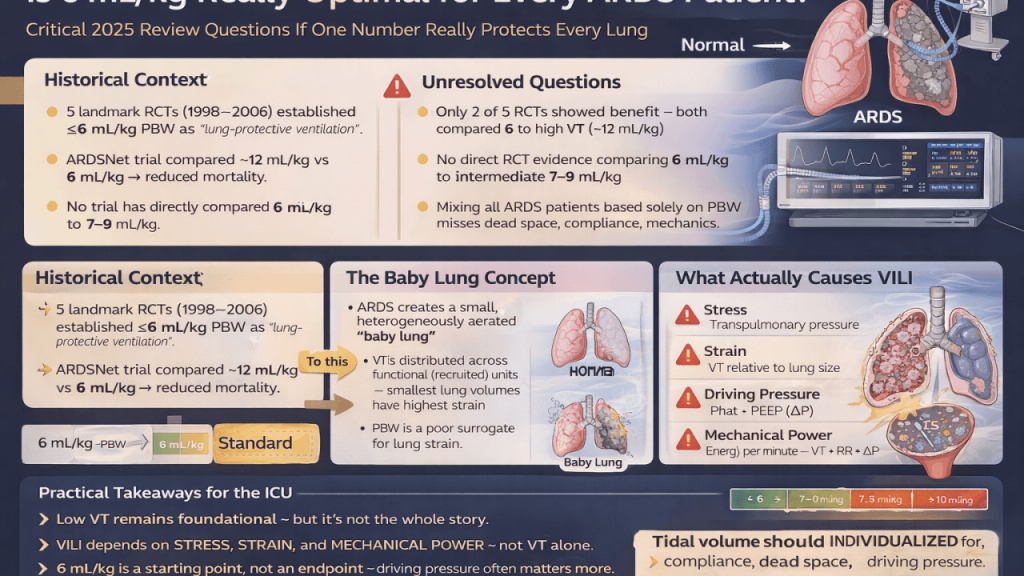
lung protective mechanical ventilation

Respiratory

Lung-protective ventilation strategy in acute respiratory distress syndrome: a critical reappraisal of current practice

Why This Article Matters For more than 20 years, lung-protective ventilation has been synonymous with a single number: 6 mL/kg predicted body weight (PBW). This target has been taught, audited, benchmarked, and enforced across ICUs worldwide. Yet despite near-universal endorsement, real-world adherence remains inconsistent—and outcomes have plateaued. This 2025 review asks an uncomfortable but necessary […]

, , ,

Lung-protective ventilation strategy in acute respiratory distress syndrome: a critical reappraisal of current practice Read Post »

Mechanical Ventilation

Individualized Lung-Protective Ventilation Strategy Based on Esophageal Pressure Monitoring in Patients With ARDS Associated With Severe Acute….

Summary This randomized controlled trial investigated the effectiveness of an individualized lung-protective ventilation strategy guided by esophageal pressure (Pes) monitoring compared to conventional ventilation in patients with acute respiratory distress syndrome (ARDS) secondary to severe acute pancreatitis (SAP). The individualized Pes-guided strategy significantly improved respiratory mechanics, oxygenation, and clinical outcomes, demonstrating reduced transpulmonary driving pressure,

, , , ,

Individualized Lung-Protective Ventilation Strategy Based on Esophageal Pressure Monitoring in Patients With ARDS Associated With Severe Acute…. Read Post »

Respiratory

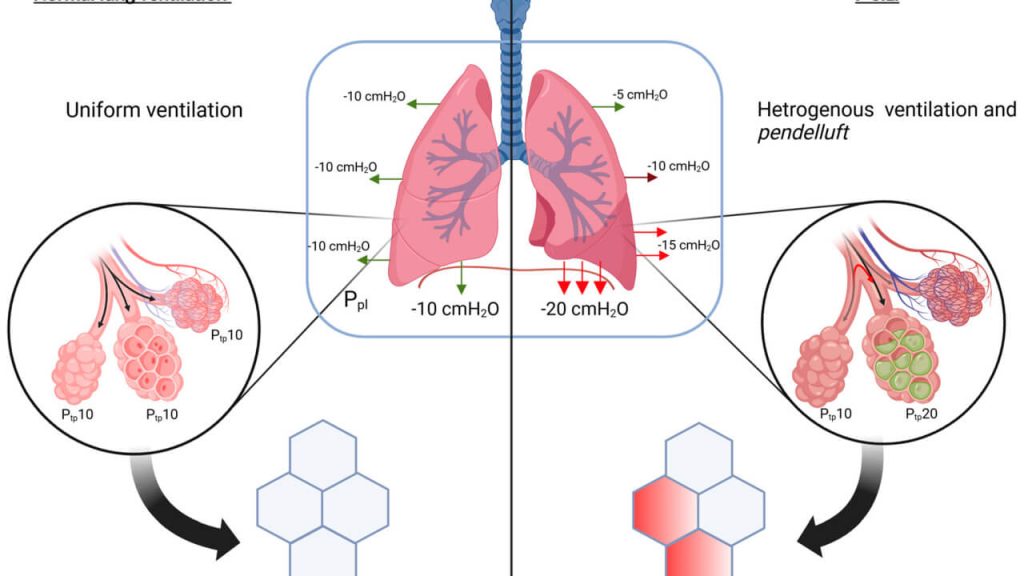
Patient-Self Inflicted Lung Injury (P-SILI): An Insight into the Pathophysiology of Lung Injury and Management

Abstract Acute respiratory distress syndrome (ARDS) is a heterogeneous group of disease entities that are associated with acute hypoxic respiratory failure and significant morbidity and mortality. With a better understanding and phenotyping of lung injury, novel pathophysiologic mechanisms demonstrate the impact of a patient’s excessive spontaneous breathing effort on perpetuating lung injury. Patient self-inflicted lung

, , ,

Patient-Self Inflicted Lung Injury (P-SILI): An Insight into the Pathophysiology of Lung Injury and Management Read Post »

Scroll to Top