Lung-protective ventilation

Respiratory

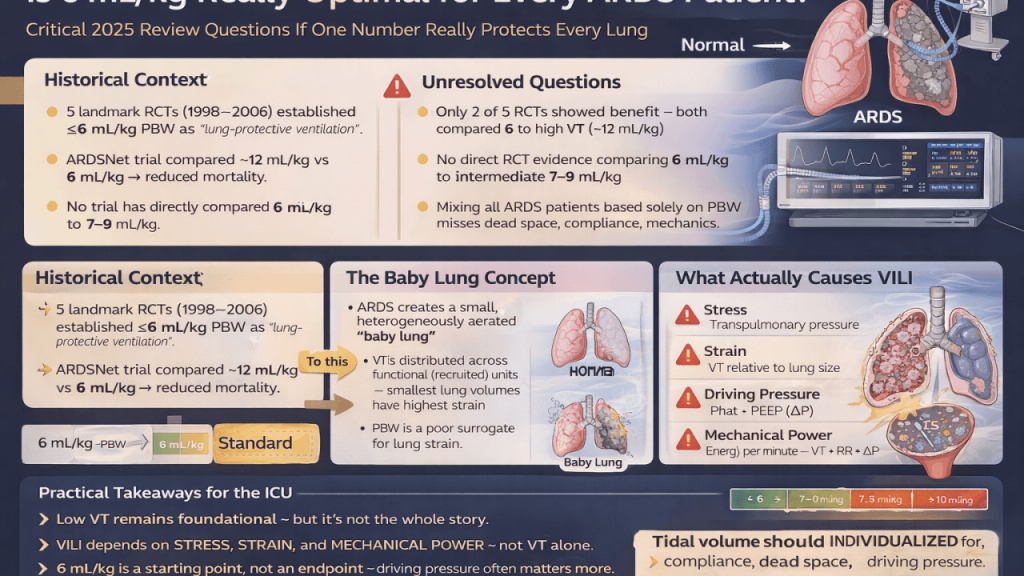
Lung-protective ventilation strategy in acute respiratory distress syndrome: a critical reappraisal of current practice

Why This Article Matters For more than 20 years, lung-protective ventilation has been synonymous with a single number: 6 mL/kg predicted body weight (PBW). This target has been taught, audited, benchmarked, and enforced across ICUs worldwide. Yet despite near-universal endorsement, real-world adherence remains inconsistent—and outcomes have plateaued. This 2025 review asks an uncomfortable but necessary […]
, , ,

Lung-protective ventilation strategy in acute respiratory distress syndrome: a critical reappraisal of current practice Read Post »

Circulatory, Respiratory

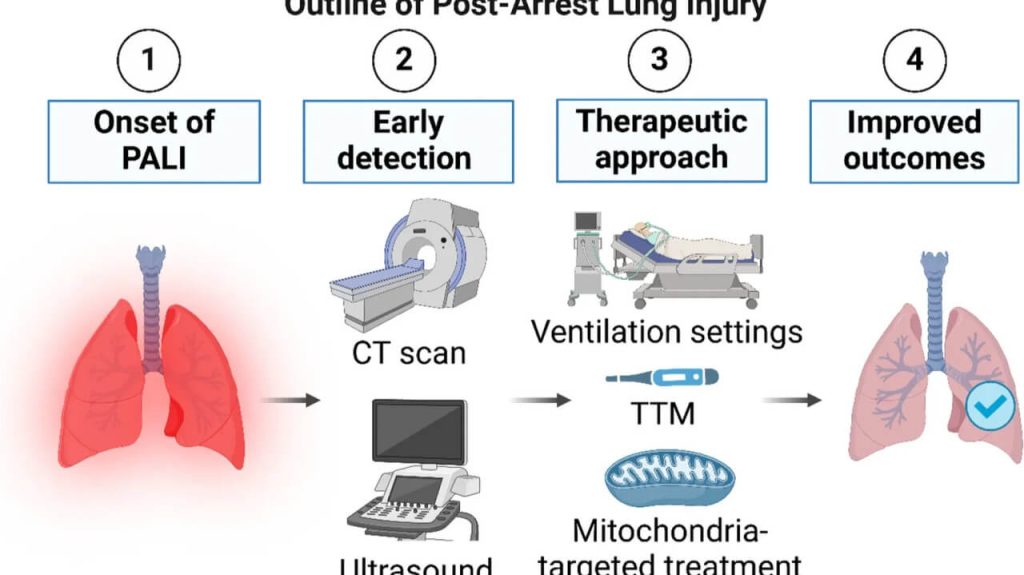
Acute lung injury and post-cardiac arrest syndrome: a narrative review

Abstract Background Post-cardiac arrest syndrome (PCAS) presents a multifaceted challenge in clinical practice, characterized by severe neurological injury and high mortality rates despite advancements in management strategies. One of the important critical aspects of PCAS is post-arrest lung injury (PALI), which significantly contributes to poor outcomes. PALI arises from a complex interplay of pathophysiological mechanisms,

, , , , , , ,

Acute lung injury and post-cardiac arrest syndrome: a narrative review Read Post »

Scroll to Top