Cardiopulmonary resuscitation (CPR)

Cardiovascular

The role of serial point-of-care ultrasound during cardiac arrest to predict termination of resuscitation

Summary This prospective cohort study evaluated the utility of serial point-of-care ultrasound (POCUS) during cardiopulmonary resuscitation (CPR) to determine optimal timing for terminating resuscitation efforts in patients presenting with non-shockable cardiac arrest rhythms. Conducted in two academic hospitals, serial ultrasounds every two minutes were used to measure cardiac standstill duration and predict return of spontaneous […]

, , ,

The role of serial point-of-care ultrasound during cardiac arrest to predict termination of resuscitation Read Post »

Cardiovascular, Circulatory

Ethical Considerations for Patients Requiring Extracorporeal Cardiopulmonary Resuscitation

Summary The article explores ethical considerations surrounding extracorporeal cardiopulmonary resuscitation (eCPR), highlighting its potential as an advanced intervention to improve survival and neurological outcomes in cardiac arrest patients. Despite its promising clinical advantages, integrating eCPR into routine advanced life support (ALS) protocols poses significant ethical challenges, including increased demand for long-term care, resource allocation dilemmas,

, , , , ,

Ethical Considerations for Patients Requiring Extracorporeal Cardiopulmonary Resuscitation Read Post »

Cardiovascular

Advances in resuscitation and deresuscitation

Summary This review discusses significant recent developments in fluid resuscitation and deresuscitation practices within critical care, highlighting a paradigm shift toward conservative, personalized fluid management. Advances in fluid stewardship, goal-directed fluid therapy (GDFT), and innovative monitoring tools, including automated closed-loop systems and machine learning, support a precision medicine approach. The authors advocate for balanced resuscitation

, , ,

Advances in resuscitation and deresuscitation Read Post »

Uncategorized

Extracorporeal Cardiopulmonary Resuscitation—Where Do We Currently Stand?

Abstract Extracorporeal cardiopulmonary resuscitation (eCPR) is a method of acute resuscitation for patients who have suffered a cardiac arrest through the utilization of an extracorporeal membrane oxygenation (ECMO) pump. The use and efficacy of eCPR is an active area of investigation with ongoing clinical investigation across the world. Since its inception, ECMO has been utilized

, , ,

Extracorporeal Cardiopulmonary Resuscitation—Where Do We Currently Stand? Read Post »

Circulatory, Respiratory

Acute lung injury and post-cardiac arrest syndrome: a narrative review

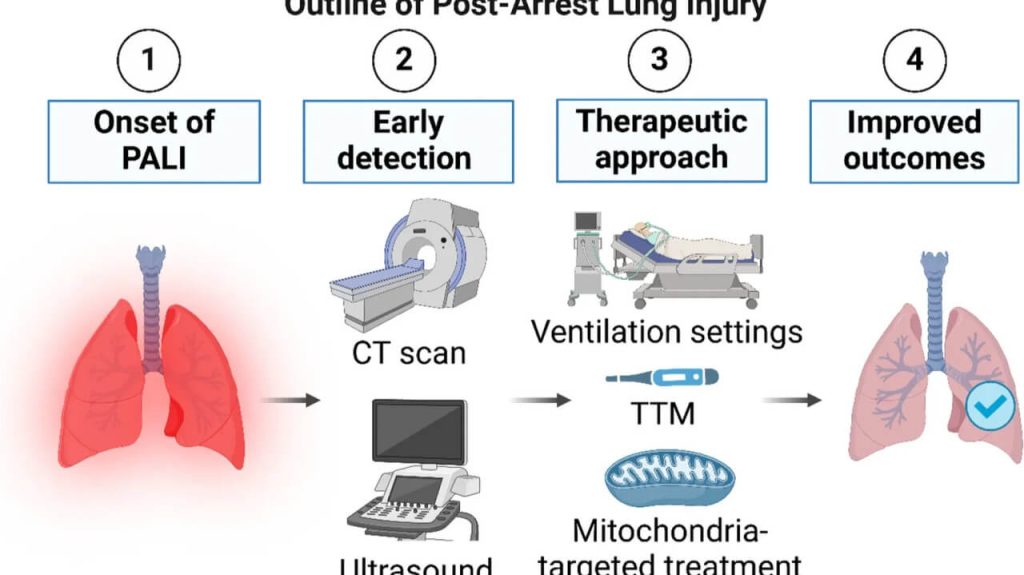
Abstract Background Post-cardiac arrest syndrome (PCAS) presents a multifaceted challenge in clinical practice, characterized by severe neurological injury and high mortality rates despite advancements in management strategies. One of the important critical aspects of PCAS is post-arrest lung injury (PALI), which significantly contributes to poor outcomes. PALI arises from a complex interplay of pathophysiological mechanisms,

, , , , , , ,

Acute lung injury and post-cardiac arrest syndrome: a narrative review Read Post »

Circulatory, Mechanical Ventilation, Respiratory

Airway management and ventilation techniques in resuscitation during advanced life support: an update

Abstract For many years, ventilation has been an essential part of advanced life support (ALS) in cardiopulmonary resuscitation (CPR). Nevertheless, there is little evidence about the best method of ventilation during resuscitation for both out-of-hospital cardiac arrest (OHCA) and inhospital cardiac arrest (IHCA) patients. Effective ventilation is one of the two main keys to successful

, , , , ,

Airway management and ventilation techniques in resuscitation during advanced life support: an update Read Post »

Scroll to Top