Circulatory

Circulatory, Respiratory

Physiology-guided management of patients with severe hypoxemia ineligible for ECMO: a multidisciplinary lung rescue team approach

Abstract Not all patients with refractory hypoxemia meet ECMO criteria — yet many still face catastrophic oxygenation failure with limited options. This study describes a physiology-guided “Lung Rescue Team (LRT)” model, designed to evaluate patients who are ineligible or borderline for ECMO by integrating mechanical ventilation physiology, multimodal imaging, hemodynamics, gas exchange, and lung recruitability […]
Physiology-guided management of patients with severe hypoxemia ineligible for ECMO: a multidisciplinary lung rescue team approach Read Post »

Circulatory, Respiratory

Radiomics-enhanced modelling approach for predicting the need for ECMO in ARDS patients: a retrospective cohort study

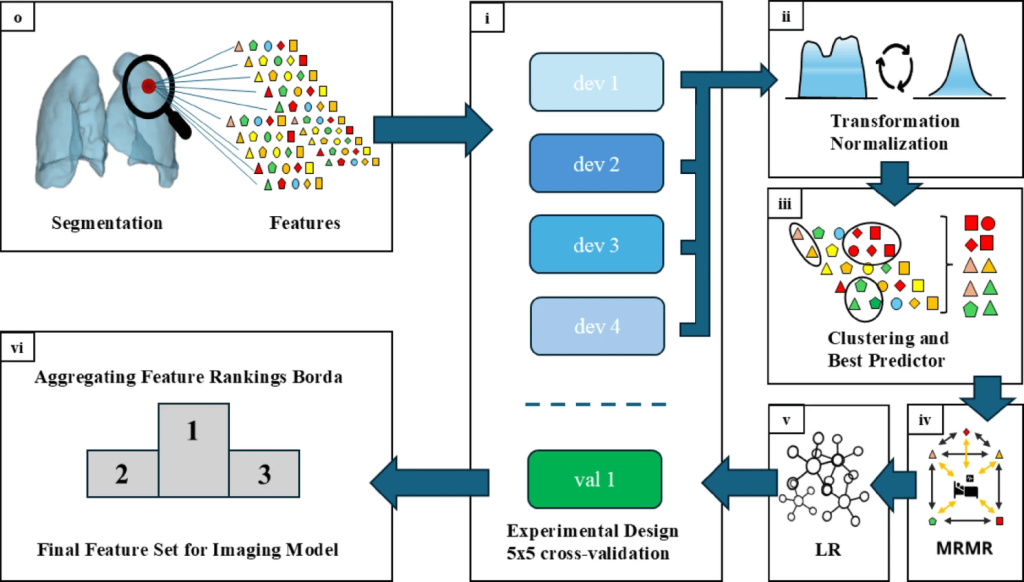
Predicting ECMO Before It’s Too Late: When Radiomics Meets Critical Care 🩺 Abstract The decision to initiate ECMO in patients with severe ARDS remains one of the most challenging and time-sensitive in critical care. In this retrospective cohort of 375 adults with COVID-19–associated ARDS, researchers from Germany explored whether combining quantitative CT radiomics with clinical

, , ,

Radiomics-enhanced modelling approach for predicting the need for ECMO in ARDS patients: a retrospective cohort study Read Post »

Circulatory, Respiratory

Extracorporeal membrane oxygenation (ECMO) and beyond in near fatal asthma: A comprehensive review

Extracorporeal Membrane Oxygenation (ECMO) and Beyond in Near-Fatal Asthma Abstract: Near-fatal asthma (NFA) is a life-threatening condition that sometimes proves refractory to conventional therapies, including mechanical ventilation. This comprehensive review examines the role of extracorporeal membrane oxygenation (ECMO) and extracorporeal CO₂ removal (ECCO₂R) as rescue therapies in NFA. It synthesizes registry data, observational studies, and

, ,

Extracorporeal membrane oxygenation (ECMO) and beyond in near fatal asthma: A comprehensive review Read Post »

Circulatory, Respiratory

Physiological and clinical effects of two ultraprotective ventilation strategies in patients with VV-ECMO: the ECMOVENT study

ECMOVENT: Comparing Two Ultraprotective Ventilation Strategies on VV-ECMO Abstract: The optimal ventilatory strategy for ARDS patients on VV-ECMO remains debated. This single-center, before-and-after study compared two ultraprotective approaches: VT1 strategy: Assist-controlled volume mode, VT 1 ml/kg PBW, RR 5/min, Pplat 20–25 cmH₂O. ΔP8 strategy: Pressure-controlled mode, ΔP 8 cmH₂O, PEEP 14 cmH₂O, RR 10/min. Among

, , , ,

Physiological and clinical effects of two ultraprotective ventilation strategies in patients with VV-ECMO: the ECMOVENT study Read Post »

Circulatory

A simple VA-ECMO bundle in adult patients with cardiogenic shock: an analysis of ELSO registry

Abstract This registry-based cohort study of 7,950 adult patients with cardiogenic shock supported with VA-ECMO reveals that achieving a simple physiological bundle within the first 24 hours—Mean Arterial Pressure >65 mmHg, PaO₂ between 60–150 mmHg, limiting PaCO₂ reduction to > −50%, and Peak Inspiratory Pressure <30 cm H₂O—was associated with significantly higher survival to hospital

,

A simple VA-ECMO bundle in adult patients with cardiogenic shock: an analysis of ELSO registry Read Post »

Circulatory

Mixed Cardiogenic-Vasodilatory Shock: Current Insights and Future Directions

Abstract This state-of-the-art review defines mixed cardiogenic–vasodilatory shock as overt hypotension with end-organ hypoperfusion arising from the combination of acute cardiac insufficiency (low cardiac output) and inappropriate systemic vasodilation, typically with normal or elevated filling pressures; it introduces a pragmatic three-group classification (cardiogenic-vasodilatory, vasodilatory-cardiogenic, and primary mixed shock), emphasizes invasive hemodynamic monitoring, and outlines management

, , ,

Mixed Cardiogenic-Vasodilatory Shock: Current Insights and Future Directions Read Post »

Cardiovascular, Circulatory

Ethical Considerations for Patients Requiring Extracorporeal Cardiopulmonary Resuscitation

Summary The article explores ethical considerations surrounding extracorporeal cardiopulmonary resuscitation (eCPR), highlighting its potential as an advanced intervention to improve survival and neurological outcomes in cardiac arrest patients. Despite its promising clinical advantages, integrating eCPR into routine advanced life support (ALS) protocols poses significant ethical challenges, including increased demand for long-term care, resource allocation dilemmas,

, , , , ,

Ethical Considerations for Patients Requiring Extracorporeal Cardiopulmonary Resuscitation Read Post »

Cardiovascular, Circulatory

Does targeted temperature management at 33 °C improve outcome after cardiac arrest?

Summary The article explores targeted temperature management (TTM) at 33°C as a treatment for patients following cardiac arrest, presenting arguments both in favor and against its use. TTM has been extensively debated due to conflicting clinical trial outcomes, variability in evidence from systematic reviews, and differences in interpretation of clinical utility. This review critically assesses

, ,

Does targeted temperature management at 33 °C improve outcome after cardiac arrest? Read Post »

Circulatory

Central venous pressure: current uses and prospects for an old parameter

Summary The article revisits the clinical relevance of central venous pressure (CVP), a traditional yet often underutilized hemodynamic parameter, given its historical inability to predict fluid responsiveness. It emphasizes that CVP still holds considerable diagnostic and management utility beyond fluid responsiveness, particularly as an indicator of venous return dynamics, organ perfusion, and right ventricular filling

Central venous pressure: current uses and prospects for an old parameter Read Post »

Circulatory, Miscellaneous

Measurement and interpretation of central venous pressure: a narrative review

Summary This narrative review explores the historical development, physiological underpinnings, measurement techniques, and clinical relevance of central venous pressure (CVP) in perioperative and critical care settings. Although traditionally used as a marker for fluid responsiveness and intravascular volume status, evidence now emphasizes that CVP alone is unreliable for guiding fluid therapy. Nonetheless, when used alongside

Measurement and interpretation of central venous pressure: a narrative review Read Post »

Scroll to Top