Asthma

Circulatory, Respiratory

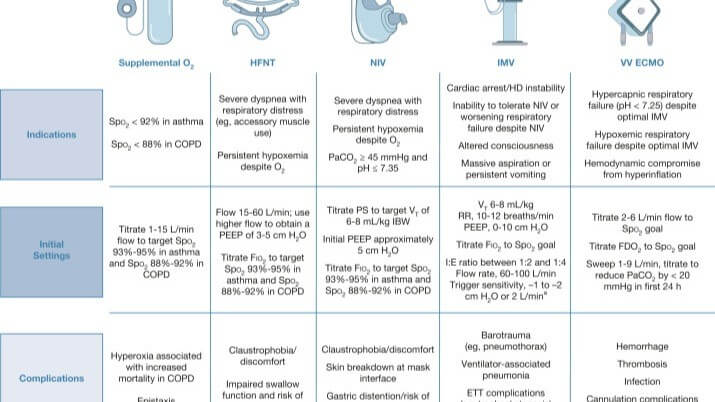
Extracorporeal membrane oxygenation (ECMO) and beyond in near fatal asthma: A comprehensive review

Extracorporeal Membrane Oxygenation (ECMO) and Beyond in Near-Fatal Asthma Abstract: Near-fatal asthma (NFA) is a life-threatening condition that sometimes proves refractory to conventional therapies, including mechanical ventilation. This comprehensive review examines the role of extracorporeal membrane oxygenation (ECMO) and extracorporeal CO₂ removal (ECCO₂R) as rescue therapies in NFA. It synthesizes registry data, observational studies, and […]
, ,

Extracorporeal membrane oxygenation (ECMO) and beyond in near fatal asthma: A comprehensive review Read Post »

Respiratory

Management of Asthma and COPD Exacerbations in Adults in the ICU

Abstract Severe, life-threatening asthma and COPD exacerbations are managed commonly in the ICU and are associated with significant morbidity and mortality. It is important to understand the commonalities and differences in the diagnosis and management of these obstructive lung diseases to improve patient outcomes via evidence-based care. In this review, we first outline triggers of

, , ,

Management of Asthma and COPD Exacerbations in Adults in the ICU Read Post »

Respiratory

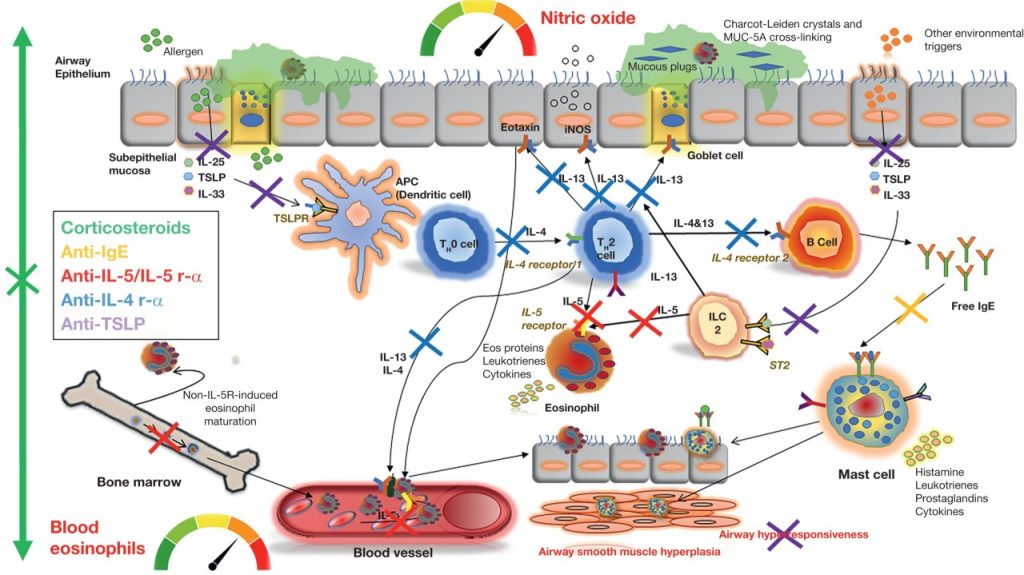
Choosing the Right Biologic for the Right Patient With Severe Asthma

Abstract In this installment of the How I Do It series on severe asthma, we tackle the clinical conundrum of choosing the right biologic for the right patient with severe asthma. With six biologics now approved for use in this area comprising four different targeting strategies (anti-Ig E: omalizumab; anti-IL-5 and anti-IL-5-receptor: mepolizumab, reslizumab, and

, , ,

Choosing the Right Biologic for the Right Patient With Severe Asthma Read Post »

Miscellaneous

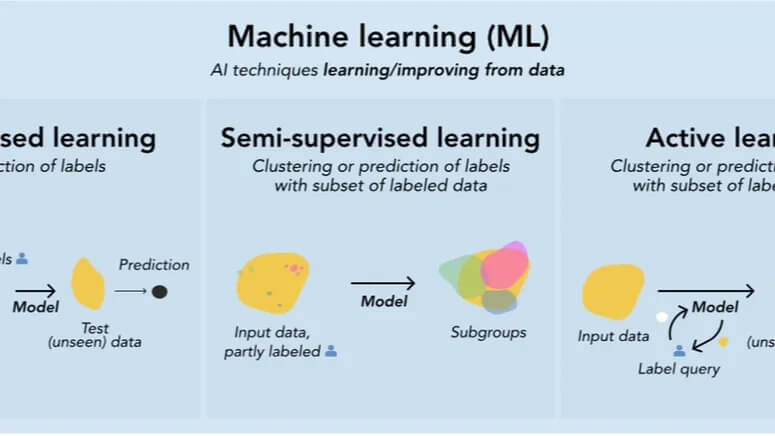
Artificial intelligence in pediatric allergy research

Abstract Atopic dermatitis, food allergy, allergic rhinitis, and asthma are among the most common diseases in childhood. They are heterogeneous diseases, can co-exist in their development, and manifest complex associations with other disorders and environmental and hereditary factors. Elucidating these intricacies by identifying clinically distinguishable groups and actionable risk factors will allow for better understanding

, , , ,

Artificial intelligence in pediatric allergy research Read Post »

Respiratory

Long-acting Muscarinic Antagonists and Their Role in Children with Recurrent Wheezing or Asthma: An Updated Review

Abstract Long-acting muscarinic antagonists (LAMAs) are a class of bronchodilators that work by blocking the muscarinic receptors in the airway smooth muscle, leading to bronchodilation and reduced mucus secretion. They are primarily used in the management of chronic obstructive pulmonary disease, but their use in asthma, including in pediatric patients, has been increasing, especially in

, ,

Long-acting Muscarinic Antagonists and Their Role in Children with Recurrent Wheezing or Asthma: An Updated Review Read Post »

Respiratory

Distinct phenotype and risk factor analysis of persistent airflow limitation among asthmatic children: a case-control study

Abstract Background Persistent airflow limitation (PAL) in childhood asthma is associated with a poor prognosis. The aim of this study was to categorize asthmatic children with PAL into distinct phenotypes and investigate the risk factors associated with each phenotype. Methods We conducted a case-control study with a total of 119 PAL patients and 120 non-PAL

,

Distinct phenotype and risk factor analysis of persistent airflow limitation among asthmatic children: a case-control study Read Post »

Scroll to Top