biomarkers

Neurology

Serum biomarkers of delirium in critical illness: a systematic review of mechanistic and diagnostic evidence

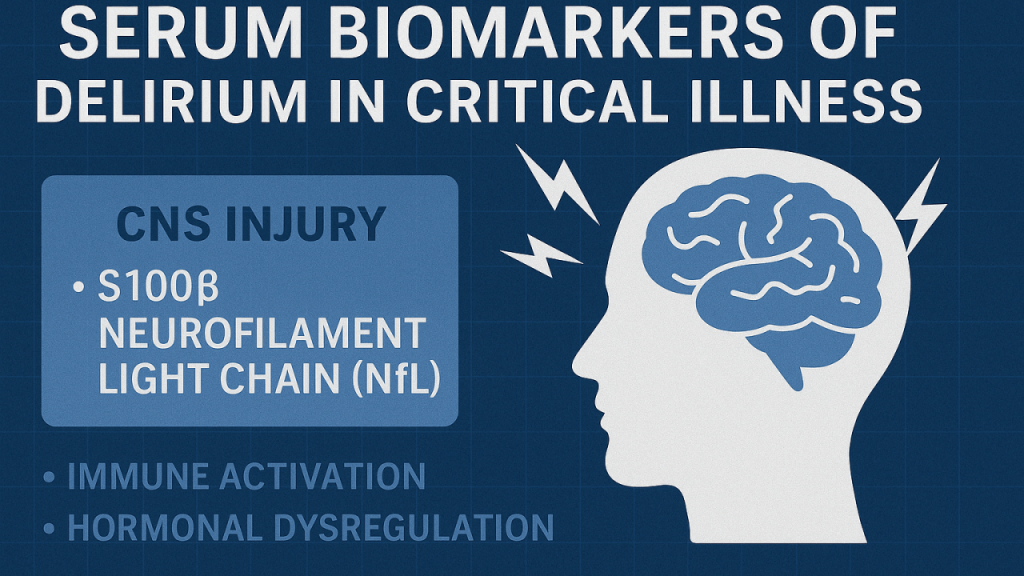
Serum Biomarkers of Delirium in Critical Illness Abstract: Delirium is a frequent and serious complication of critical illness, with up to 80% of ventilated ICU patients affected. This systematic review synthesized evidence from 28 studies assessing 54 serum biomarkers related to delirium, grouped into six mechanistic categories: CNS injury, immune activation, hormonal dysregulation, neurotransmission, coagulation, […]

, ,

Serum biomarkers of delirium in critical illness: a systematic review of mechanistic and diagnostic evidence Read Post »

Sepsis

Biomarkers to guide sepsis management

🧬 Biomarkers to Guide Sepsis Management: The Next Frontier Abstract: Sepsis remains a leading global cause of mortality and morbidity. This review highlights how biomarkers—from inflammatory mediators to endothelial and immune markers—are increasingly being used to guide key elements of sepsis management: early diagnosis, antibiotic stewardship, fluid therapy, vasopressor initiation, and immunotherapy. Precision therapeutics anchored

,

Biomarkers to guide sepsis management Read Post »

Respiratory

Choosing the Right Biologic for the Right Patient With Severe Asthma

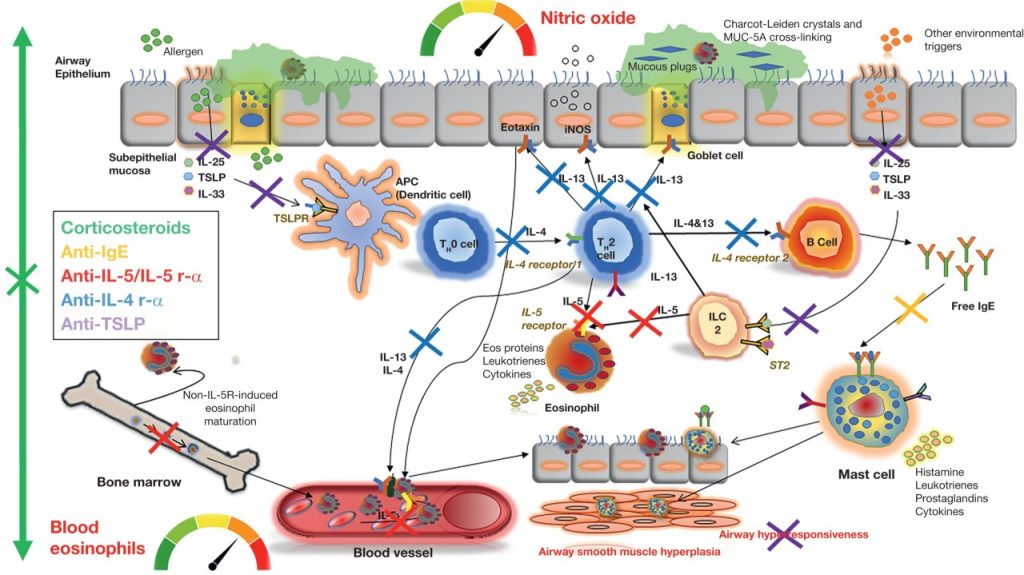
Abstract In this installment of the How I Do It series on severe asthma, we tackle the clinical conundrum of choosing the right biologic for the right patient with severe asthma. With six biologics now approved for use in this area comprising four different targeting strategies (anti-Ig E: omalizumab; anti-IL-5 and anti-IL-5-receptor: mepolizumab, reslizumab, and

, , ,

Choosing the Right Biologic for the Right Patient With Severe Asthma Read Post »

Sepsis

Host Response Biomarkers for Sepsis in the Emergency Room

Abstract This review explores the role of host response biomarkers in diagnosing, prognosticating, and managing sepsis in the emergency room (ER). It highlights the benefits of traditional biomarkers like procalcitonin (PCT) and C-reactive protein (CRP) and emerging tools from transcriptomics, proteomics, and metabolomics to improve patient outcomes and advance precision medicine in sepsis care. Key

, , , ,

Host Response Biomarkers for Sepsis in the Emergency Room Read Post »

Sepsis

Advances and Challenges in Sepsis Management: Modern Tools and Future Directions

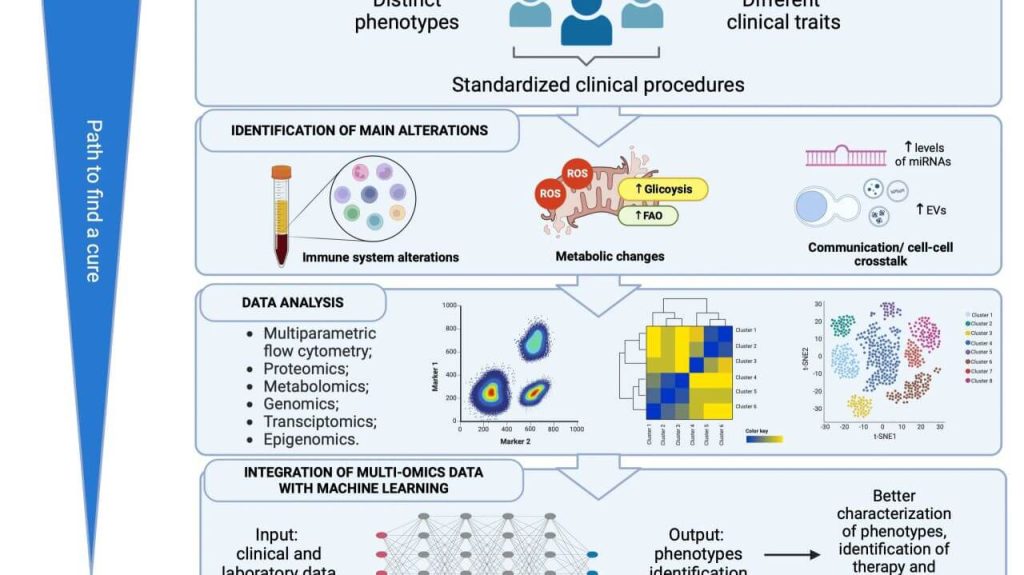
Abstract Sepsis, a critical condition marked by systemic inflammation, profoundly impacts both innate and adaptive immunity, often resulting in lymphopenia. This immune alteration can spare regulatory T cells (Tregs) but significantly affects other lymphocyte subsets, leading to diminished effector functions, altered cytokine profiles, and metabolic changes. The complexity of sepsis stems not only from its

, , ,

Advances and Challenges in Sepsis Management: Modern Tools and Future Directions Read Post »

Respiratory

Unlocking the power of biomarkers: transforming the diagnosis of acute respiratory distress syndrome

Abstract Acute respiratory distress syndrome (ARDS) remains a significant challenge due to its heterogeneity and lack of targeted therapies. Recent advances in biomarkers offer promise in refining diagnosis, assessing severity, and personalizing treatment strategies. This article explores the evolving role of biomarkers in ARDS, highlighting their potential to enhance clinical precision, differentiate subphenotypes, and guide

, ,

Unlocking the power of biomarkers: transforming the diagnosis of acute respiratory distress syndrome Read Post »

Scroll to Top