Acute respiratory distress syndrome

Respiratory

Lung-protective ventilation strategy in acute respiratory distress syndrome: a critical reappraisal of current practice

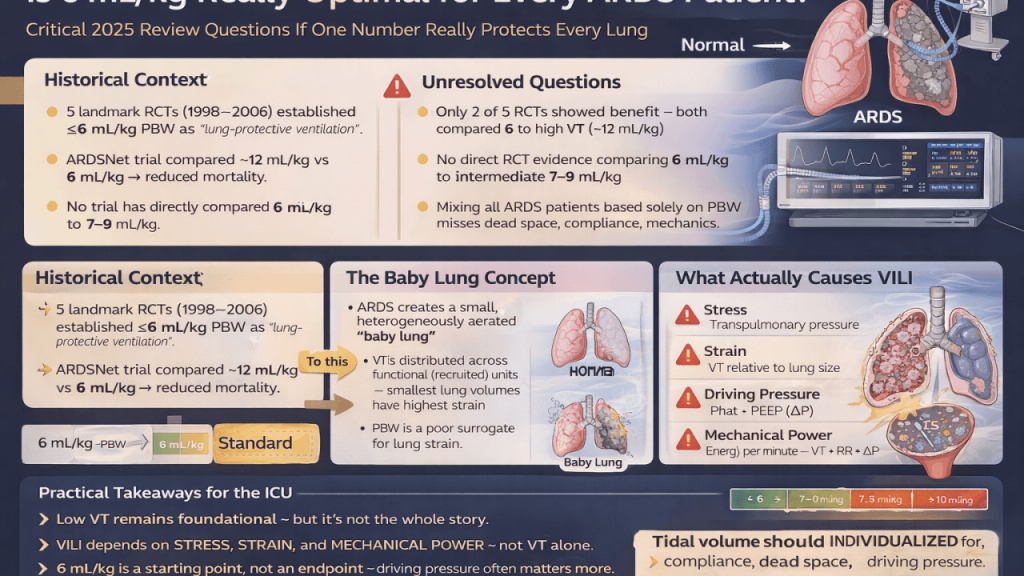
Why This Article Matters For more than 20 years, lung-protective ventilation has been synonymous with a single number: 6 mL/kg predicted body weight (PBW). This target has been taught, audited, benchmarked, and enforced across ICUs worldwide. Yet despite near-universal endorsement, real-world adherence remains inconsistent—and outcomes have plateaued. This 2025 review asks an uncomfortable but necessary […]
, , ,

Lung-protective ventilation strategy in acute respiratory distress syndrome: a critical reappraisal of current practice Read Post »

Circulatory, Respiratory

Radiomics-enhanced modelling approach for predicting the need for ECMO in ARDS patients: a retrospective cohort study

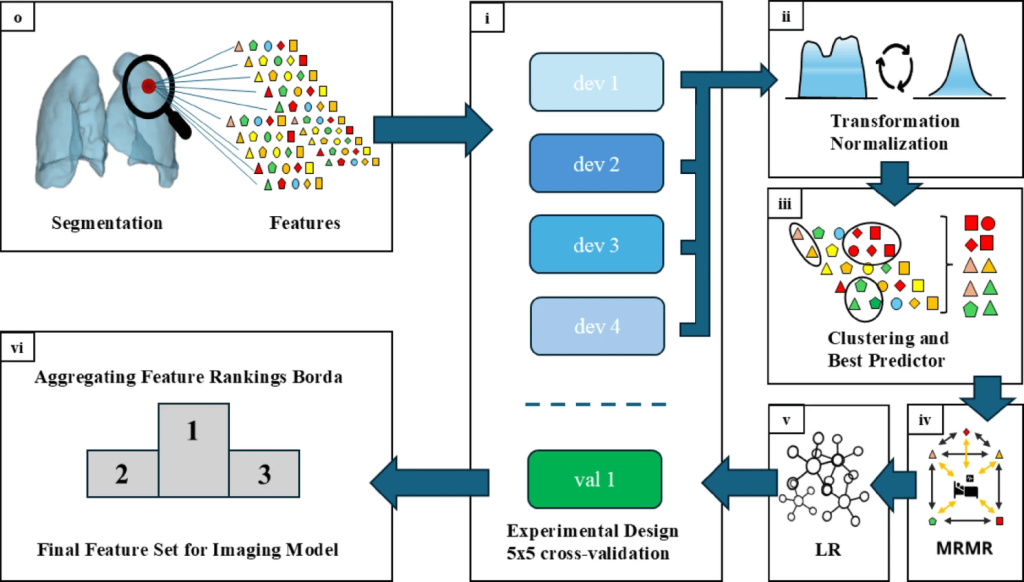
Predicting ECMO Before It’s Too Late: When Radiomics Meets Critical Care 🩺 Abstract The decision to initiate ECMO in patients with severe ARDS remains one of the most challenging and time-sensitive in critical care. In this retrospective cohort of 375 adults with COVID-19–associated ARDS, researchers from Germany explored whether combining quantitative CT radiomics with clinical

, , ,

Radiomics-enhanced modelling approach for predicting the need for ECMO in ARDS patients: a retrospective cohort study Read Post »

Respiratory

Acute Respiratory Distress Syndrome: Pathophysiological Insights, Subphenotypes, and Clinical Implications—A Comprehensive Review

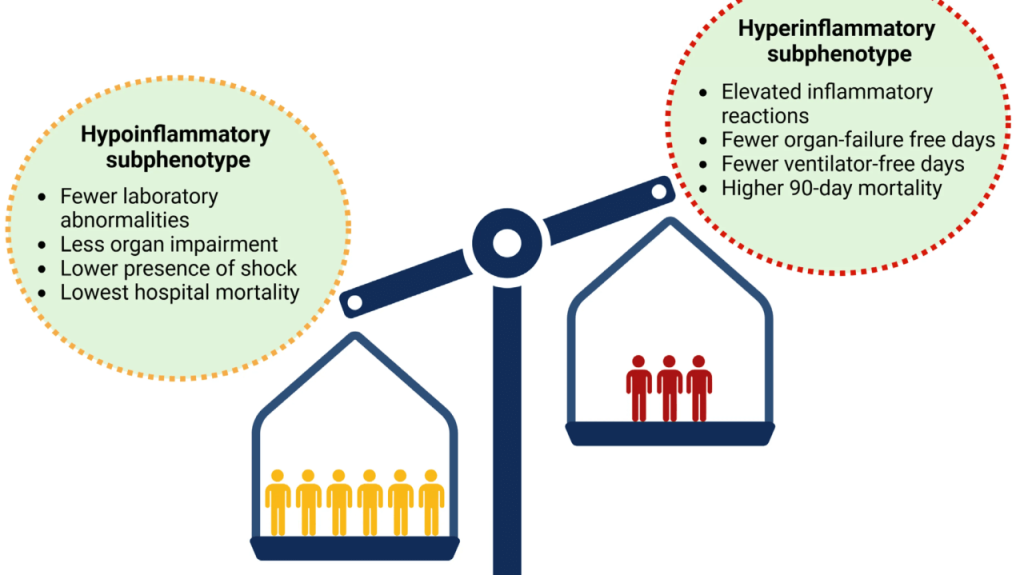
ARDS: Pathophysiological Insights, Subphenotypes, and Precision Medicine Abstract: ARDS is a syndrome of hypoxemic respiratory failure caused by alveolo-capillary barrier dysfunction, dysregulated inflammation, and mechanical injury. Despite 60 years of research, mortality remains near 40%. The heterogeneity of ARDS has driven interest in subphenotypes—biological, clinical, physiological, and radiographic—that may explain variable responses to therapies. This

, ,

Acute Respiratory Distress Syndrome: Pathophysiological Insights, Subphenotypes, and Clinical Implications—A Comprehensive Review Read Post »

Pulmonary, Respiratory, Sepsis

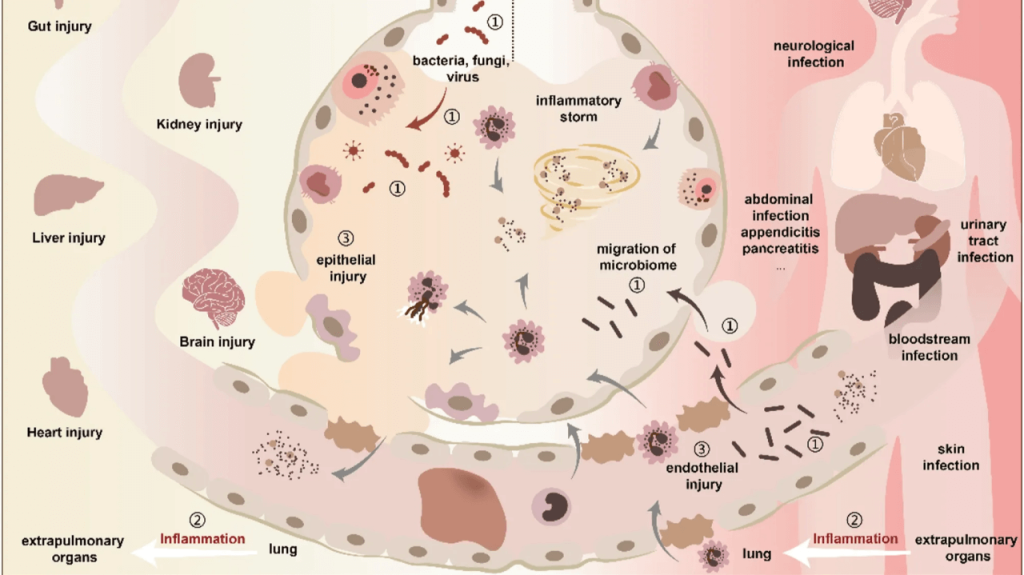
Crosstalk between lung and extrapulmonary organs in sepsis-related acute lung injury/acute respiratory distress syndrome

Organ Crosstalk in Sepsis-Related ALI/ARDS: New Insights into Lung–System Interactions Abstract: Sepsis-related ALI/ARDS remains highly lethal (>30% mortality), and most research has historically focused only on the lung. This review highlights organ crosstalk as a central mechanism in sepsis pathophysiology. The authors differentiate pulmonary sepsis-associated ALI/ARDS (PSA) from extrapulmonary sepsis-associated ALI/ARDS (ESA), outline systemic inflammation,

, , ,

Crosstalk between lung and extrapulmonary organs in sepsis-related acute lung injury/acute respiratory distress syndrome Read Post »

Respiratory

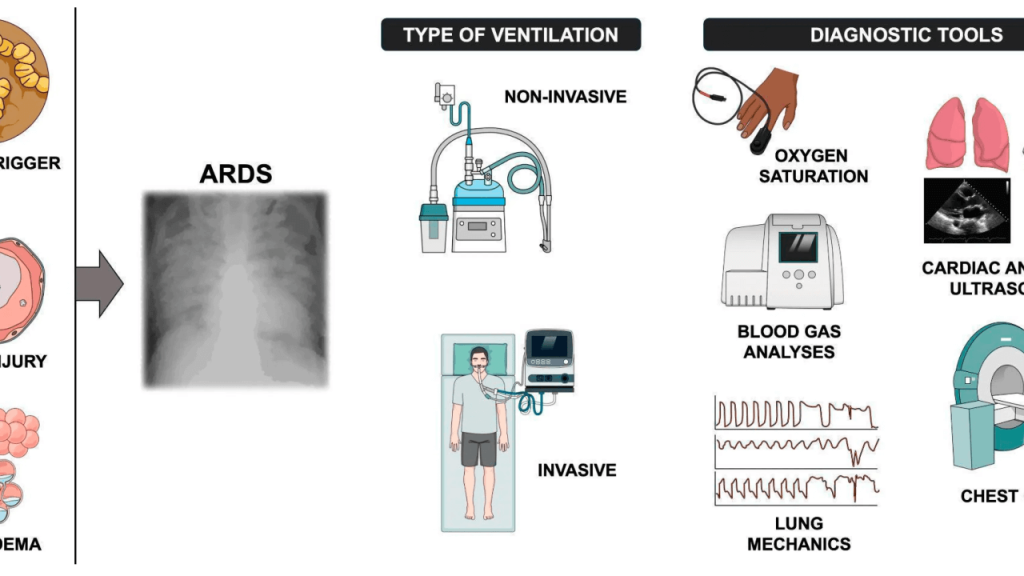
Old and New Definitions of Acute Respiratory Distress Syndrome (ARDS): An Overview of Practical Considerations and Clinical Implications

Should ARDS definitions include HFNC/NIV and SpO₂/FiO₂—without overdiagnosing? Abstract: This narrative review contrasts the 2012 Berlin definition with newer proposals—including the Kigali modification and the emerging global definition—that broaden ARDS diagnosis to patients on HFNC/NIV, allow SpO₂/FiO₂ surrogates, and consider lung ultrasound (LUS) where ABGs or CXR/CT are limited; the authors welcome earlier recognition but

,

Old and New Definitions of Acute Respiratory Distress Syndrome (ARDS): An Overview of Practical Considerations and Clinical Implications Read Post »

Respiratory

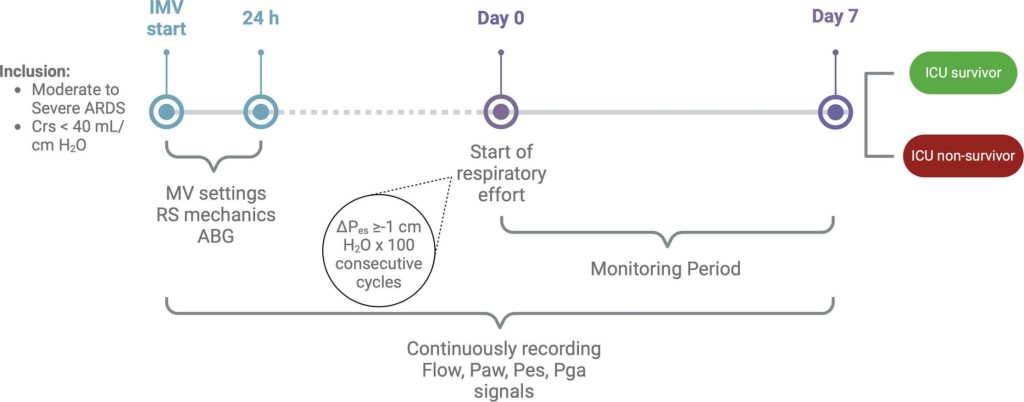
Association of Breathing Effort With Survival in Patients With Acute Respiratory Distress Syndrome

Abstract This multicenter prospective cohort study investigated whether breathing effort, estimated by esophageal pressure swing (ΔPes), is associated with survival in adults with acute hypoxemic respiratory failure (AHRF) receiving noninvasive respiratory support (NRS). Across 12 ICUs in Italy, 180 patients were enrolled. The study found that higher breathing effort—particularly ΔPes >10 cmH₂O—was independently associated with

,

Association of Breathing Effort With Survival in Patients With Acute Respiratory Distress Syndrome Read Post »

Respiratory

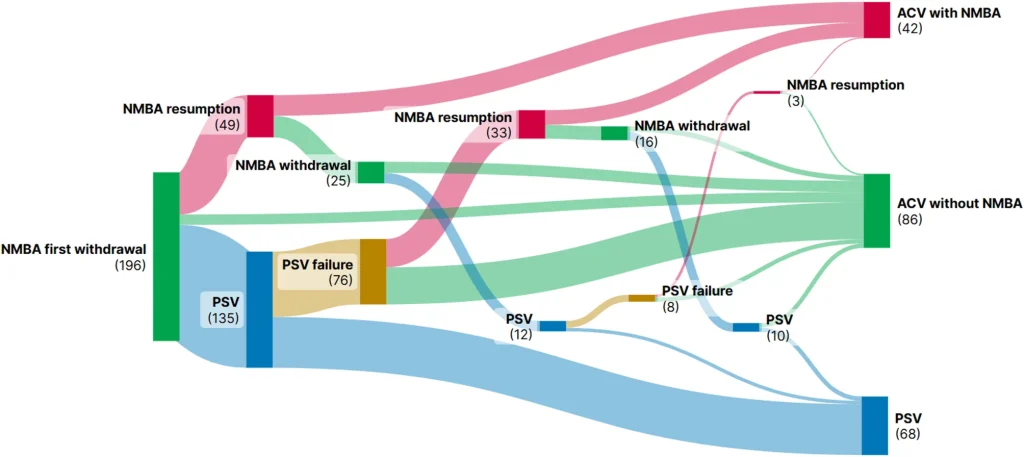
Factors influencing the transition phase in acute respiratory distress syndrome: an observational cohort study

🫁 Transition Phase in ARDS: Predictors of NMBA and PSV Failure Abstract: Protective ventilation and liberation strategies in ARDS are well established, but the transition phase—between stopping neuromuscular blockade (NMBA) and initiating assisted ventilation—remains poorly defined. This bicentric cohort study (n=196) evaluated predictors of NMBA weaning failure and pressure support ventilation (PSV) failure, focusing on

,

Factors influencing the transition phase in acute respiratory distress syndrome: an observational cohort study Read Post »

Uncategorized

Setting and Monitoring of Mechanical Ventilation During Venovenous ECMO

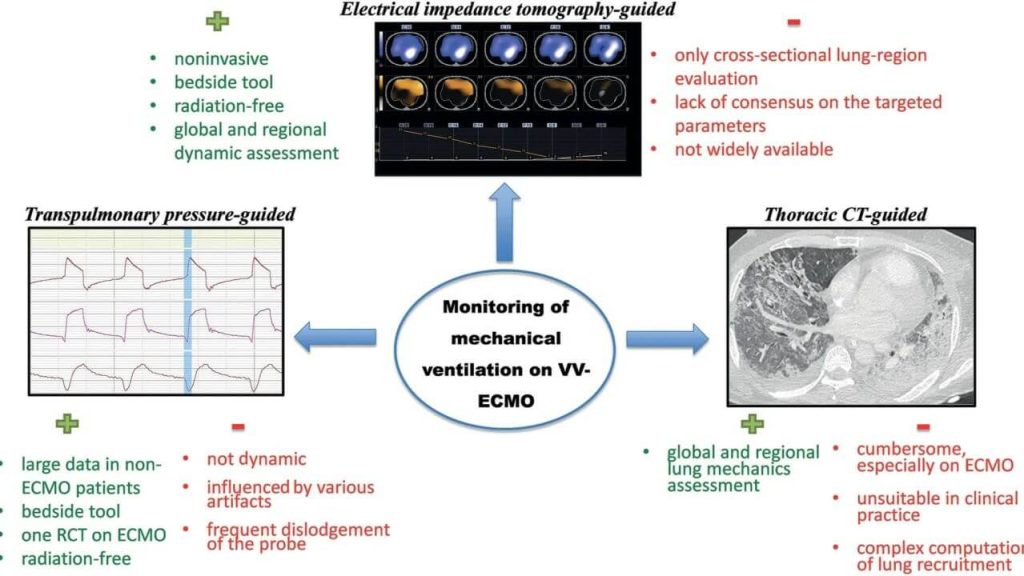
Abstract This review provides insights into the management of mechanical ventilation during venovenous extracorporeal membrane oxygenation (VV-ECMO) for severe acute respiratory distress syndrome (ARDS). It focuses on strategies to minimize ventilator-induced lung injury (VILI) by employing ultra-lung-protective ventilation, exploring key parameters like tidal volume, plateau pressure, and driving pressure. Key Points Lung Rest Strategy: VV-ECMO

, , ,

Setting and Monitoring of Mechanical Ventilation During Venovenous ECMO Read Post »

Respiratory

Unlocking the power of biomarkers: transforming the diagnosis of acute respiratory distress syndrome

Abstract Acute respiratory distress syndrome (ARDS) remains a significant challenge due to its heterogeneity and lack of targeted therapies. Recent advances in biomarkers offer promise in refining diagnosis, assessing severity, and personalizing treatment strategies. This article explores the evolving role of biomarkers in ARDS, highlighting their potential to enhance clinical precision, differentiate subphenotypes, and guide

, ,

Unlocking the power of biomarkers: transforming the diagnosis of acute respiratory distress syndrome Read Post »

Respiratory

Effect of emodin on acute lung injury: a meta-analysis of preclinical trials

Abstract Background Emodin has protective effects on acute lung injury (ALI) or acute respiratory distress syndrome (ARDS). This meta-analysis intended to illustrate the efficacy of emodin on ALI/ARDS animal models. Methods Relevant preclinical studies were searched on PubMed, EMBASE, and Web of Science. Standardized mean differences (SMDs) with corresponding confidence intervals (CIs) were used to

, , ,

Effect of emodin on acute lung injury: a meta-analysis of preclinical trials Read Post »

Scroll to Top