Sepsis

Sepsis

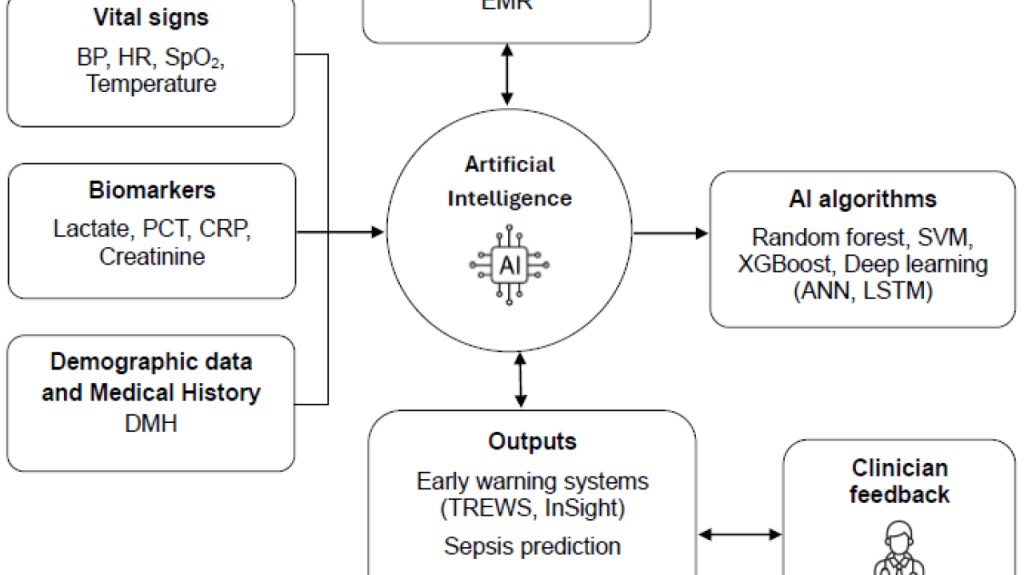
The Potential of Artificial Intelligence in the Diagnosis and Prognosis of Sepsis: A Narrative Review

Abstract Sepsis, one of the leading causes of ICU mortality worldwide, remains a diagnostic and therapeutic challenge due to its nonspecific presentation and rapidly evolving course. In this narrative review, Tocu and colleagues explore the emerging role of artificial intelligence (AI) in diagnosing and predicting sepsis. Drawing from 45 studies between 2016 and 2024, the […]

,

The Potential of Artificial Intelligence in the Diagnosis and Prognosis of Sepsis: A Narrative Review Read Post »

Pulmonary, Respiratory, Sepsis

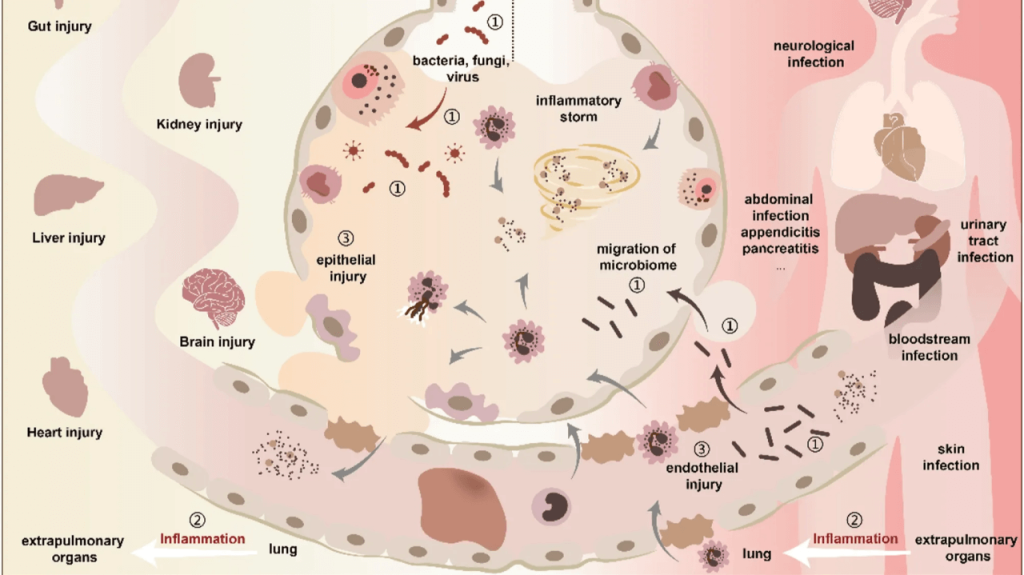
Crosstalk between lung and extrapulmonary organs in sepsis-related acute lung injury/acute respiratory distress syndrome

Organ Crosstalk in Sepsis-Related ALI/ARDS: New Insights into Lung–System Interactions Abstract: Sepsis-related ALI/ARDS remains highly lethal (>30% mortality), and most research has historically focused only on the lung. This review highlights organ crosstalk as a central mechanism in sepsis pathophysiology. The authors differentiate pulmonary sepsis-associated ALI/ARDS (PSA) from extrapulmonary sepsis-associated ALI/ARDS (ESA), outline systemic inflammation,

, , ,

Crosstalk between lung and extrapulmonary organs in sepsis-related acute lung injury/acute respiratory distress syndrome Read Post »

Sepsis

Healthcare costs after sepsis: a systematic review

Abstract: This systematic review of 23 studies (2000–2025) examined healthcare costs among adult sepsis survivors in developed nations. While in-hospital sepsis costs are well described, this review reveals that post-discharge healthcare costs remain high for years. Median one-year cost per survivor was $28,719 (IQR $21,715), with second-year costs still averaging $22,460 (IQR $14,407). Median cost

, ,

Healthcare costs after sepsis: a systematic review Read Post »

Sepsis

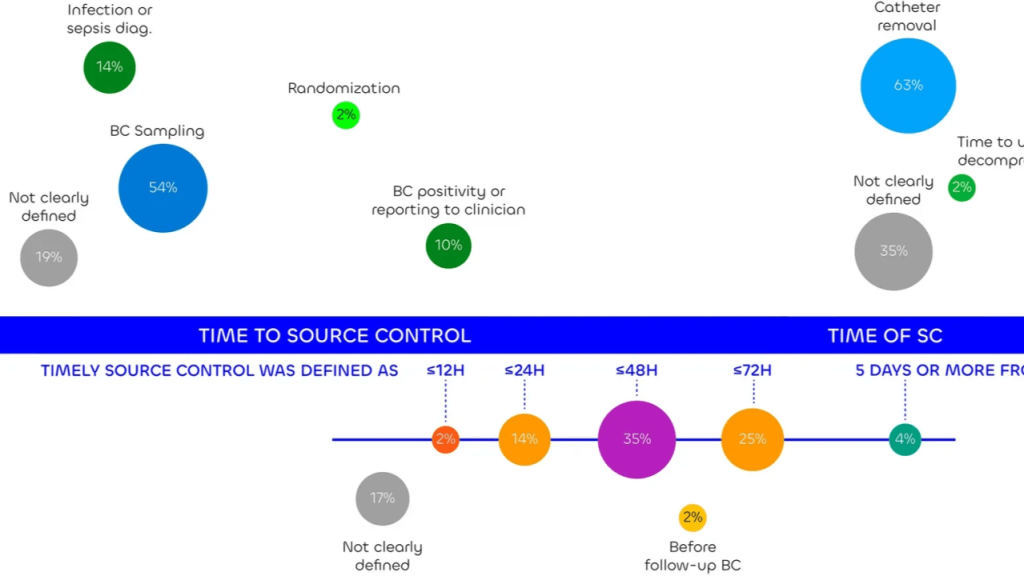
Source control in bloodstream infections in patients with sepsis, septic shock, or requiring ICU admission: a scoping review with recommendations…..

Summary This scoping review examines source control (SC) in bloodstream infections (BSI) among critically ill patients with sepsis, septic shock, or intensive care unit (ICU) admission, highlighting the substantial variability in definitions, interventions, timing, and adequacy reporting. The review analyzed 77 studies, finding significant methodological inconsistencies and an overrepresentation of catheter-related infections and candidemia. It

, ,

Source control in bloodstream infections in patients with sepsis, septic shock, or requiring ICU admission: a scoping review with recommendations….. Read Post »

Sepsis

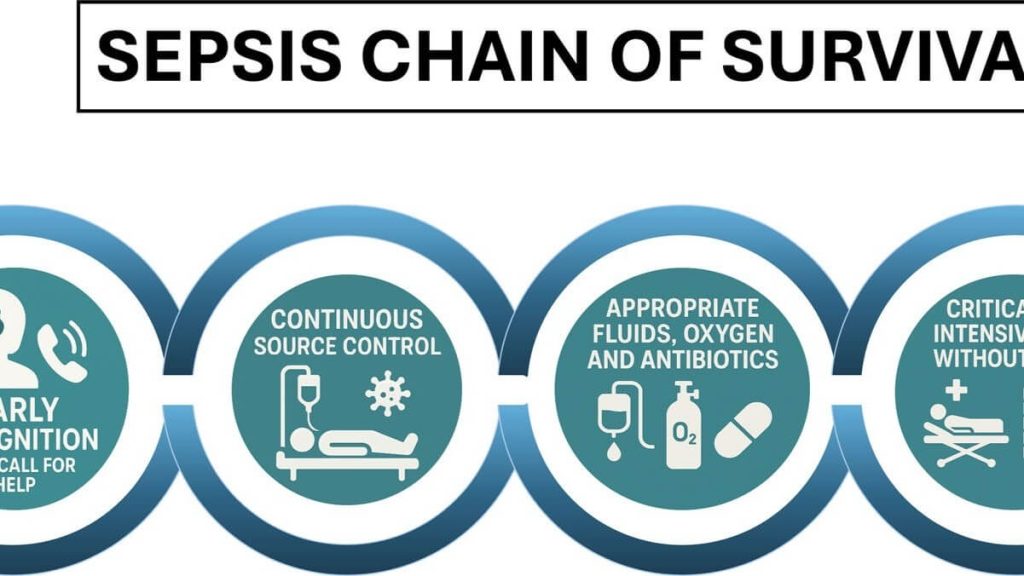
The Sepsis Chain of Survival: A Comprehensive Framework for Improving Sepsis Outcomes

Summary The article introduces the “Sepsis Chain of Survival,” a structured, interconnected framework designed to improve sepsis management and patient outcomes globally. Originally inspired by the cardiac arrest chain of survival concept, this comprehensive model underscores crucial components such as community and healthcare awareness, early recognition and intervention, prompt antimicrobial and fluid therapy, optimized critical

,

The Sepsis Chain of Survival: A Comprehensive Framework for Improving Sepsis Outcomes Read Post »

Sepsis

Fluid resuscitation management in patients with sepsis and septic shock: a network meta-analysis

Summary This network meta-analysis of 28 randomized controlled trials (8,770 patients) compares fluid resuscitation strategies in sepsis/septic shock. Balanced crystalloids (BC) demonstrated significant advantages, reducing 90-day mortality compared to saline (RR 0.89) and low-molecular-weight hydroxyethyl starch (L-HES; RR 0.84). Hyperoncotic albumin showed promise for renal protection but BC ranked highest overall, with superior outcomes for

, ,

Fluid resuscitation management in patients with sepsis and septic shock: a network meta-analysis Read Post »

Sepsis

Efficacy of targeting high mean arterial pressure for older patients with septic shock (OPTPRESS): a multicentre, pragmatic, open-label, randomised…

Abstract: Endo et al. conducted the OPTPRESS trial, a multicenter randomized controlled trial in Japan, evaluating whether a higher mean arterial pressure (MAP) target (80–85 mmHg) reduces mortality in older patients (≥65 years) with septic shock compared to standard targets (65–70 mmHg). The trial was terminated early due to increased mortality and adverse events in

, ,

Efficacy of targeting high mean arterial pressure for older patients with septic shock (OPTPRESS): a multicentre, pragmatic, open-label, randomised… Read Post »

Sepsis

Biomarkers to guide sepsis management

🧬 Biomarkers to Guide Sepsis Management: The Next Frontier Abstract: Sepsis remains a leading global cause of mortality and morbidity. This review highlights how biomarkers—from inflammatory mediators to endothelial and immune markers—are increasingly being used to guide key elements of sepsis management: early diagnosis, antibiotic stewardship, fluid therapy, vasopressor initiation, and immunotherapy. Precision therapeutics anchored

,

Biomarkers to guide sepsis management Read Post »

Sepsis

Sepsis-Associated Acute Kidney Injury

Summary Acute kidney injury (AKI) is a common complication of sepsis and significantly increases patient morbidity and mortality. Nearly two-thirds of patients with septic shock develop AKI, resulting in a six- to eightfold increase in mortality. Despite progress in understanding its pathophysiology and biomarkers, there are still limited effective therapies. This review outlines the epidemiology,

, , ,

Sepsis-Associated Acute Kidney Injury Read Post »

Sepsis

Sepsis and post-sepsis syndrome: a multisystem challenge requiring comprehensive care and management—a review

Summary: This comprehensive review discusses the multifaceted nature of sepsis, emphasizing its high mortality and complex management, spanning early recognition, acute intervention, and long-term rehabilitation. Post-sepsis syndrome (PSS) represents a critical challenge with sustained immune dysregulation, chronic inflammation, and metabolic dysfunction leading to recurrent infections, cardiovascular disease, and neurocognitive impairment. The review underscores mitochondrial dysfunction,

Sepsis and post-sepsis syndrome: a multisystem challenge requiring comprehensive care and management—a review Read Post »

Scroll to Top