Summary
The article introduces the “Sepsis Chain of Survival,” a structured, interconnected framework designed to improve sepsis management and patient outcomes globally. Originally inspired by the cardiac arrest chain of survival concept, this comprehensive model underscores crucial components such as community and healthcare awareness, early recognition and intervention, prompt antimicrobial and fluid therapy, optimized critical care delivery, effective source control, and extensive post-sepsis recovery strategies. By addressing each interdependent link, this model aims to enhance patient survival rates, quality of life, and long-term outcomes across diverse healthcare settings.
Key Points
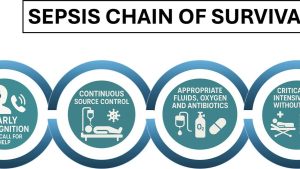
- Sepsis Chain of Survival Concept: The Sepsis Chain of Survival offers an organized, interconnected framework to improve survival outcomes through coordinated interventions that span from initial community awareness to post-discharge care, adapted from the cardiac arrest survival chain.
- Awareness and Prevention: Emphasis is placed on increasing public and healthcare worker awareness of sepsis signs, prevention strategies including vaccination, hygiene programs, and timely recognition to halt progression from infection to sepsis or septic shock.
- Early Recognition and Call for Help: Rapid detection of sepsis symptoms is vital. Public education, healthcare provider training, and implementation of early warning systems (such as electronic health record alerts) are crucial to activating early intervention pathways and reducing sepsis-related morbidity and mortality.
- Continuous Source Control: Promptly identifying and managing infection sources (e.g., surgical drainage, removal of infected devices) is essential. Source control is highlighted as an ongoing process throughout sepsis management.
- Appropriate Fluids, Oxygen, and Antibiotics: Immediate initiation of appropriate antimicrobials, guided by local resistance patterns, timely administration of supplemental oxygen, and cautious fluid resuscitation (particularly in resource-limited settings) are fundamental to managing early sepsis.
- Critical Care Without Walls: Advocating flexibility in providing essential critical care interventions regardless of ICU availability, the article emphasizes seamless care coordination across hospital, pre-hospital, and community settings, especially critical in resource-constrained environments.
- Post-Sepsis Care and Community Reintegration: Comprehensive post-sepsis care addresses physical, cognitive, and psychological recovery, managing complications such as post-intensive care syndrome (PICS). Structured follow-up care and support systems are crucial for long-term patient rehabilitation and family education.
- Systematic Approach to Sepsis Management: The authors propose an integrated approach, stressing that each link within the sepsis chain (awareness, recognition, source control, intervention, critical care management, and post-sepsis recovery) is interdependent, underscoring the necessity for robust healthcare system coordination.
- Implementation Actions: A practical call to action includes strengthening public education campaigns, healthcare provider training, standardized management protocols, resource allocation, health system capacity building, and continuous monitoring to ensure effective implementation and continuous improvement of sepsis management strategies.
- Future Directions and Global Collaboration: Advocating for international consensus and collaboration, future directions include aligning sepsis management with global standards, utilizing emerging technologies (telemedicine, AI-enhanced diagnostics), and fostering comprehensive community engagement and policy advocacy to enhance sepsis care worldwide.
Conclusion
The Sepsis Chain of Survival offers a powerful, integrated approach to optimizing sepsis care, encompassing early recognition, systematic intervention, ongoing critical care management, and comprehensive post-recovery support. By embracing this model and strengthening each interdependent component, healthcare systems worldwide can significantly reduce sepsis mortality, enhance patient recovery, and improve long-term outcomes.

Discussion Questions
- How can healthcare systems effectively integrate the Sepsis Chain of Survival framework into existing emergency response protocols, especially in resource-limited settings?
- What are the primary challenges and potential solutions to implementing standardized sepsis recognition and response training programs globally?
- Given the critical role of post-sepsis care, what strategies could enhance the integration of community-based support networks and follow-up care programs to improve long-term patient recovery?
Open Access This article is licensed under a Creative Commons Attribution 4.0 International License, which permits use, sharing, adaptation, distribution and reproduction in any medium or format, as long as you give appropriate credit to the original author(s) and the source, provide a link to the Creative Commons licence, and indicate if changes were made. The images or other third party material in this article are included in the article’s Creative Commons licence, unless indicated otherwise in a credit line to the material. If material is not included in the article’s Creative Commons licence and your intended use is not permitted by statutory regulation or exceeds the permitted use, you will need to obtain permission directly from the copyright holder. To view a copy of this licence, visit http://creativecommons.org/licenses/by/4.0/.

