ecmo

Cardiovascular

Crossing the line: blood transfusion thresholds in ECMO

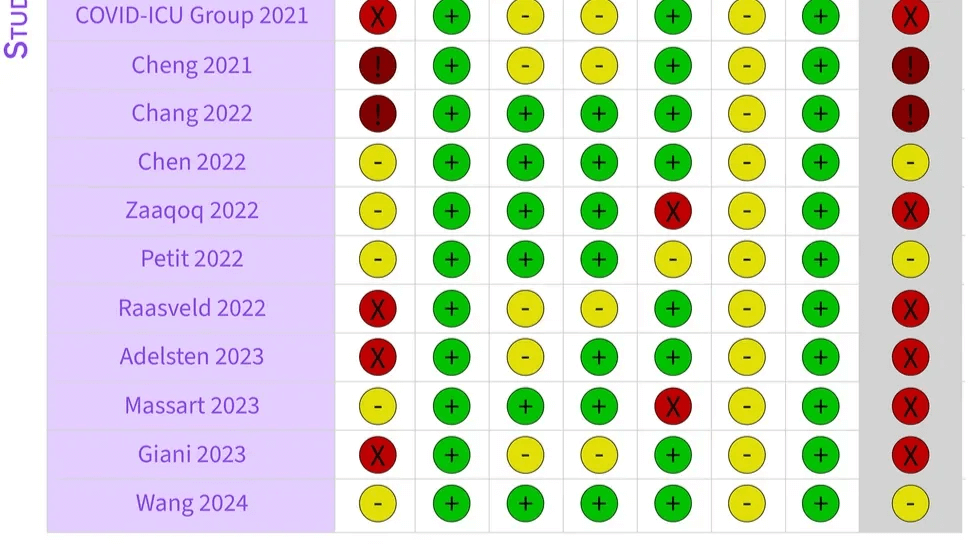
1. Why this editorial matters — and why you should read it ECMO teams across the world ask the same question daily: “What hemoglobin level actually improves oxygen delivery in ECMO — and when does transfusion do more harm than good?” Despite decades of ECMO evolution, there is still no evidence-based transfusion threshold for ECMO […]

, , ,

Crossing the line: blood transfusion thresholds in ECMO Read Post »
Circulatory, Respiratory

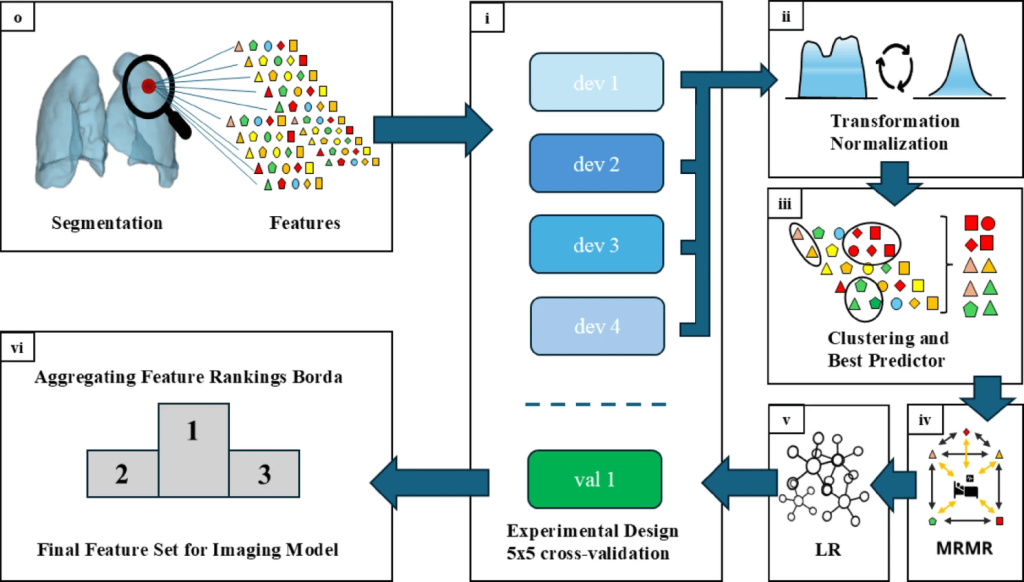
Radiomics-enhanced modelling approach for predicting the need for ECMO in ARDS patients: a retrospective cohort study

Predicting ECMO Before It’s Too Late: When Radiomics Meets Critical Care 🩺 Abstract The decision to initiate ECMO in patients with severe ARDS remains one of the most challenging and time-sensitive in critical care. In this retrospective cohort of 375 adults with COVID-19–associated ARDS, researchers from Germany explored whether combining quantitative CT radiomics with clinical

, , ,

Radiomics-enhanced modelling approach for predicting the need for ECMO in ARDS patients: a retrospective cohort study Read Post »

Circulatory, Respiratory

Extracorporeal membrane oxygenation (ECMO) and beyond in near fatal asthma: A comprehensive review

Extracorporeal Membrane Oxygenation (ECMO) and Beyond in Near-Fatal Asthma Abstract: Near-fatal asthma (NFA) is a life-threatening condition that sometimes proves refractory to conventional therapies, including mechanical ventilation. This comprehensive review examines the role of extracorporeal membrane oxygenation (ECMO) and extracorporeal CO₂ removal (ECCO₂R) as rescue therapies in NFA. It synthesizes registry data, observational studies, and

, ,

Extracorporeal membrane oxygenation (ECMO) and beyond in near fatal asthma: A comprehensive review Read Post »

Circulatory, Respiratory

Physiological and clinical effects of two ultraprotective ventilation strategies in patients with VV-ECMO: the ECMOVENT study

ECMOVENT: Comparing Two Ultraprotective Ventilation Strategies on VV-ECMO Abstract: The optimal ventilatory strategy for ARDS patients on VV-ECMO remains debated. This single-center, before-and-after study compared two ultraprotective approaches: VT1 strategy: Assist-controlled volume mode, VT 1 ml/kg PBW, RR 5/min, Pplat 20–25 cmH₂O. ΔP8 strategy: Pressure-controlled mode, ΔP 8 cmH₂O, PEEP 14 cmH₂O, RR 10/min. Among

, , , ,

Physiological and clinical effects of two ultraprotective ventilation strategies in patients with VV-ECMO: the ECMOVENT study Read Post »

Circulatory

A simple VA-ECMO bundle in adult patients with cardiogenic shock: an analysis of ELSO registry

Abstract This registry-based cohort study of 7,950 adult patients with cardiogenic shock supported with VA-ECMO reveals that achieving a simple physiological bundle within the first 24 hours—Mean Arterial Pressure >65 mmHg, PaO₂ between 60–150 mmHg, limiting PaCO₂ reduction to > −50%, and Peak Inspiratory Pressure <30 cm H₂O—was associated with significantly higher survival to hospital

,

A simple VA-ECMO bundle in adult patients with cardiogenic shock: an analysis of ELSO registry Read Post »

Cardiovascular

Prognostic implication of venoarterial extracorporeal membrane oxygenation in acute myocardial infarction-related cardiogenic shock

Summary This retrospective study aimed to evaluate clinical outcomes in patients receiving veno-arterial extracorporeal membrane oxygenation (VA-ECMO) for cardiogenic shock (CS), comparing acute myocardial infarction-related cardiogenic shock (AMI-CS) with non-AMI-CS. Analysis of data from 667 patients treated between 2008 and 2023 showed that AMI-CS was associated with significantly lower in-hospital mortality compared to non-AMI-CS. Independent

, , ,

Prognostic implication of venoarterial extracorporeal membrane oxygenation in acute myocardial infarction-related cardiogenic shock Read Post »

Cardiovascular, Circulatory

Ethical Considerations for Patients Requiring Extracorporeal Cardiopulmonary Resuscitation

Summary The article explores ethical considerations surrounding extracorporeal cardiopulmonary resuscitation (eCPR), highlighting its potential as an advanced intervention to improve survival and neurological outcomes in cardiac arrest patients. Despite its promising clinical advantages, integrating eCPR into routine advanced life support (ALS) protocols poses significant ethical challenges, including increased demand for long-term care, resource allocation dilemmas,

, , , , ,

Ethical Considerations for Patients Requiring Extracorporeal Cardiopulmonary Resuscitation Read Post »

Cardiovascular, Respiratory

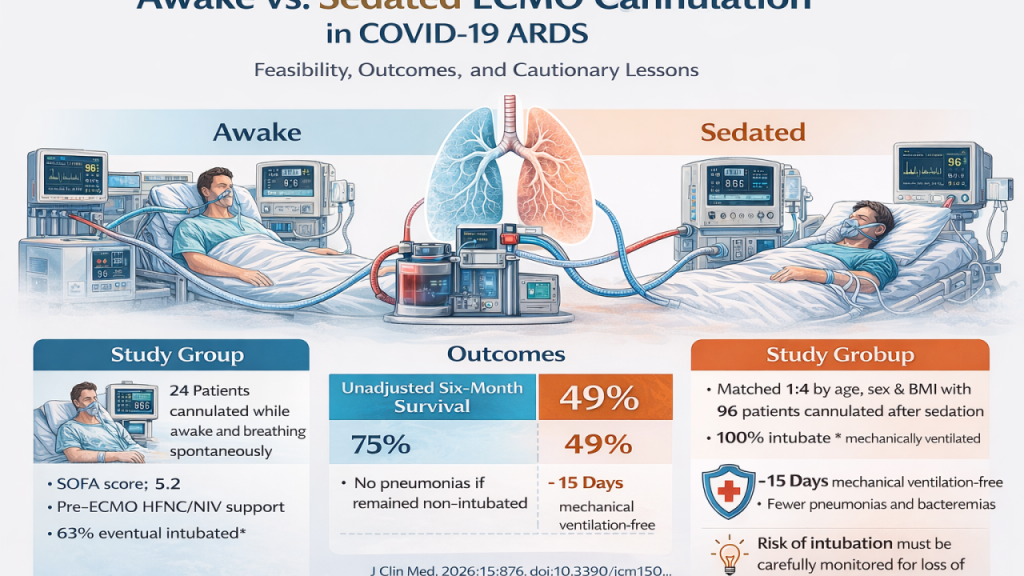
Awake vs. Sedated Cannulation for Extra-Corporeal Membrane Oxygenation in Patients with COVID-19 Induced Acute Respiratory Distress Syndrome

Why this article matters   Veno-venous extracorporeal membrane oxygenation (VV-ECMO) is routinely initiated in patients with severe ARDS after intubation, deep sedation, and often neuromuscular blockade. During the COVID-19 pandemic, however, some centers explored an alternative strategy: awake ECMO cannulation, in which patients are cannulated while spontaneously breathing and supported without invasive mechanical ventilation. The

, , , ,

Awake vs. Sedated Cannulation for Extra-Corporeal Membrane Oxygenation in Patients with COVID-19 Induced Acute Respiratory Distress Syndrome Read Post »

Cardiovascular

Intraoperative extracorporeal support for lung transplant: a systematic review and network meta-analysis

Abstract: Pettenuzzo et al. conducted a systematic review and network meta-analysis evaluating the efficacy and safety of intraoperative extracorporeal supports—veno-arterial extracorporeal membrane oxygenation (V-A ECMO) and cardiopulmonary bypass (CPB)—compared to off-pump strategies during lung transplantation (LT). Their analysis revealed that off-pump approaches generally offered better outcomes, while V-A ECMO, particularly as a default strategy, showed

, ,

Intraoperative extracorporeal support for lung transplant: a systematic review and network meta-analysis Read Post »

Uncategorized

Prone positioning during veno-venous extracorporeal membrane oxygenation: a systematic review and meta-analysis

Summary Pettenuzzo et al. conducted a comprehensive systematic review and meta-analysis evaluating the effects of prone positioning during veno-venous extracorporeal membrane oxygenation (V-V ECMO) in patients with acute hypoxemic respiratory failure. Analyzing data from 22 studies (3,465 patients), the review concluded that prone positioning is associated with significantly improved 28-day and hospital mortality rates despite

, ,

Prone positioning during veno-venous extracorporeal membrane oxygenation: a systematic review and meta-analysis Read Post »

Scroll to Top