VA-ecmo

Circulatory

A simple VA-ECMO bundle in adult patients with cardiogenic shock: an analysis of ELSO registry

Abstract This registry-based cohort study of 7,950 adult patients with cardiogenic shock supported with VA-ECMO reveals that achieving a simple physiological bundle within the first 24 hours—Mean Arterial Pressure >65 mmHg, PaO₂ between 60–150 mmHg, limiting PaCO₂ reduction to > −50%, and Peak Inspiratory Pressure <30 cm H₂O—was associated with significantly higher survival to hospital […]

,

A simple VA-ECMO bundle in adult patients with cardiogenic shock: an analysis of ELSO registry Read Post »

Cardiovascular

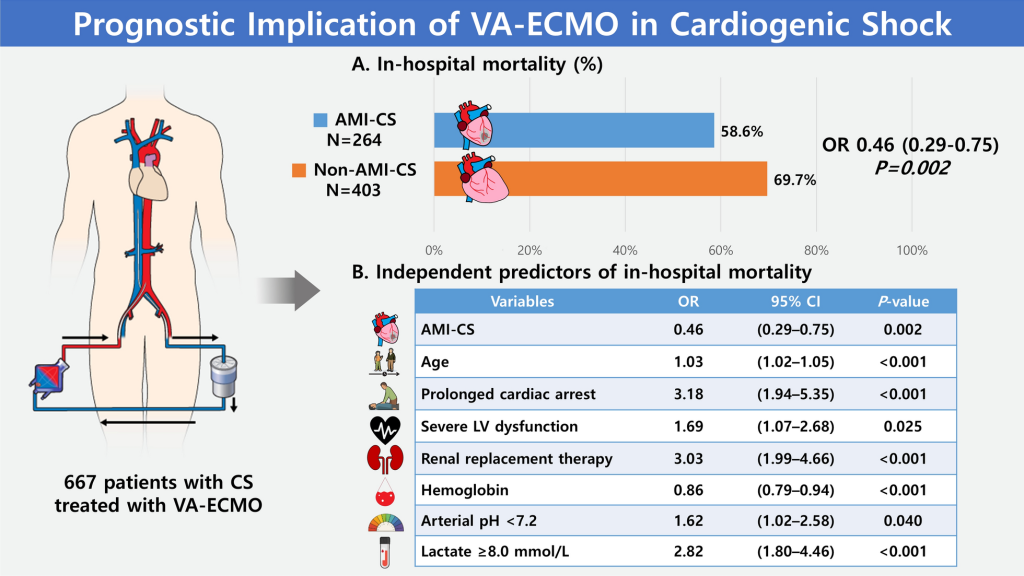
Prognostic implication of venoarterial extracorporeal membrane oxygenation in acute myocardial infarction-related cardiogenic shock

Summary This retrospective study aimed to evaluate clinical outcomes in patients receiving veno-arterial extracorporeal membrane oxygenation (VA-ECMO) for cardiogenic shock (CS), comparing acute myocardial infarction-related cardiogenic shock (AMI-CS) with non-AMI-CS. Analysis of data from 667 patients treated between 2008 and 2023 showed that AMI-CS was associated with significantly lower in-hospital mortality compared to non-AMI-CS. Independent

, , ,

Prognostic implication of venoarterial extracorporeal membrane oxygenation in acute myocardial infarction-related cardiogenic shock Read Post »

Cardiovascular

Intraoperative extracorporeal support for lung transplant: a systematic review and network meta-analysis

Abstract: Pettenuzzo et al. conducted a systematic review and network meta-analysis evaluating the efficacy and safety of intraoperative extracorporeal supports—veno-arterial extracorporeal membrane oxygenation (V-A ECMO) and cardiopulmonary bypass (CPB)—compared to off-pump strategies during lung transplantation (LT). Their analysis revealed that off-pump approaches generally offered better outcomes, while V-A ECMO, particularly as a default strategy, showed

, ,

Intraoperative extracorporeal support for lung transplant: a systematic review and network meta-analysis Read Post »

Uncategorized

Prognostic implication of venoarterial extracorporeal membrane oxygenation in acute myocardial infarction-related cardiogenic shock

Summary This retrospective study aimed to evaluate clinical outcomes in patients receiving veno-arterial extracorporeal membrane oxygenation (VA-ECMO) for cardiogenic shock (CS), comparing acute myocardial infarction-related cardiogenic shock (AMI-CS) with non-AMI-CS. Analysis of data from 667 patients treated between 2008 and 2023 showed that AMI-CS was associated with significantly lower in-hospital mortality compared to non-AMI-CS. Independent

Prognostic implication of venoarterial extracorporeal membrane oxygenation in acute myocardial infarction-related cardiogenic shock Read Post »

Circulatory, Respiratory

High-risk pulmonary embolism: the significance and perspectives of pulmonary reperfusion

Summary This editorial explores the current landscape of pulmonary reperfusion strategies in patients with high-risk pulmonary embolism (PE). It underscores the centrality of rapid hemodynamic stabilization and reperfusion in managing high-risk PE and analyzes recent data from a large target trial emulation by Stadlbauer et al. The authors conclude that while systemic thrombolysis (SYS) remains

,

High-risk pulmonary embolism: the significance and perspectives of pulmonary reperfusion Read Post »

Circulatory, Sepsis

Venoarterial extracorporeal membrane oxygenation to rescue sepsis-induced cardiogenic shock: a retrospective, multicentre, international cohort study

Summary   Background Patients with sepsis-induced cardiomyopathy with cardiogenic shock have a high mortality. This study assessed venoarterial extracorporeal membrane oxygenation (VA-ECMO) support for sepsis-induced cardiogenic shock refractory to conventional treatments. Methods In this retrospective, multicentre, international cohort study, we compared outcomes of 82 patients (aged ≥18 years) with septic shock who received VA-ECMO at

, , ,

Venoarterial extracorporeal membrane oxygenation to rescue sepsis-induced cardiogenic shock: a retrospective, multicentre, international cohort study Read Post »

Circulatory, Sepsis

Venoarterial extracorporeal membrane oxygenation to rescue sepsis-induced cardiogenic shock: a retrospective, multicentre, international cohort study

Summary Background Patients with sepsis-induced cardiomyopathy with cardiogenic shock have a high mortality. This study assessed venoarterial extracorporeal membrane oxygenation (VA-ECMO) support for sepsis-induced cardiogenic shock refractory to conventional treatments. Methods In this retrospective, multicentre, international cohort study, we compared outcomes of 82 patients (aged ≥18 years) with septic shock who received VA-ECMO at five

, , ,

Venoarterial extracorporeal membrane oxygenation to rescue sepsis-induced cardiogenic shock: a retrospective, multicentre, international cohort study Read Post »

Circulatory

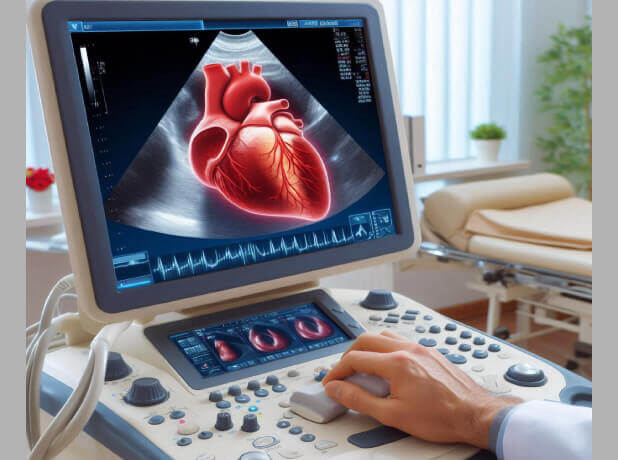
My echo checklist in venoarterial ECMO patients

Abstract Transthoracic echocardiography is an essential tool for the management of venoarterial extracorporeal membrane oxygenation (VA-ECMO). Its ease of access makes it ideally suited for routine daily bedside assessments, which are essential for adjusting ECMO flow, detecting ECMO-related complications, evaluating the need for venting devices, and monitoring patient recovery. If transthoracic imaging is not feasible

, ,

My echo checklist in venoarterial ECMO patients Read Post »

Scroll to Top