echocardiography

Respiratory

Echocardiography in the Ventilated Patient: What the Clinician Has to Know

Summary This review discusses echocardiographic evaluation in mechanically ventilated (MV) patients, highlighting the complex heart–lung interactions influenced by positive pressure ventilation, especially focusing on the right ventricle (RV). Echocardiography serves as a crucial bedside tool to assess RV dimensions, function, and response to mechanical ventilation. Given the challenges in assessing fluid responsiveness and diaphragmatic function […]

Echocardiography in the Ventilated Patient: What the Clinician Has to Know Read Post »

Miscellaneous

How we use ultrasound to support clinical decisions on fluid administration in critical ill patients

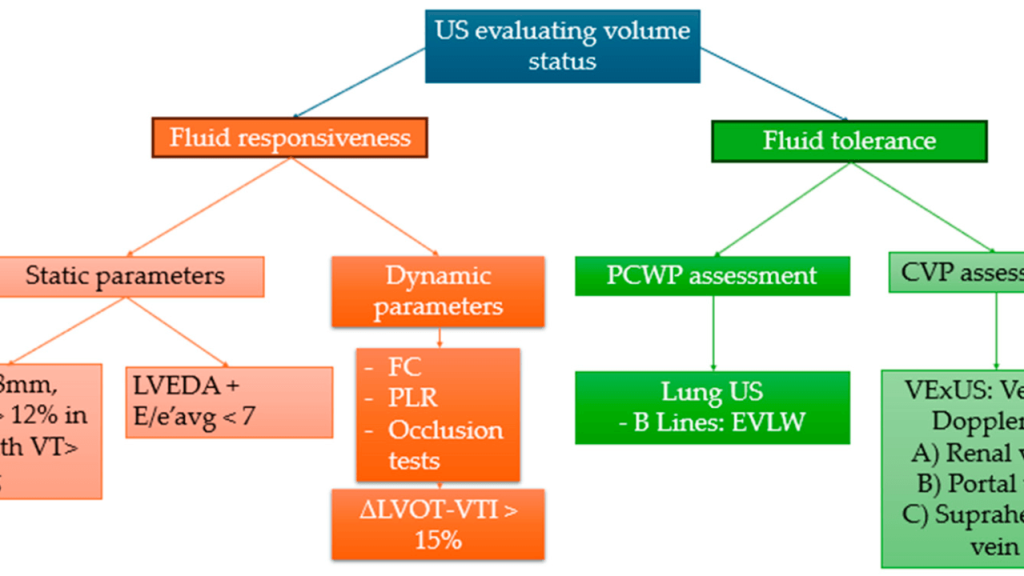
🩺 How Ultrasound Guides Fluid Administration in Critical Illness Abstract: Intravenous fluids are among the most frequently used therapies in critical care but must be considered drugs, carrying both benefits and risks. Critical care ultrasound (CCUS)—through echocardiography (CCE), lung ultrasound (LUS), and venous excess ultrasound (VExUS)—offers a structured way to assess the risks and benefits

, , ,

How we use ultrasound to support clinical decisions on fluid administration in critical ill patients Read Post »

Mechanical Ventilation, Miscellaneous

Echocardiography in the Ventilated Patient: What the Clinician Has to Know

Abstract Heart and lung sharing the same anatomical space are influenced by each other. Spontaneous breathing induces dynamic changes in intrathoracic pressure, impacting cardiac function, particularly the right ventricle. In intensive care units (ICU), mechanical ventilation (MV) and therefore positive end-expiratory pressure (PEEP) are often applied, and this inevitably influences cardiac function. In ventilated patients,

, , , , , ,

Echocardiography in the Ventilated Patient: What the Clinician Has to Know Read Post »

Circulatory

My echo checklist in venoarterial ECMO patients

Abstract Transthoracic echocardiography is an essential tool for the management of venoarterial extracorporeal membrane oxygenation (VA-ECMO). Its ease of access makes it ideally suited for routine daily bedside assessments, which are essential for adjusting ECMO flow, detecting ECMO-related complications, evaluating the need for venting devices, and monitoring patient recovery. If transthoracic imaging is not feasible

, ,

My echo checklist in venoarterial ECMO patients Read Post »

Scroll to Top