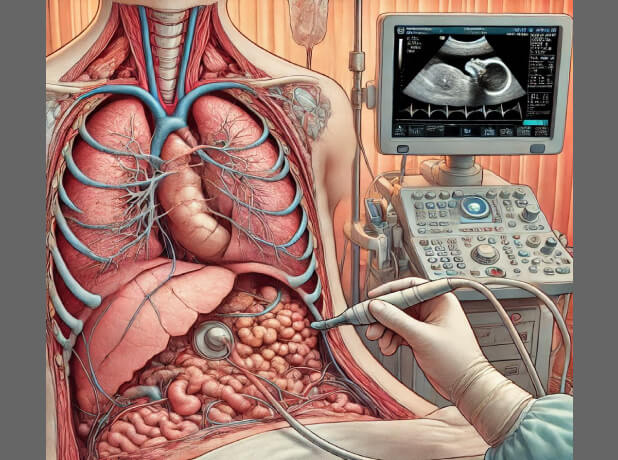
ultrasound

Cardiovascular

The role of serial point-of-care ultrasound during cardiac arrest to predict termination of resuscitation

Summary This prospective cohort study evaluated the utility of serial point-of-care ultrasound (POCUS) during cardiopulmonary resuscitation (CPR) to determine optimal timing for terminating resuscitation efforts in patients presenting with non-shockable cardiac arrest rhythms. Conducted in two academic hospitals, serial ultrasounds every two minutes were used to measure cardiac standstill duration and predict return of spontaneous […]

, , ,

The role of serial point-of-care ultrasound during cardiac arrest to predict termination of resuscitation Read Post »

Miscellaneous, Uncategorized

Demystifying Volume Status

Summary Accurate evaluation of patient volume status is crucial yet challenging, impacting critical decisions on fluid management and vasoactive therapies. Traditional clinical methods often lack precision due to complexities in fluid distribution and homeostasis. This review provides a structured physiologic framework leveraging point-of-care ultrasound (POCUS) to assess volume status comprehensively. It emphasizes integrating central venous

,

Demystifying Volume Status Read Post »

Miscellaneous

How we use ultrasound to support clinical decisions on fluid administration in critical ill patients

🩺 How Ultrasound Guides Fluid Administration in Critical Illness Abstract: Intravenous fluids are among the most frequently used therapies in critical care but must be considered drugs, carrying both benefits and risks. Critical care ultrasound (CCUS)—through echocardiography (CCE), lung ultrasound (LUS), and venous excess ultrasound (VExUS)—offers a structured way to assess the risks and benefits

, , ,

How we use ultrasound to support clinical decisions on fluid administration in critical ill patients Read Post »

Respiratory

Advancements in imaging techniques for monitoring the respiratory muscles

Summary of “Advancements in Imaging Techniques for Monitoring the Respiratory Muscles” Abstract Respiratory muscle dysfunction is a significant issue in critically ill patients, affecting weaning from mechanical ventilation and overall outcomes. This review explores emerging imaging techniques for assessing respiratory muscles, including ultrasound-based methods such as speckle tracking, tissue Doppler imaging, and shear wave elastography.

, , ,

Advancements in imaging techniques for monitoring the respiratory muscles Read Post »

Miscellaneous

Assessing fluid responsiveness with ultrasound in the neonatal intensive care setting: the mini-fluid challenge

Abstract The mini-fluid challenge (MFC) can guide individualised fluid therapy and prevent fluid overload and associated morbidity in adult intensive care patients. This ultrasound test is based on the Frank-Starling principles to assess dynamic fluid responsiveness, but limited MFC data exists for newborns. This brief report describes the feasibility of the MFC in 12 preterm infants

, , ,

Assessing fluid responsiveness with ultrasound in the neonatal intensive care setting: the mini-fluid challenge Read Post »

Mechanical Ventilation, Miscellaneous

How we use ultrasound in the management of weaning from mechanical ventilation

Difficult weaning from invasive mechanical ventilation is associated with adverse clinical outcome and increased use of limited health care resources. Difficult weaning, characterized by failure of multiple spontaneous breathing trails (SBTs), can result from several causes, including impaired function of lung, heart, and respiratory pump [1]. In this editorial, we discuss how ultrasound may facilitate

, , ,

How we use ultrasound in the management of weaning from mechanical ventilation Read Post »

Miscellaneous

How I perform diaphragmatic ultrasound in the intensive care unit

The diaphragm is a thin, dome-shaped muscle, compris-ing a costal and crural part, and a non-contracting central tendon. Muscle fiber activation shortens and thickens the diaphragm in the zone of apposition, moving the dome caudally. Diaphragm function, defined as the ability to contract and generate pressure, has substantial reserve capacity. However, clinically significant diaphragm weak-ness,

,

How I perform diaphragmatic ultrasound in the intensive care unit Read Post »

Miscellaneous

Left diaphragmatic ultrasound in the intensive care unit: practical considerations and alternative approaches

We read with great interest the recent article by Her-mans et al. on diaphragmatic ultrasound, which provides a detailed guide on both methodology and clinical appli-cations [1]. This article has significantly enhanced our understanding of diaphragmatic ultrasound, especially for its application in intensive care unit (ICU) [2]. We would like to offer some additional considerations

,

Left diaphragmatic ultrasound in the intensive care unit: practical considerations and alternative approaches Read Post »

Scroll to Top