ventilation strategies

Mechanical Ventilation

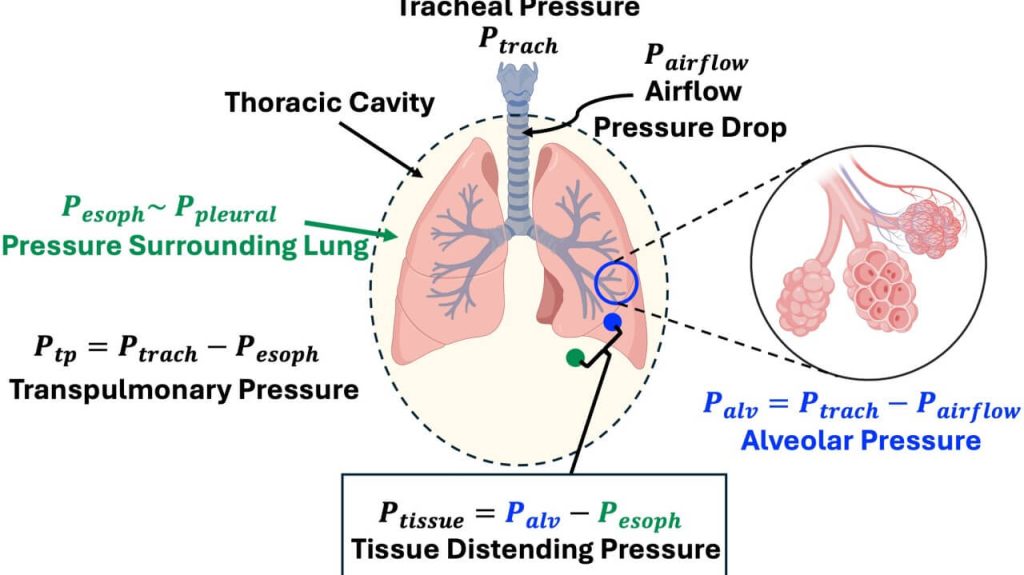
Individualized Lung-Protective Ventilation Strategy Based on Esophageal Pressure Monitoring in Patients With ARDS Associated With Severe Acute….

Summary This randomized controlled trial investigated the effectiveness of an individualized lung-protective ventilation strategy guided by esophageal pressure (Pes) monitoring compared to conventional ventilation in patients with acute respiratory distress syndrome (ARDS) secondary to severe acute pancreatitis (SAP). The individualized Pes-guided strategy significantly improved respiratory mechanics, oxygenation, and clinical outcomes, demonstrating reduced transpulmonary driving pressure, […]

, , , ,

Individualized Lung-Protective Ventilation Strategy Based on Esophageal Pressure Monitoring in Patients With ARDS Associated With Severe Acute…. Read Post »

Respiratory

Driving pressure vs. oxygenation-based PEEP titration strategies in ARDS patients: a physiological study

Summary This prospective observational study compared the physiological effects of three different positive end-expiratory pressure (PEEP) titration strategies in patients with acute respiratory distress syndrome (ARDS): a driving pressure-based clinical approach, an empirical oxygenation-based method (high PEEP/FiO₂ table), and fixed PEEP levels (5 or 15 cmH₂O) determined by ARDS severity. Findings revealed that clinical titration

, ,

Driving pressure vs. oxygenation-based PEEP titration strategies in ARDS patients: a physiological study Read Post »

Mechanical Ventilation

Mechanical ventilation energy analysis: Recruitment focuses injurious power in the ventilated lung

Abstract The progression of acute respiratory distress syndrome (ARDS) from its onset due to disease or trauma to either recovery or death is poorly understood. Currently, there are no generally accepted treatments aside from supportive care using mechanical ventilation. However, this can lead to ventilator-induced lung injury (VILI), which contributes to a 30 to 40%

, , ,

Mechanical ventilation energy analysis: Recruitment focuses injurious power in the ventilated lung Read Post »

Mechanical Ventilation

Inconsistent Methods Used to Set Airway Pressure Release Ventilation in ARDS: A Systematic Review and Meta-Regression Analysis

Abstract Airway pressure release ventilation (APRV) is a protective mechanical ventilation mode for patients with acute respiratory distress syndrome (ARDS) that theoretically may reduce ventilator-induced lung injury (VILI) and ARDS-related mortality. However, there is no standard method to set and adjust the APRV mode shown to be optimal. Therefore, we performed a meta-regression analysis to

, , , ,

Inconsistent Methods Used to Set Airway Pressure Release Ventilation in ARDS: A Systematic Review and Meta-Regression Analysis Read Post »

Respiratory

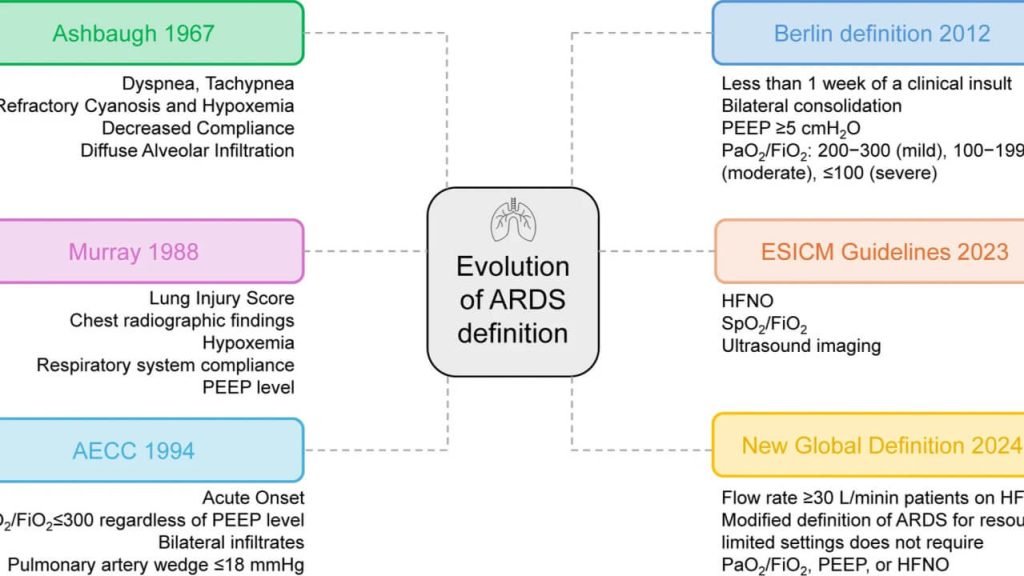
A narrative review on the future of ARDS: evolving definitions, pathophysiology, and tailored management

Abstract Acute respiratory distress syndrome (ARDS) is a severe complication of critical illness, characterized by bilateral lung infiltrates and hypoxemia. Its clinical and pathophysiological heterogeneity poses challenges for both diagnosis and treatment. This review outlines the evolution of ARDS definitions, discusses the underlying pathophysiology of ARDS, and examines the clinical implications of its heterogeneity. Traditional

,

A narrative review on the future of ARDS: evolving definitions, pathophysiology, and tailored management Read Post »

Scroll to Top