ventilation

Mechanical Ventilation

Inconsistent Methods Used to Set Airway Pressure Release Ventilation in ARDS: A Systematic Review and Meta-Regression Analysis

Abstract Airway pressure release ventilation (APRV) is a protective mechanical ventilation mode for patients with acute respiratory distress syndrome (ARDS) that theoretically may reduce ventilator-induced lung injury (VILI) and ARDS-related mortality. However, there is no standard method to set and adjust the APRV mode shown to be optimal. Therefore, we performed a meta-regression analysis to […]
, , , ,

Inconsistent Methods Used to Set Airway Pressure Release Ventilation in ARDS: A Systematic Review and Meta-Regression Analysis Read Post »

Mechanical Ventilation

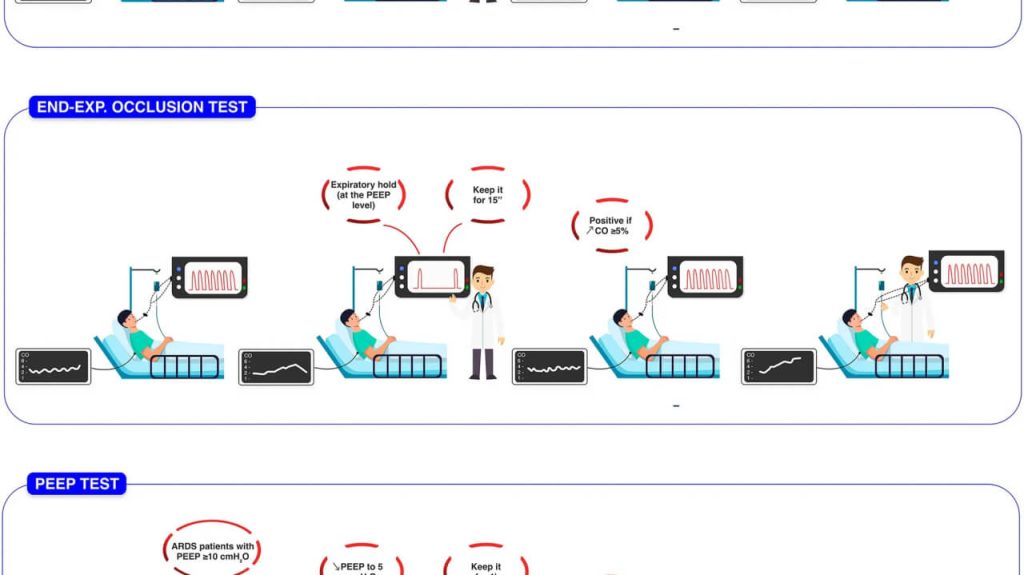
Using the ventilator to predict fluid responsiveness

During acute circulatory failure, infusing fluids as first line therapy is the source of a therapeutic dilemma [increase in cardiac output (CO) and improvement of tissue perfusion vs. inconsistent effectiveness and risk of fluid accumulation]. Predicting effectiveness of a fluid bolus on CO before infusing it avoids administering fluid to patients who do not require

, ,

Using the ventilator to predict fluid responsiveness Read Post »

Circulatory, Mechanical Ventilation, Pharmacological Insights in Critical Care

Ventilation and Oxygenation During and After Adult Cardiopulmonary Resuscitation: Changing Paradigms

Abstract Cardiac arrest (CA) remains a major cause of death despite advancements in cardiopulmonary resuscitation (CPR), post-resuscitation care, and international efforts to develop evidence-based guidelines. Effectively managing ventilation and oxygenation during and after CPR is vital for patient survival and neurological outcomes, yet it remains a challenging task. This review examines current strategies for ventilation

, , ,

Ventilation and Oxygenation During and After Adult Cardiopulmonary Resuscitation: Changing Paradigms Read Post »

Mechanical Ventilation

Predictors of weaning failure in ventilated intensive care patients: a systematic evidence map

Abstract Background Ventilator weaning is of great importance for intensive care patients in order to avoid complications caused by prolonged ventilation. However, not all patients succeed in weaning immediately. Their spontaneous breathing may be insufficient, resulting in extubation failure and the subsequent need for reintubation. To identify patients at high risk for weaning failure, a

, , ,

Predictors of weaning failure in ventilated intensive care patients: a systematic evidence map Read Post »

Scroll to Top