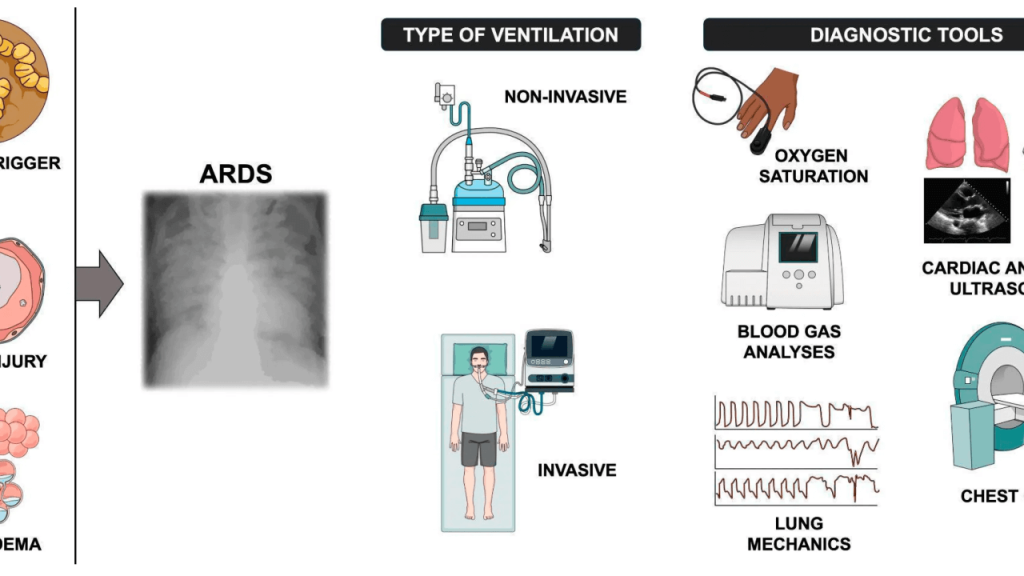
ARDS

Respiratory

Old and New Definitions of Acute Respiratory Distress Syndrome (ARDS): An Overview of Practical Considerations and Clinical Implications

Should ARDS definitions include HFNC/NIV and SpO₂/FiO₂—without overdiagnosing? Abstract: This narrative review contrasts the 2012 Berlin definition with newer proposals—including the Kigali modification and the emerging global definition—that broaden ARDS diagnosis to patients on HFNC/NIV, allow SpO₂/FiO₂ surrogates, and consider lung ultrasound (LUS) where ABGs or CXR/CT are limited; the authors welcome earlier recognition but […]

,

Old and New Definitions of Acute Respiratory Distress Syndrome (ARDS): An Overview of Practical Considerations and Clinical Implications Read Post »

Mechanical Ventilation

Individualized Lung-Protective Ventilation Strategy Based on Esophageal Pressure Monitoring in Patients With ARDS Associated With Severe Acute….

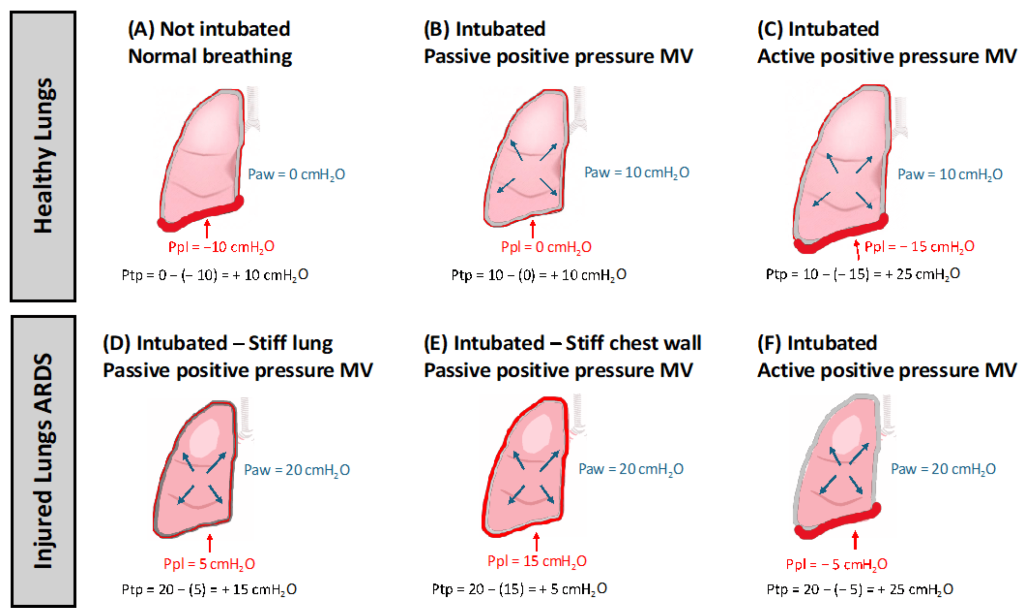
Summary This randomized controlled trial investigated the effectiveness of an individualized lung-protective ventilation strategy guided by esophageal pressure (Pes) monitoring compared to conventional ventilation in patients with acute respiratory distress syndrome (ARDS) secondary to severe acute pancreatitis (SAP). The individualized Pes-guided strategy significantly improved respiratory mechanics, oxygenation, and clinical outcomes, demonstrating reduced transpulmonary driving pressure,

, , , ,

Individualized Lung-Protective Ventilation Strategy Based on Esophageal Pressure Monitoring in Patients With ARDS Associated With Severe Acute…. Read Post »

Cardiovascular, Respiratory

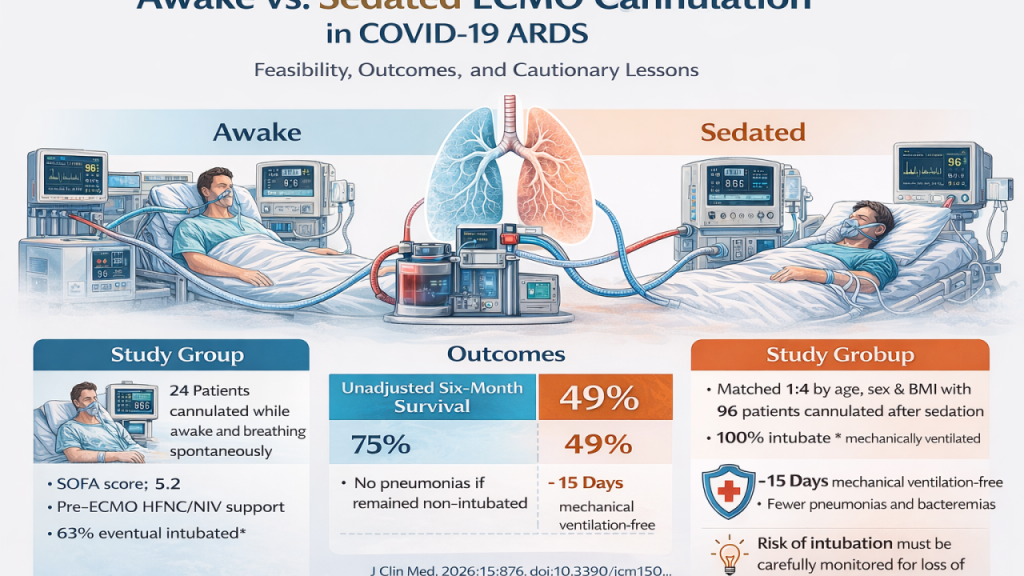
Awake vs. Sedated Cannulation for Extra-Corporeal Membrane Oxygenation in Patients with COVID-19 Induced Acute Respiratory Distress Syndrome

Why this article matters   Veno-venous extracorporeal membrane oxygenation (VV-ECMO) is routinely initiated in patients with severe ARDS after intubation, deep sedation, and often neuromuscular blockade. During the COVID-19 pandemic, however, some centers explored an alternative strategy: awake ECMO cannulation, in which patients are cannulated while spontaneously breathing and supported without invasive mechanical ventilation. The

, , , ,

Awake vs. Sedated Cannulation for Extra-Corporeal Membrane Oxygenation in Patients with COVID-19 Induced Acute Respiratory Distress Syndrome Read Post »

Respiratory

Driving pressure vs. oxygenation-based PEEP titration strategies in ARDS patients: a physiological study

Summary This prospective observational study compared the physiological effects of three different positive end-expiratory pressure (PEEP) titration strategies in patients with acute respiratory distress syndrome (ARDS): a driving pressure-based clinical approach, an empirical oxygenation-based method (high PEEP/FiO₂ table), and fixed PEEP levels (5 or 15 cmH₂O) determined by ARDS severity. Findings revealed that clinical titration

, ,

Driving pressure vs. oxygenation-based PEEP titration strategies in ARDS patients: a physiological study Read Post »

Mechanical Ventilation, Respiratory

Revisiting Acute Respiratory Distress Syndrome ventilation management: Time for a paradigm shift focusing on tidal volume

Abstract: Merola and colleagues critically evaluate current Acute Respiratory Distress Syndrome (ARDS) ventilation strategies, emphasizing limitations inherent in universally applying low tidal volume (VT) strategies. They argue for personalized, physiology-driven ventilation approaches that incorporate mechanical power, compliance, and transpulmonary pressures. The authors highlight the complexity and heterogeneity of ARDS, suggesting the inadequacy of global parameters

, , , ,

Revisiting Acute Respiratory Distress Syndrome ventilation management: Time for a paradigm shift focusing on tidal volume Read Post »

Pulmonary

Pulmonary shunt in critical care: a practical approach with clinical scenarios

Abstract: Raimondi Cominesi et al. deliver an extensive review on pulmonary shunt, a critical physiological phenomenon where venous blood bypasses alveolar gas exchange, leading to impaired oxygenation. The authors provide practical methods to assess and calculate pulmonary shunt in various critical care scenarios, highlighting its clinical importance, especially in complex conditions such as acute respiratory

,

Pulmonary shunt in critical care: a practical approach with clinical scenarios Read Post »

Respiratory

Factors influencing the transition phase in acute respiratory distress syndrome: an observational cohort study

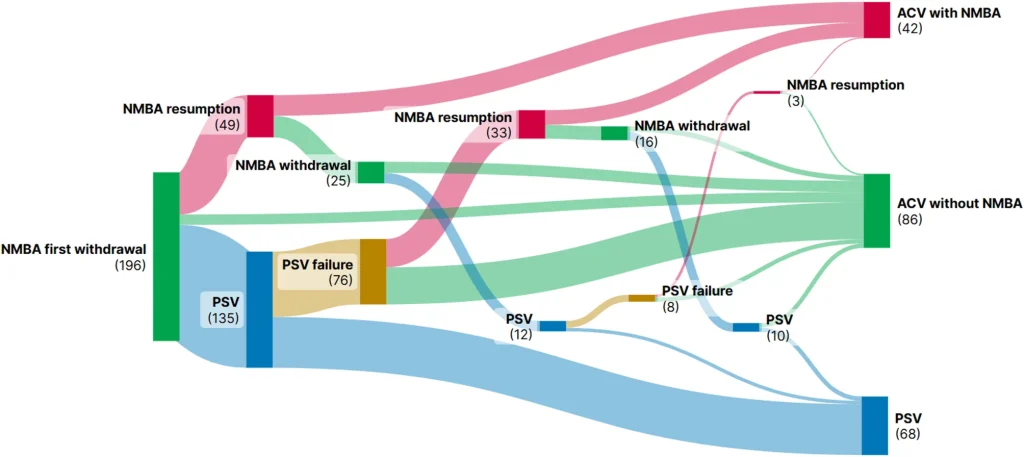
🫁 Transition Phase in ARDS: Predictors of NMBA and PSV Failure Abstract: Protective ventilation and liberation strategies in ARDS are well established, but the transition phase—between stopping neuromuscular blockade (NMBA) and initiating assisted ventilation—remains poorly defined. This bicentric cohort study (n=196) evaluated predictors of NMBA weaning failure and pressure support ventilation (PSV) failure, focusing on

,

Factors influencing the transition phase in acute respiratory distress syndrome: an observational cohort study Read Post »

Respiratory, Uncategorized

Imaging and pulmonary function techniques in ARDS diagnosis and management: current insights and challenges

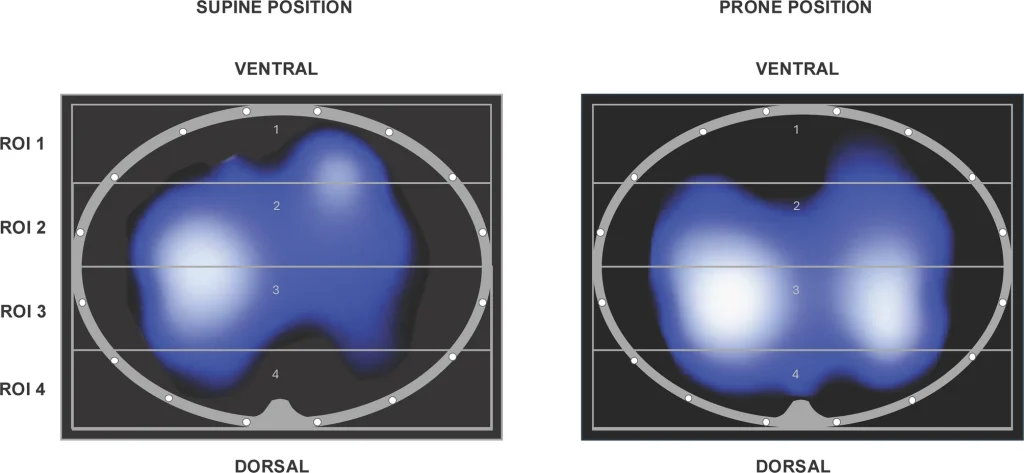
🫁 Are CT, LUS, and EIT the missing link to truly personalized ARDS care? Abstract: This narrative review argues that integrating chest CT, lung ultrasound (LUS), and electrical impedance tomography (EIT) with key physiology (compliance, driving pressure, transpulmonary pressure, mechanical power) can sharpen ARDS diagnosis and enable more individualized ventilation. The authors endorse a tiered

,

Imaging and pulmonary function techniques in ARDS diagnosis and management: current insights and challenges Read Post »

Miscellaneous

Macrophage pyroptosis and its crucial role in ALI/ARDS

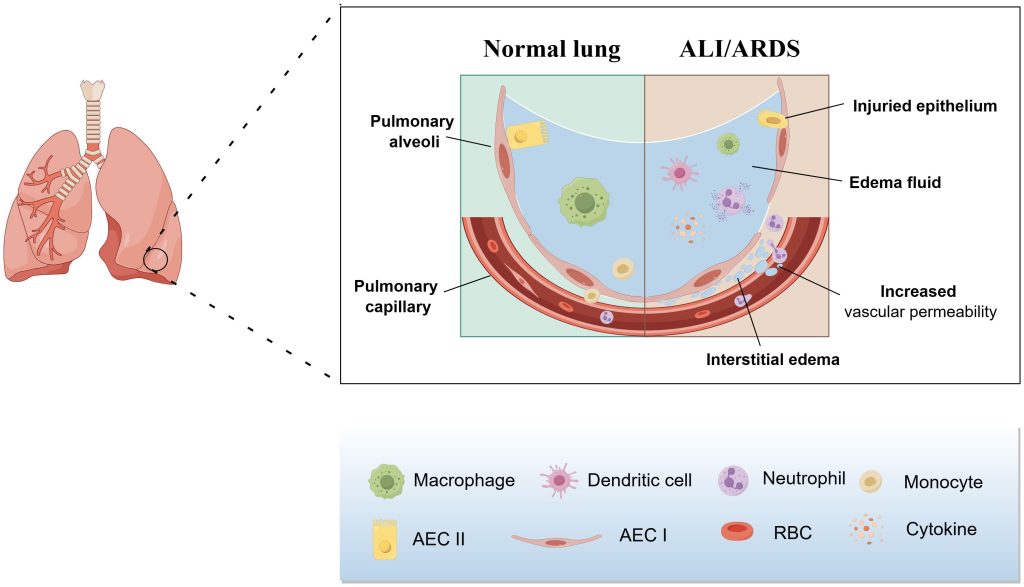
Summary: “Macrophage Pyroptosis and its Crucial Role in ALI/ARDS” Abstract Summary: This comprehensive review explores macrophage pyroptosis, a specific form of programmed cell death, and its pivotal role in the pathogenesis of acute lung injury (ALI) and acute respiratory distress syndrome (ARDS). Highlighting complex molecular pathways and inflammasome activation mechanisms, the authors detail the relationship

,

Macrophage pyroptosis and its crucial role in ALI/ARDS Read Post »

Pulmonary

Ventilator-Induced Lung Injury: The Unseen Challenge in Acute Respiratory Distress Syndrome Management

Summary of “Ventilator-Induced Lung Injury: The Unseen Challenge in Acute Respiratory Distress Syndrome Management” (Merola et al.) Abstract Summary: Merola et al. comprehensively review ventilator-induced lung injury (VILI) within acute respiratory distress syndrome (ARDS) management, underscoring the complex interplay of pathophysiological mechanisms. The authors discuss traditional and emerging concepts such as volutrauma, barotrauma, atelectrauma, biotrauma,

,

Ventilator-Induced Lung Injury: The Unseen Challenge in Acute Respiratory Distress Syndrome Management Read Post »

Scroll to Top