Ventilator-Induced Lung Injury (VILI)

Pulmonary

Ventilator-Induced Lung Injury: The Unseen Challenge in Acute Respiratory Distress Syndrome Management

Summary of “Ventilator-Induced Lung Injury: The Unseen Challenge in Acute Respiratory Distress Syndrome Management” (Merola et al.) Abstract Summary: Merola et al. comprehensively review ventilator-induced lung injury (VILI) within acute respiratory distress syndrome (ARDS) management, underscoring the complex interplay of pathophysiological mechanisms. The authors discuss traditional and emerging concepts such as volutrauma, barotrauma, atelectrauma, biotrauma, […]

,

Ventilator-Induced Lung Injury: The Unseen Challenge in Acute Respiratory Distress Syndrome Management Read Post »

Respiratory

Understanding Pulmonary Stress-Strain Relationships in Severe ARDS and Its Implications for Designing a Safer Approach to Setting the Ventilator

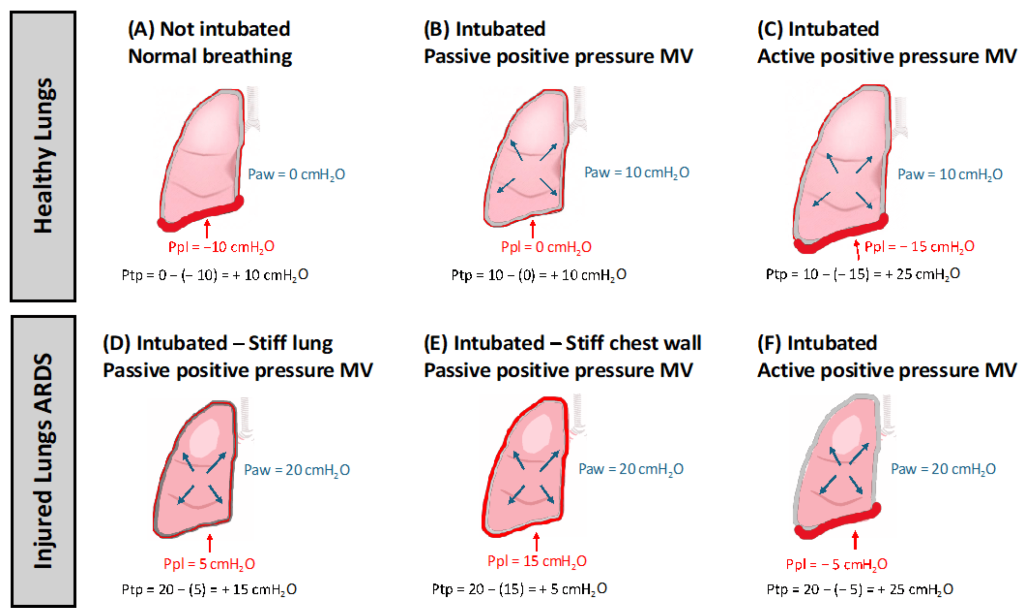
Abstract This review describes the current understanding of the lungs’ response to deforming stress under conditions of both normal physiology and acute lung injury. Several limiting assumptions are needed to infer lung parenchymal stress and strain from airway pressure, volume, and flow data from mechanically ventilated patients with injured lungs. These assumptions include the effects

, , ,

Understanding Pulmonary Stress-Strain Relationships in Severe ARDS and Its Implications for Designing a Safer Approach to Setting the Ventilator Read Post »

Respiratory

Understanding ventilator-induced lung injury: The role of mechanical power

Abstract Mechanical ventilation stands as a life-saving intervention in the management of respiratory failure. However, it carries the risk of ventilator-induced lung injury. Despite the adoption of lung-protective ventilation strategies, including lower tidal volumes and pressure limitations, mortality rates remain high, leaving room for innovative approaches. The concept of mechanical power has emerged as a

, , , ,

Understanding ventilator-induced lung injury: The role of mechanical power Read Post »

Mechanical Ventilation

Ventilator induced lung injury: a case for a larger umbrella?

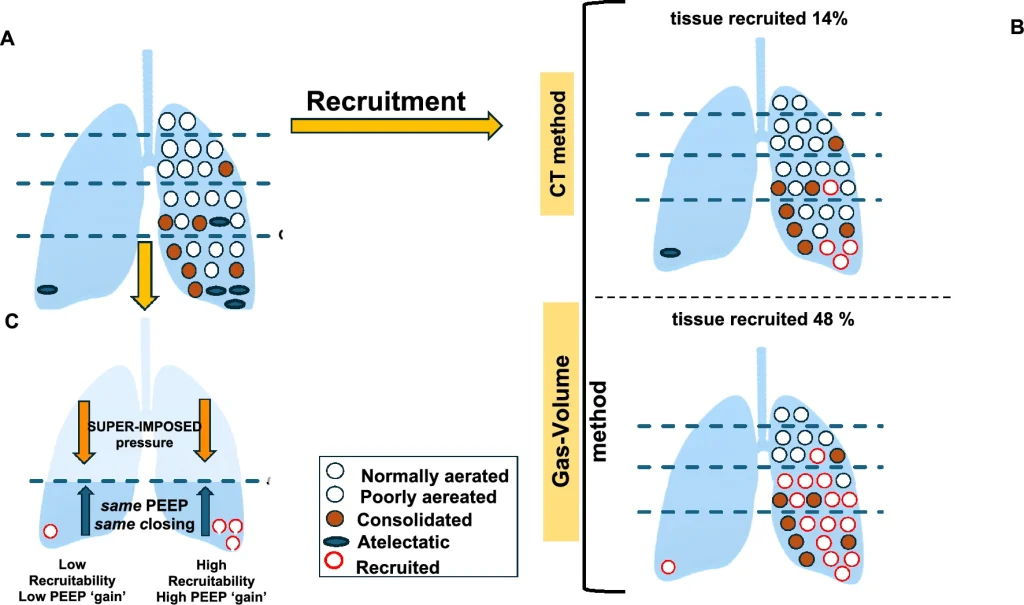
Summary of “Assessing lung recruitability: does it help with PEEP settings?” This editorial examines the relationship between lung recruitability and the selection of positive end-expiratory pressure (PEEP) settings in acute respiratory distress syndrome (ARDS) management. While recruitability measures the potential to reinflate atelectatic lung regions, PEEP must prevent their collapse while considering additional factors like

, , , , , , , , , , , , , ,

Ventilator induced lung injury: a case for a larger umbrella? Read Post »

Scroll to Top