March 2026

Sepsis

Healthcare costs after sepsis: a systematic review

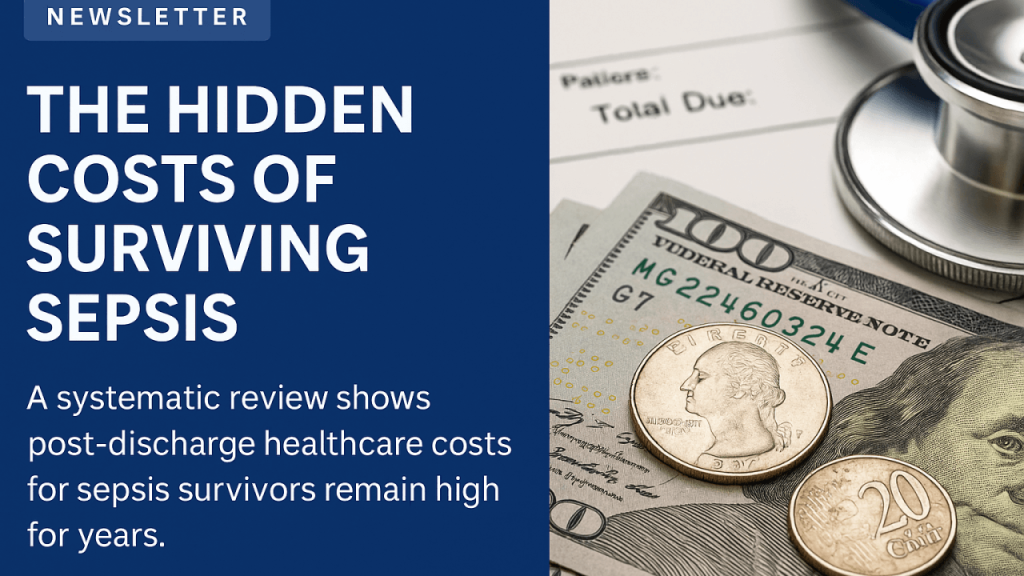
Abstract: This systematic review of 23 studies (2000–2025) examined healthcare costs among adult sepsis survivors in developed nations. While in-hospital sepsis costs are well described, this review reveals that post-discharge healthcare costs remain high for years. Median one-year cost per survivor was $28,719 (IQR $21,715), with second-year costs still averaging $22,460 (IQR $14,407). Median cost […]

, ,

Healthcare costs after sepsis: a systematic review Read Post »

Miscellaneous

Exercise in patients with a tracheostomy and speaking valve: a randomised crossover-controlled trial

Can Patients Safely Exercise With a Speaking Valve in Place? Abstract: This randomized crossover-controlled study evaluated 20 ICU patients with tracheostomies performing in-bed cycle ergometry with versus without a speaking valve (SV). Safety was assessed via lung aeration using electrical impedance tomography (EIT), vital signs, and patient experience. Key Insights: Safety: No adverse events occurred

,

Exercise in patients with a tracheostomy and speaking valve: a randomised crossover-controlled trial Read Post »

Respiratory

Demographics and outcome of Legionella pneumonia in the intensive care unit: a retrospective multicenter cohort study

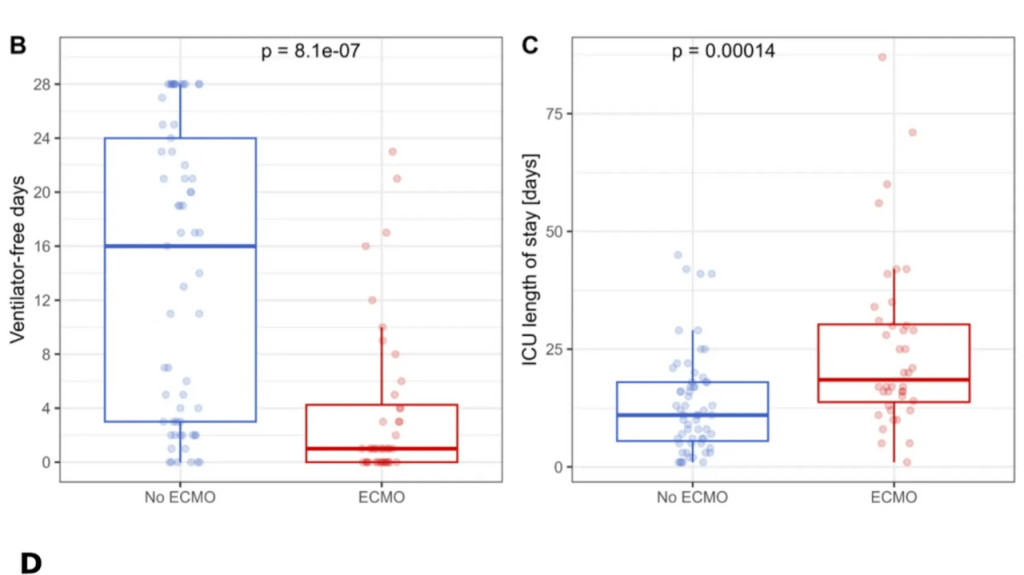
Legionella Pneumonia in the ICU: Does ECMO Improve Outcomes? Abstract: This multicenter, retrospective cohort study (Zurich, Hannover, Bonn; 2013–2023) evaluated 110 ICU patients with Legionella pneumonia (LP). Severe LP frequently progressed to ARDS and multiorgan failure; 40% required ECMO. Despite greater severity (SOFA 12 vs 9), ECMO patients had similar 28-day mortality (25% vs 21%)

,

Demographics and outcome of Legionella pneumonia in the intensive care unit: a retrospective multicenter cohort study Read Post »

Pulmonary

Non-mechanical haemodynamic support in acute pulmonary thromboembolism: a scoping review

Abstract: This scoping review maps all non-mechanical haemodynamic support used in acute pulmonary embolism (PE) while definitive clot-reducing therapy is pursued. Across animal studies, case series, observational cohorts, trials, and reviews, the authors catalogue vasopressors, inotropes, fluids, and pulmonary vasodilators. Evidence is heterogeneous and mostly low-quality; some agents improve physiological surrogates (CO, PVR, RV function),

Non-mechanical haemodynamic support in acute pulmonary thromboembolism: a scoping review Read Post »

Circulatory

A simple VA-ECMO bundle in adult patients with cardiogenic shock: an analysis of ELSO registry

Abstract This registry-based cohort study of 7,950 adult patients with cardiogenic shock supported with VA-ECMO reveals that achieving a simple physiological bundle within the first 24 hours—Mean Arterial Pressure >65 mmHg, PaO₂ between 60–150 mmHg, limiting PaCO₂ reduction to > −50%, and Peak Inspiratory Pressure <30 cm H₂O—was associated with significantly higher survival to hospital

,

A simple VA-ECMO bundle in adult patients with cardiogenic shock: an analysis of ELSO registry Read Post »

Respiratory

Old and New Definitions of Acute Respiratory Distress Syndrome (ARDS): An Overview of Practical Considerations and Clinical Implications

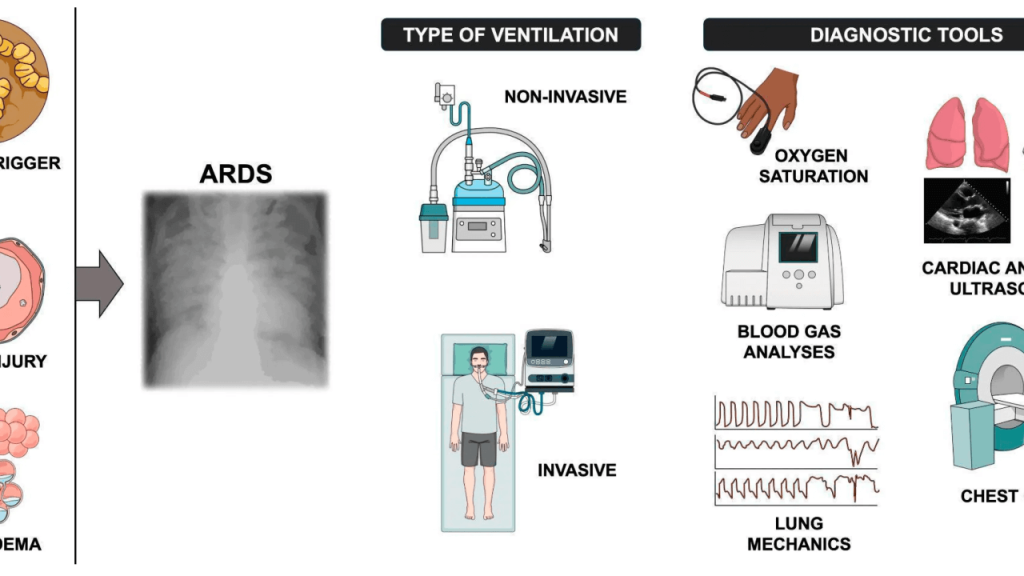
Should ARDS definitions include HFNC/NIV and SpO₂/FiO₂—without overdiagnosing? Abstract: This narrative review contrasts the 2012 Berlin definition with newer proposals—including the Kigali modification and the emerging global definition—that broaden ARDS diagnosis to patients on HFNC/NIV, allow SpO₂/FiO₂ surrogates, and consider lung ultrasound (LUS) where ABGs or CXR/CT are limited; the authors welcome earlier recognition but

,

Old and New Definitions of Acute Respiratory Distress Syndrome (ARDS): An Overview of Practical Considerations and Clinical Implications Read Post »

Miscellaneous

Extracellular vesicles from bronchoalveolar lavage fluid provide insights into the inhaled corticosteroids treatment response in COPD

Abstract In a comprehensive proteomic analysis of sputum from patients in the WISDOM trial, Fang et al. identified cystatin SN (CST1) as a promising biomarker linked to better responses to inhaled corticosteroids (ICS) in COPD. Elevated CST1 levels—along with other related proteins—were consistently associated with reduced exacerbations and improved outcomes, particularly in patients with higher

, ,

Extracellular vesicles from bronchoalveolar lavage fluid provide insights into the inhaled corticosteroids treatment response in COPD Read Post »

Respiratory

Association of Breathing Effort With Survival in Patients With Acute Respiratory Distress Syndrome

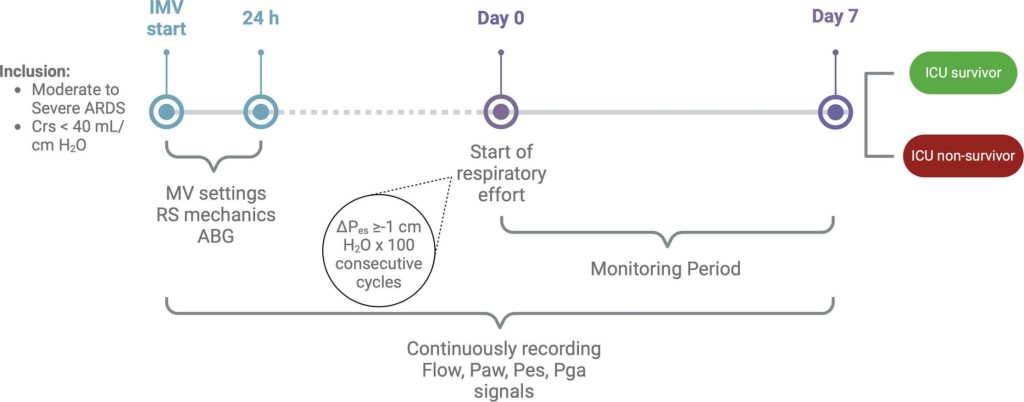
Abstract This multicenter prospective cohort study investigated whether breathing effort, estimated by esophageal pressure swing (ΔPes), is associated with survival in adults with acute hypoxemic respiratory failure (AHRF) receiving noninvasive respiratory support (NRS). Across 12 ICUs in Italy, 180 patients were enrolled. The study found that higher breathing effort—particularly ΔPes >10 cmH₂O—was independently associated with

,

Association of Breathing Effort With Survival in Patients With Acute Respiratory Distress Syndrome Read Post »

Mechanical Ventilation

Effect of Automated Closed-loop ventilation versus conventional Ventilation on duration and quality of ventilation in critically ill patients (ACTiVE)

Abstract The MVENT trial is a multicentre, assessor-blinded, parallel-group pilot RCT designed to compare a “minimal ventilation” strategy—daily one-hour spontaneous breathing trials (SBT) with minimal pressure support or CPAP—versus usual care in critically ill adults mechanically ventilated for ≥24 hours. The hypothesis is that minimal support SBTs may better assess readiness for extubation, avoid over-assistance,

,

Effect of Automated Closed-loop ventilation versus conventional Ventilation on duration and quality of ventilation in critically ill patients (ACTiVE) Read Post »

Circulatory

Mixed Cardiogenic-Vasodilatory Shock: Current Insights and Future Directions

Abstract This state-of-the-art review defines mixed cardiogenic–vasodilatory shock as overt hypotension with end-organ hypoperfusion arising from the combination of acute cardiac insufficiency (low cardiac output) and inappropriate systemic vasodilation, typically with normal or elevated filling pressures; it introduces a pragmatic three-group classification (cardiogenic-vasodilatory, vasodilatory-cardiogenic, and primary mixed shock), emphasizes invasive hemodynamic monitoring, and outlines management

, , ,

Mixed Cardiogenic-Vasodilatory Shock: Current Insights and Future Directions Read Post »

Scroll to Top