Intensive care unit

Miscellaneous

Consensus recommendations for the integration of critical care pharmacists on intensive care unit teams: Endorsed by the American Association of……

Summary This article presents consensus recommendations developed to optimize the integration of critical care pharmacists (CCPs) within multidisciplinary intensive care unit (ICU) teams. Recognizing the proven benefits of CCPs, including improved patient outcomes and enhanced medication safety, the recommendations focus on standards, infrastructure, and best practices for implementing CCPs effectively. Developed using a modified Delphi […]

,

Consensus recommendations for the integration of critical care pharmacists on intensive care unit teams: Endorsed by the American Association of…… Read Post »

Miscellaneous

Strategies for adapting under pressure: an interview study in intensive care units

Abstract Background Healthcare systems are operating under substantial pressures. Clinicians and managers are constantly having to make adaptations, which are typically improvised, highly variable and not coordinated across teams. This study aimed to identify and describe the types of everyday pressures in intensive care and the adaptive strategies staff use to respond, with the longer-term aim

,

Strategies for adapting under pressure: an interview study in intensive care units Read Post »

Miscellaneous

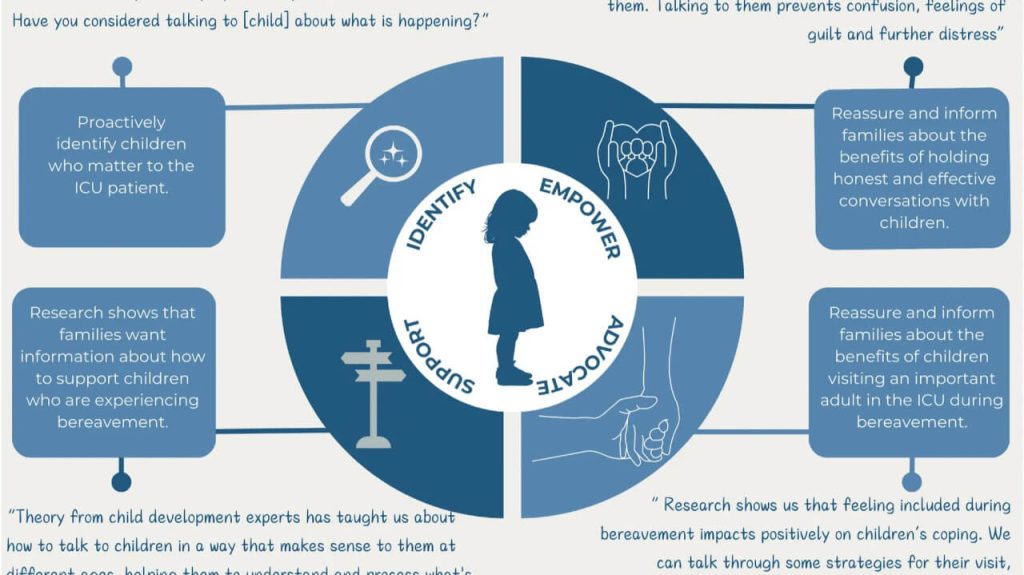
Supporting the bereaved child in the adult ICU: a narrative review

Abstract Childhood bereavement is a significant issue globally, affecting millions of children each year, with incidence rates significantly increasing following the COVID-19 pandemic. The loss of an important adult, particularly in the ICU environment, can lead to lasting psychological and behavioural challenges for children. While family-centred practices in the ICU have advanced, the unique bereavement

, , ,

Supporting the bereaved child in the adult ICU: a narrative review Read Post »

Pharmacological Insights in Critical Care

Are contemporary antifungal doses sufficient for critically ill patients? Outcomes from an international, multicenter pharmacokinetics study for Screening Antifungal Exposure in Intensive Care Units—the SAFE-ICU study

Abstract Purpose Appropriate antifungal therapy is a major determinant of survival in critically ill patients with invasive fungal disease. We sought to describe whether contemporary dosing of antifungals achieves therapeutic exposures in critically ill patients. Methods In a prospective, open-label, multicenter pharmacokinetic study, intensive care unit (ICU) patients prescribed azoles, echinocandins, or polyene antifungals for

, , , , , , ,

Are contemporary antifungal doses sufficient for critically ill patients? Outcomes from an international, multicenter pharmacokinetics study for Screening Antifungal Exposure in Intensive Care Units—the SAFE-ICU study Read Post »

Neurology

Neuromodulation in the intensive care unit

Neuromodulation, through various forms of invasive and noninvasive stimulations at the central or peripheral level, can enhance or suppress neural activities, offering the potential for therapeutic intervention. Studies of neuromodulation have reported intriguing clinical outcomes and promising application prospects across various disciplines, particularly in the realm of novel therapeutic modalities. Critically ill patients are commonly

, , ,

Neuromodulation in the intensive care unit Read Post »

Miscellaneous

Use of Antimicrobials for Bloodstream Infections in the Intensive Care Unit, a Clinically Oriented Review

Abstract Bloodstream infections (BSIs) in critically ill patients are associated with significant mortality. For patients with septic shock, antibiotics should be administered within the hour. Probabilistic treatment should be targeted to the most likely pathogens, considering the source and risk factors for bacterial resistance including local epidemiology. Source control is a critical component of the

, ,

Use of Antimicrobials for Bloodstream Infections in the Intensive Care Unit, a Clinically Oriented Review Read Post »

Uncategorized

D-PRISM: a global survey-based study to assess diagnostic and treatment approaches in pneumonia managed in intensive care

Abstract Background Pneumonia remains a significant global health concern, particularly among those requiring admission to the intensive care unit (ICU). Despite the availability of international guidelines, there remains heterogeneity in clinical management. The D-PRISM study aimed to develop a global overview of how pneumonias (i.e., community-acquired (CAP), hospital-acquired (HAP), and Ventilator-associated pneumonia (VAP)) are diagnosed

, , ,

D-PRISM: a global survey-based study to assess diagnostic and treatment approaches in pneumonia managed in intensive care Read Post »

Neurology

Care of the Patient Nearing the End of Life in the Neurointensive Care Unit

Abstract Background Neurologically critically ill patients present with unique disease trajectories, prognostic uncertainties, and challenges to end-of-life (EOL) care. Acute brain injuries place these patients at risk for underrecognized symptoms and unmet EOL management needs, which can negatively affect their quality of care and lead to complicated grief in surviving loved ones. To care for

, , , ,

Care of the Patient Nearing the End of Life in the Neurointensive Care Unit Read Post »

Scroll to Top