Respiratory

Respiratory

Echocardiography in the Ventilated Patient: What the Clinician Has to Know

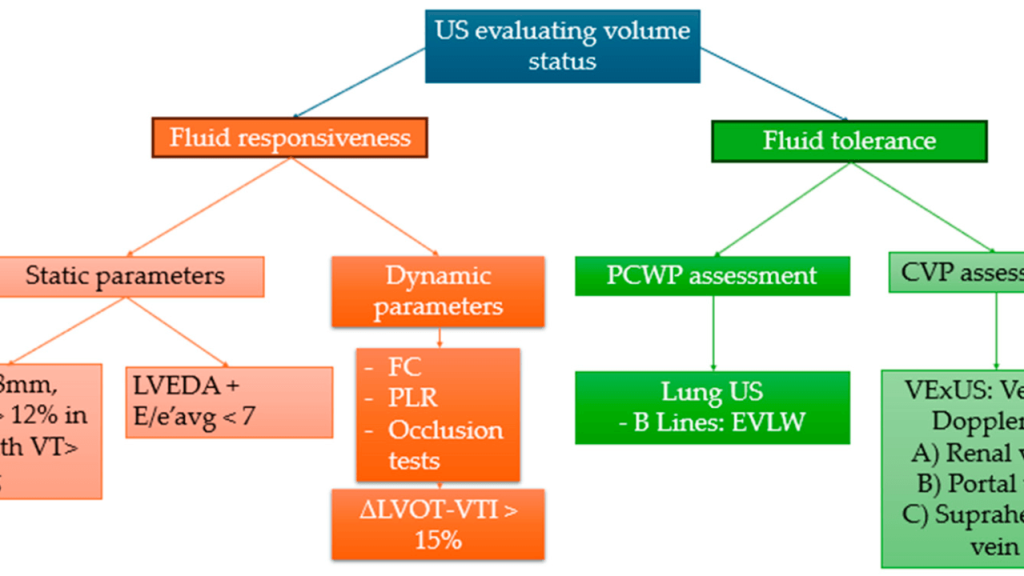
Summary This review discusses echocardiographic evaluation in mechanically ventilated (MV) patients, highlighting the complex heart–lung interactions influenced by positive pressure ventilation, especially focusing on the right ventricle (RV). Echocardiography serves as a crucial bedside tool to assess RV dimensions, function, and response to mechanical ventilation. Given the challenges in assessing fluid responsiveness and diaphragmatic function […]

Echocardiography in the Ventilated Patient: What the Clinician Has to Know Read Post »
Cardiovascular, Respiratory

Awake vs. Sedated Cannulation for Extra-Corporeal Membrane Oxygenation in Patients with COVID-19 Induced Acute Respiratory Distress Syndrome

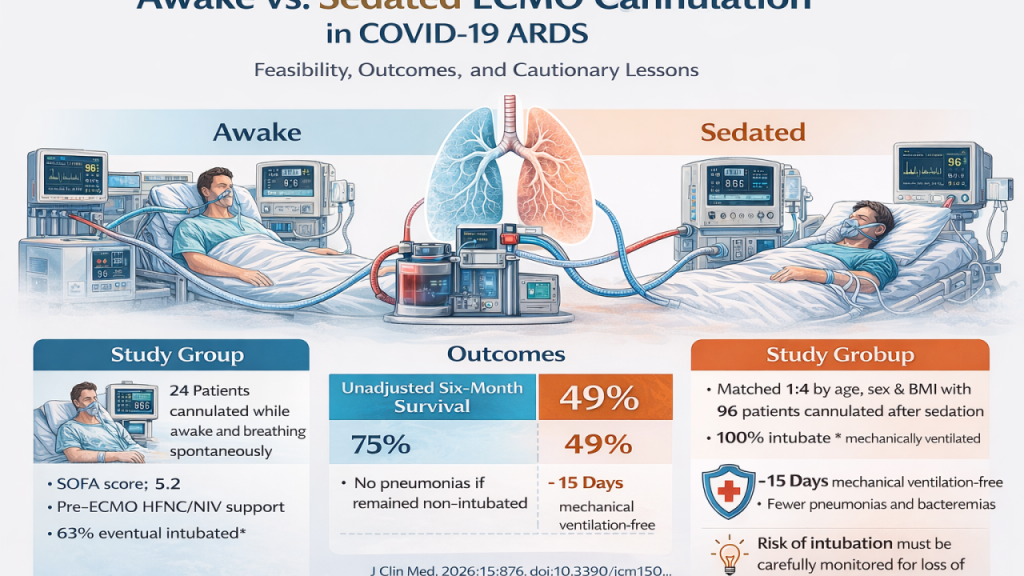
Why this article matters   Veno-venous extracorporeal membrane oxygenation (VV-ECMO) is routinely initiated in patients with severe ARDS after intubation, deep sedation, and often neuromuscular blockade. During the COVID-19 pandemic, however, some centers explored an alternative strategy: awake ECMO cannulation, in which patients are cannulated while spontaneously breathing and supported without invasive mechanical ventilation. The

, , , ,

Awake vs. Sedated Cannulation for Extra-Corporeal Membrane Oxygenation in Patients with COVID-19 Induced Acute Respiratory Distress Syndrome Read Post »

Respiratory

Driving pressure vs. oxygenation-based PEEP titration strategies in ARDS patients: a physiological study

Summary This prospective observational study compared the physiological effects of three different positive end-expiratory pressure (PEEP) titration strategies in patients with acute respiratory distress syndrome (ARDS): a driving pressure-based clinical approach, an empirical oxygenation-based method (high PEEP/FiO₂ table), and fixed PEEP levels (5 or 15 cmH₂O) determined by ARDS severity. Findings revealed that clinical titration

, ,

Driving pressure vs. oxygenation-based PEEP titration strategies in ARDS patients: a physiological study Read Post »

Respiratory

Can we predict the future of respiratory failure prediction?

Summary This article examines current methods of predicting respiratory failure, emphasizing existing scoring systems, biomarkers, and their limitations. It introduces machine learning (ML) as a promising alternative for predicting acute respiratory failure and reviews key challenges to integrating ML into clinical practice. The authors advocate for rigorous validation, thoughtful trial design, and clinician collaboration to

Can we predict the future of respiratory failure prediction? Read Post »

Mechanical Ventilation, Respiratory

Revisiting Acute Respiratory Distress Syndrome ventilation management: Time for a paradigm shift focusing on tidal volume

Abstract: Merola and colleagues critically evaluate current Acute Respiratory Distress Syndrome (ARDS) ventilation strategies, emphasizing limitations inherent in universally applying low tidal volume (VT) strategies. They argue for personalized, physiology-driven ventilation approaches that incorporate mechanical power, compliance, and transpulmonary pressures. The authors highlight the complexity and heterogeneity of ARDS, suggesting the inadequacy of global parameters

, , , ,

Revisiting Acute Respiratory Distress Syndrome ventilation management: Time for a paradigm shift focusing on tidal volume Read Post »

Respiratory

Physical and respiratory therapy in the critically ill patient with obesity: a narrative review

Abstract: Martínez-Camacho et al. discuss the critical aspects of physical and respiratory therapy for obese patients in the ICU, highlighting the complexities of obesity-related respiratory and metabolic disturbances. They emphasize the importance of early mobilization, meticulous ventilatory management, personalized nutritional support, and multidisciplinary collaboration as pivotal strategies to enhance functional outcomes and reduce complications in

, ,

Physical and respiratory therapy in the critically ill patient with obesity: a narrative review Read Post »

Respiratory

Factors influencing the transition phase in acute respiratory distress syndrome: an observational cohort study

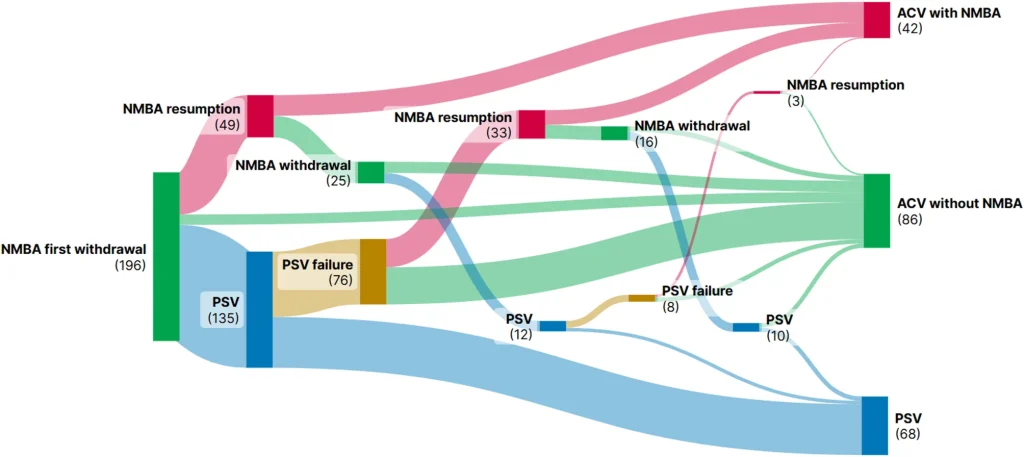
🫁 Transition Phase in ARDS: Predictors of NMBA and PSV Failure Abstract: Protective ventilation and liberation strategies in ARDS are well established, but the transition phase—between stopping neuromuscular blockade (NMBA) and initiating assisted ventilation—remains poorly defined. This bicentric cohort study (n=196) evaluated predictors of NMBA weaning failure and pressure support ventilation (PSV) failure, focusing on

,

Factors influencing the transition phase in acute respiratory distress syndrome: an observational cohort study Read Post »

Respiratory

Lung electrical impedance tomography during positioning, weaning and chest physiotherapy in mechanically ventilated critically ill patients: a…

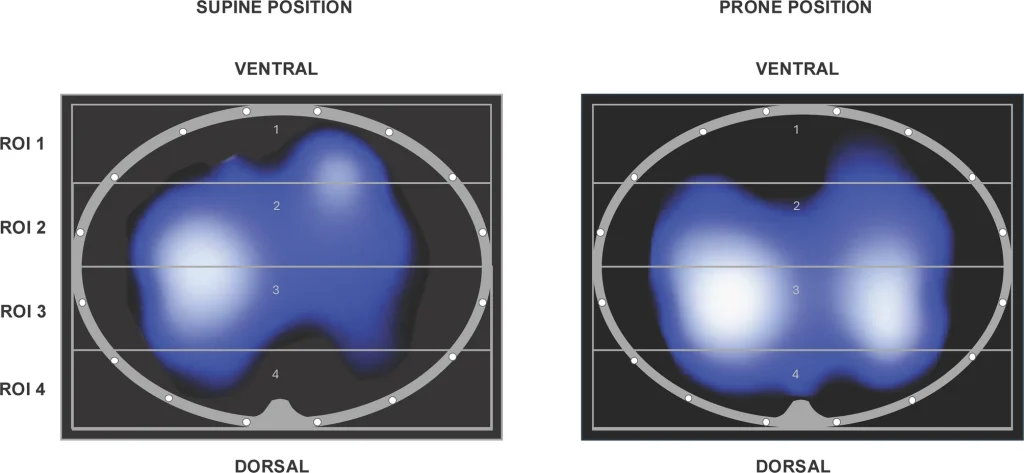
🫁 Lung EIT in Positioning, Weaning, and Chest Physiotherapy: A Narrative Review Abstract: Electrical impedance tomography (EIT) is a bedside, radiation-free imaging modality that measures ventilation and, with some techniques, perfusion. While most ICU studies have focused on ARDS and PEEP titration, this review explored EIT applications during positioning, weaning, and chest physiotherapy in intubated

Lung electrical impedance tomography during positioning, weaning and chest physiotherapy in mechanically ventilated critically ill patients: a… Read Post »

Respiratory, Uncategorized

Imaging and pulmonary function techniques in ARDS diagnosis and management: current insights and challenges

🫁 Are CT, LUS, and EIT the missing link to truly personalized ARDS care? Abstract: This narrative review argues that integrating chest CT, lung ultrasound (LUS), and electrical impedance tomography (EIT) with key physiology (compliance, driving pressure, transpulmonary pressure, mechanical power) can sharpen ARDS diagnosis and enable more individualized ventilation. The authors endorse a tiered

,

Imaging and pulmonary function techniques in ARDS diagnosis and management: current insights and challenges Read Post »

Circulatory, Respiratory

High-risk pulmonary embolism: the significance and perspectives of pulmonary reperfusion

Summary This editorial explores the current landscape of pulmonary reperfusion strategies in patients with high-risk pulmonary embolism (PE). It underscores the centrality of rapid hemodynamic stabilization and reperfusion in managing high-risk PE and analyzes recent data from a large target trial emulation by Stadlbauer et al. The authors conclude that while systemic thrombolysis (SYS) remains

,

High-risk pulmonary embolism: the significance and perspectives of pulmonary reperfusion Read Post »

Scroll to Top