Respiratory

Respiratory

Airway management in critically ill patients

Summary This comprehensive review highlights the challenges associated with airway management in critically ill patients, emphasizing the high risk of adverse events including cardiovascular collapse and severe hypoxemia. The article delineates evidence-based strategies to optimize hemodynamics and oxygenation during airway management, stressing the importance of meticulous patient evaluation, careful selection of anesthetic agents, the utility […]

,

Airway management in critically ill patients Read Post »

Pulmonary, Respiratory

Fluid management strategies in critically ill patients with ARDS: a narrative review

Summary of “Fluid management strategies in critically ill patients with ARDS: a narrative review” (Ziaka and Exadaktylos) Abstract Summary: Ziaka and Exadaktylos comprehensively review fluid management strategies in patients with acute respiratory distress syndrome (ARDS), underscoring the delicate balance required between hypervolemia risks (lung edema, cardiopulmonary complications, and prolonged ventilatory support) and hypovolemia risks (acute

,

Fluid management strategies in critically ill patients with ARDS: a narrative review Read Post »

Respiratory

Peri-intubation complications in critically ill obese patients: a secondary analysis of the international INTUBE cohort

Summary of Peri-intubation complications in critically ill obese patients: a secondary analysis of the international INTUBE cohort (Russotto et al.) Abstract Summary: Russotto et al. conducted a secondary analysis of the INTUBE study, a multicenter international observational cohort, to evaluate peri-intubation adverse events in critically ill obese patients (BMI ≥ 30 kg/m²). They found a

, ,

Peri-intubation complications in critically ill obese patients: a secondary analysis of the international INTUBE cohort Read Post »

Respiratory

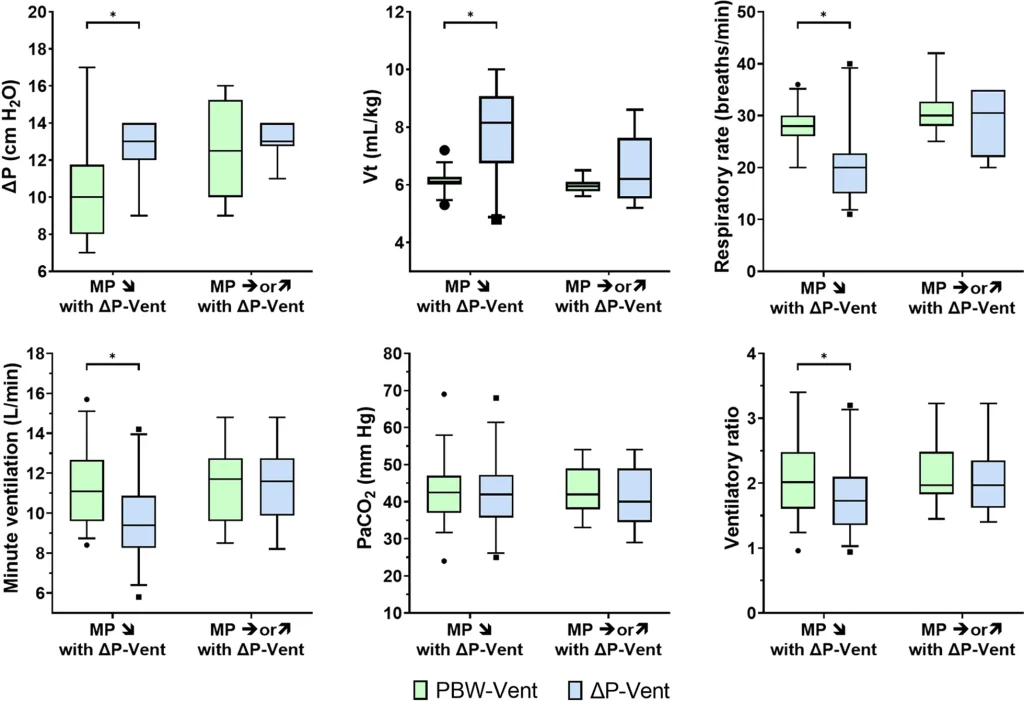
Driving pressure-guided ventilation decreases the mechanical power compared to predicted body weight-guided ventilation in the ARDS.

Summary of Driving Pressure-Guided Ventilation Decreases the Mechanical Power Compared to Predicted Body Weight-Guided Ventilation in the Acute Respiratory Distress Syndrome (Haudebourg et al.) Abstract Summary: Haudebourg et al. investigated the impact of driving pressure (ΔP)-guided ventilation versus predicted body weight (PBW)-guided ventilation on mechanical power in moderate-to-severe acute respiratory distress syndrome (ARDS) patients. Their

, ,

Driving pressure-guided ventilation decreases the mechanical power compared to predicted body weight-guided ventilation in the ARDS. Read Post »

Respiratory

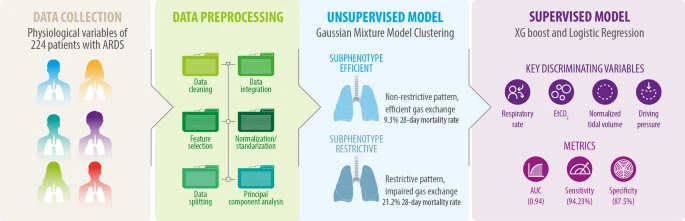
Machine learning-based identification of efficient and restrictive physiological subphenotypes in acute respiratory distress syndrome

Summary of Machine learning-based identification of efficient and restrictive physiological subphenotypes in acute respiratory distress syndrome (Meza-Fuentes et al.) Abstract Summary: Meza-Fuentes et al. utilized advanced machine learning methodologies to categorize Acute Respiratory Distress Syndrome (ARDS) into two distinct physiological subphenotypes: Efficient and Restrictive. By analyzing ventilatory mechanics and gas exchange parameters collected within the

, ,

Machine learning-based identification of efficient and restrictive physiological subphenotypes in acute respiratory distress syndrome Read Post »

Respiratory

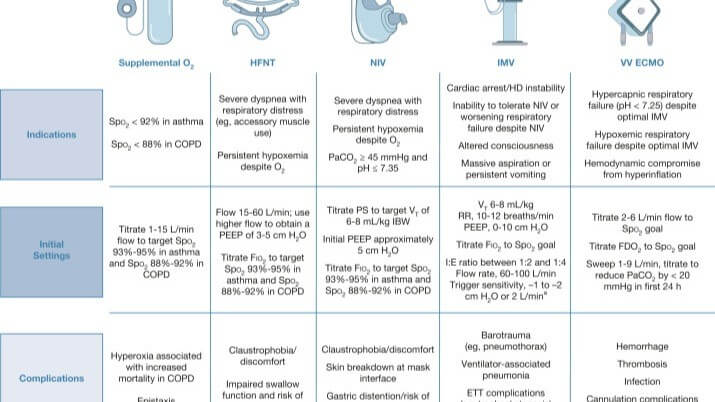
Management of Asthma and COPD Exacerbations in Adults in the ICU

Abstract Severe, life-threatening asthma and COPD exacerbations are managed commonly in the ICU and are associated with significant morbidity and mortality. It is important to understand the commonalities and differences in the diagnosis and management of these obstructive lung diseases to improve patient outcomes via evidence-based care. In this review, we first outline triggers of

, , ,

Management of Asthma and COPD Exacerbations in Adults in the ICU Read Post »

Respiratory

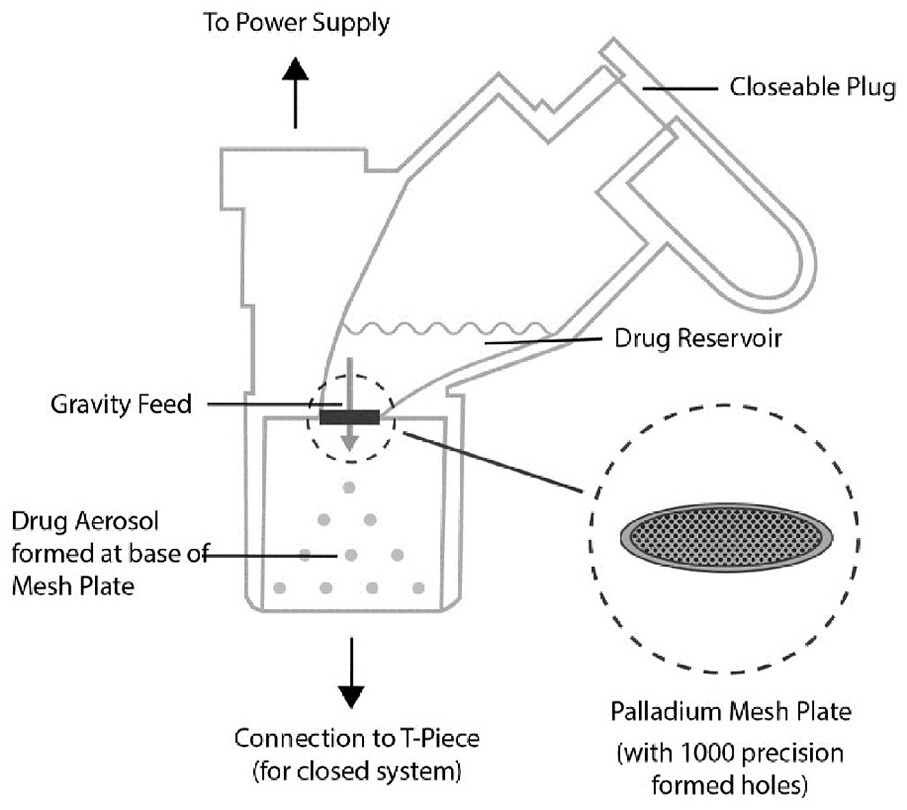
Nebuliser therapy in critical care: The past, present and future

Summary of “Nebuliser Therapy in Critical Care: The Past, Present and Future” Abstract Nebuliser therapy, utilizing the efficiency of pulmonary drug absorption, represents a pivotal approach for delivering medications locally and systemically in critically ill patients. This review discusses the historical evolution of nebuliser technologies, the science of aerosol drug delivery, and current practices, emphasizing

,

Nebuliser therapy in critical care: The past, present and future Read Post »

Respiratory

Recent Advances and Future Directions in Extracorporeal Carbon Dioxide Removal

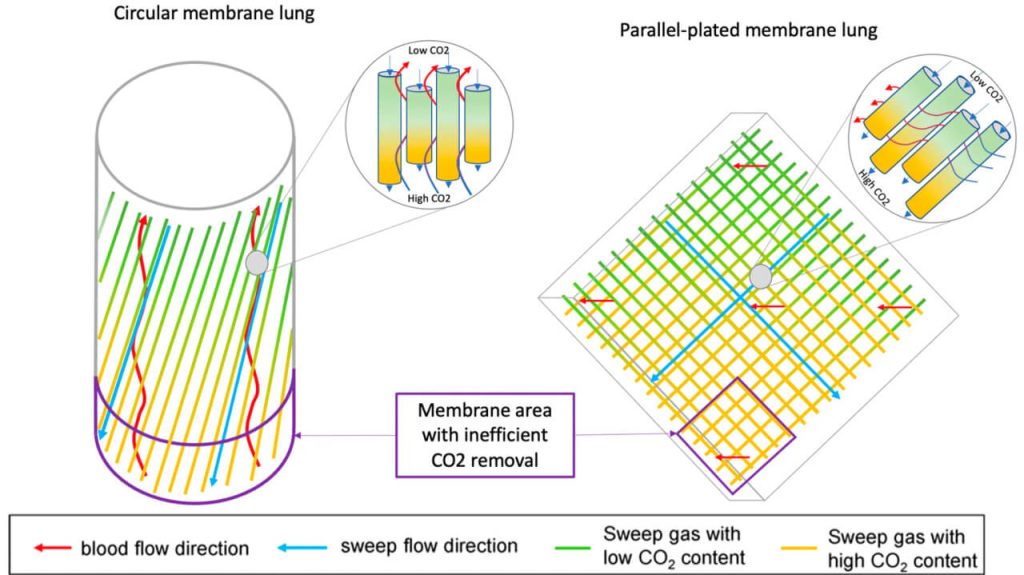
Abstract Extracorporeal carbon dioxide removal (ECCO2R) is an emerging technique designed to reduce carbon dioxide (CO2) levels in venous blood while enabling lung-protective ventilation or alleviating the work of breathing. Unlike high-flow extracorporeal membrane oxygenation (ECMO), ECCO2R operates at lower blood flows (0.4–1.5 L/min), making it less invasive, with smaller cannulas and simpler devices. Despite

, , , , , ,

Recent Advances and Future Directions in Extracorporeal Carbon Dioxide Removal Read Post »

Circulatory, Respiratory

Managing Refractory Hypoxemia in ARDS Obese Patients with Veno-Venous Extra-Corporeal Membrane Oxygenation: A Narrative Review

Abstract Veno-venous extracorporeal membrane oxygenation (vvECMO) is a life-saving intervention for severe respiratory failure unresponsive to conventional therapies. However, managing refractory hypoxemia in morbidly obese patients poses significant challenges due to the unique physiological characteristics of this population, including hyperdynamic circulation, elevated cardiac output, and increased oxygen consumption. These factors can limit the effectiveness of

, , , , ,

Managing Refractory Hypoxemia in ARDS Obese Patients with Veno-Venous Extra-Corporeal Membrane Oxygenation: A Narrative Review Read Post »

Respiratory

Electrical impedance tomography-guided the optimal awake prone position in a moderate ARDS patient

Awake prone positioning (APP) has gained prominence as a therapeutic intervention for acute respiratory distress syndrome (ARDS), particularly in COVID-19-related respiratory failure due to its proven survival benefits [1, 2]. However, the clinical applicability of APP in non-COVID-19 ARDS populations remains controversial, with patient tolerance and heterogeneous lung recruitment responses posing significant challenges [3]. To address

, , , ,

Electrical impedance tomography-guided the optimal awake prone position in a moderate ARDS patient Read Post »

Scroll to Top