Respiratory

Respiratory

Gattinoni’s Legacy: Personalizing ARDS Management Through Physiology

While writing this editorial, we learned that Professor Luciano Gattinoni—a giant in our field—had passed away. “Giant” seems an inadequate descriptor for a physician-scientist whose profound insights have fundamentally reshaped our understanding of critical care in general, and of acute respiratory distress syndrome (ARDS) in particular. His enduring legacy will continue to impact researchers, clinicians, […]

, ,

Gattinoni’s Legacy: Personalizing ARDS Management Through Physiology Read Post »

Artificial Intelligence, Mechanical Ventilation, Pharmacological Insights in Critical Care, Respiratory

Barotrauma: The statistical fallacy. A non-conventional scoping review with Bayesian meta-analysis

Abstract Background Mechanical ventilator-associated damage has a high relevance in the clinical outcomes of critically ill patients. Barotrauma is a colloquial premise that has not been questioned, while other concepts such as mechanotransduction based on time-dependent viscoelastic models derived from materials engineering and physics appear as a more solid and clinically plausible postulate. This scoping

,

Barotrauma: The statistical fallacy. A non-conventional scoping review with Bayesian meta-analysis Read Post »

Respiratory

The Ventilatory Ratio as a Predictor of Successful Weaning from a Veno-Venous Extracorporeal Membrane Oxygenator

Abstract Background: Veno-venous extracorporeal membrane oxygenation (VV-ECMO) is a critical intervention for patients with severe lung failure, especially acute respiratory distress syndrome (ARDS). The weaning process from ECMO relies largely on expert opinion due to a lack of evidence-based guidelines. The ventilatory ratio (VR), which correlates with dead space and mortality in ARDS, is calculated

, , ,

The Ventilatory Ratio as a Predictor of Successful Weaning from a Veno-Venous Extracorporeal Membrane Oxygenator Read Post »

Respiratory

Distinct phenotype and risk factor analysis of persistent airflow limitation among asthmatic children: a case-control study

Abstract Background Persistent airflow limitation (PAL) in childhood asthma is associated with a poor prognosis. The aim of this study was to categorize asthmatic children with PAL into distinct phenotypes and investigate the risk factors associated with each phenotype. Methods We conducted a case-control study with a total of 119 PAL patients and 120 non-PAL

,

Distinct phenotype and risk factor analysis of persistent airflow limitation among asthmatic children: a case-control study Read Post »

Mechanical Ventilation, Respiratory

Personalized mechanical ventilation in acute respiratory distress syndrome

Abstract A personalized mechanical ventilation approach for patients with adult respiratory distress syndrome (ARDS) based on lung physiology and morphology, ARDS etiology, lung imaging, and biological phenotypes may improve ventilation practice and outcome. However, additional research is warranted before personalized mechanical ventilation strategies can be applied at the bedside. Ventilatory parameters should be titrated based

, , ,

Personalized mechanical ventilation in acute respiratory distress syndrome Read Post »

Respiratory

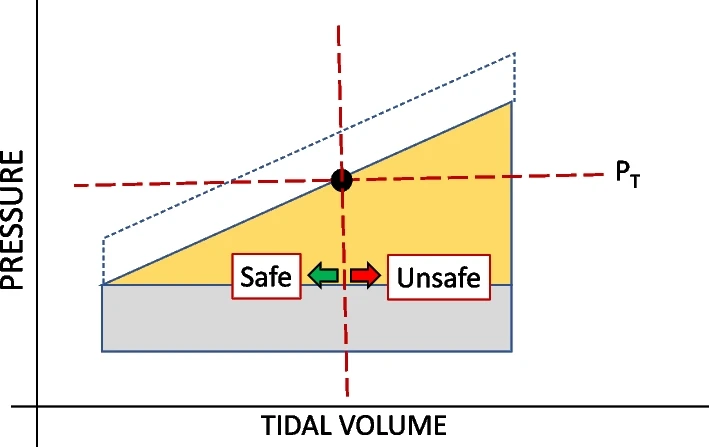
Practical assessment of risk of VILI from ventilating power: a conceptual model

Summary of “Practical Assessment of Risk of VILI from Ventilating Power: A Conceptual Model” Abstract Summary: This article introduces a conceptual model for assessing the risk of ventilator-induced lung injury (VILI) based on mechanical power and its components, such as tidal volume, driving pressure (DP), plateau pressure (Ps), and ventilating frequency. By focusing on the

, , ,

Practical assessment of risk of VILI from ventilating power: a conceptual model Read Post »

Respiratory

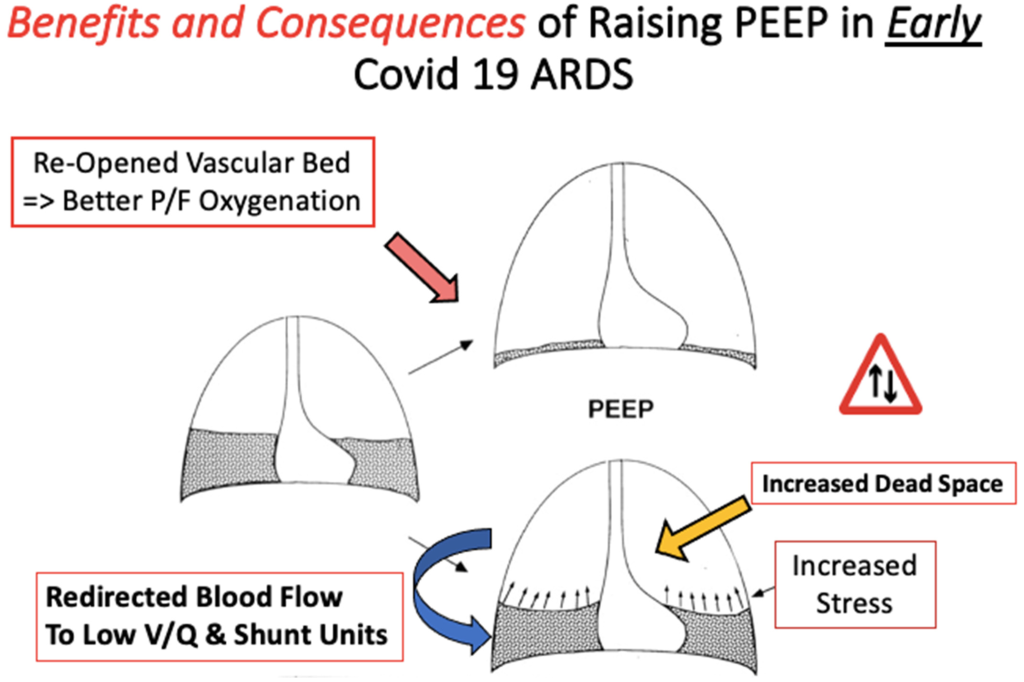
The Respiratory Mechanics of COVID-19 Acute Respiratory Distress Syndrome—Lessons Learned?

Summary of “The Respiratory Mechanics of COVID-19 Acute Respiratory Distress Syndrome—Lessons Learned?” Abstract Summary: The COVID-19 pandemic has expanded our understanding of acute respiratory distress syndrome (ARDS), revealing unique pathophysiological characteristics of COVID-19 ARDS. Distinct features include severe hypoxemia, vascular injury, and microthrombosis, often disproportionate to respiratory compliance. These findings challenge conventional ARDS management strategies,

, ,

The Respiratory Mechanics of COVID-19 Acute Respiratory Distress Syndrome—Lessons Learned? Read Post »

Respiratory

Management of life-threatening hemoptysis

Abstract It is estimated that 5–14% of patients presenting with hemoptysis will have life-threatening hemoptysis, with a reported mortality rate between 9 and 38%. This manuscript provides a comprehensive literature review on life-threatening hemoptysis, including the etiology and mechanisms, initial stabilization, and management of patients. There is no consensus on the optimal diagnostic approach to

Management of life-threatening hemoptysis Read Post »

Respiratory

Effectiveness of antenatal dexamethasone in reducing respiratory distress syndrome and mortality in preterm neonates: a nested case control study

Abstract   Background Respiratory distress syndrome (RDS) is a significant cause of preterm neonatal morbidity and mortality globally. Measures like the use of antenatal corticosteroids (ACS) and immediate resuscitation of the newborn after birth are taken to abate preterm related complications. Most studies that evidenced the benefit of ACS were done in high resource settings.

, ,

Effectiveness of antenatal dexamethasone in reducing respiratory distress syndrome and mortality in preterm neonates: a nested case control study Read Post »

Scroll to Top