Mechanical Ventilation

Mechanical Ventilation, Miscellaneous

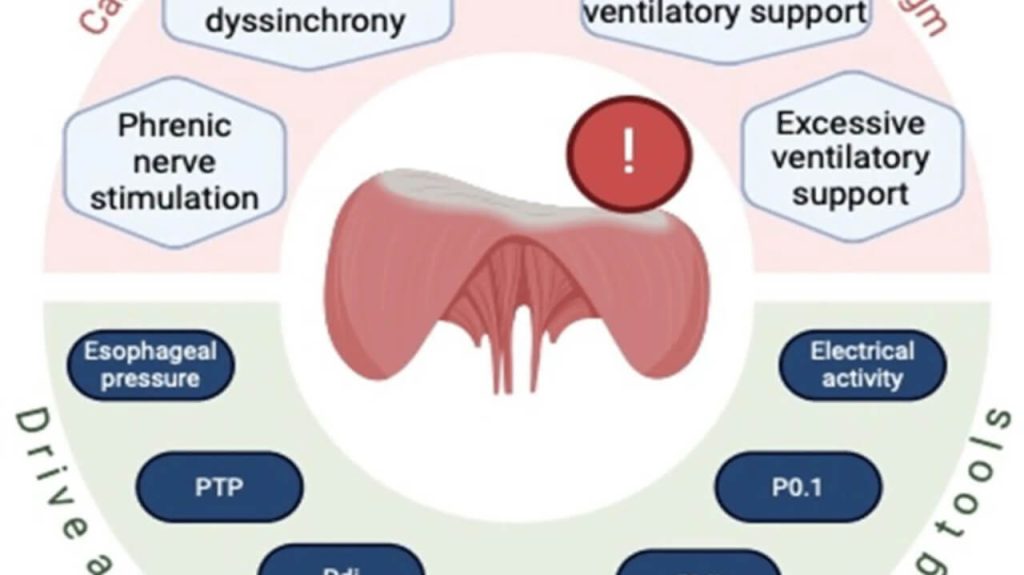
Debate on the Role of Eccentric Contraction of the Diaphragm: Is It Always Harmful?

Abstract The diaphragm is the primary muscle involved in the ventilatory pump, making it a vital component in mechanical ventilation. Various factors in patients who require mechanical ventilation can lead to the deterioration of the diaphragm, which is associated with increased mortality. This deterioration can arise from either excessive or insufficient support due to improper […]

, , ,

Debate on the Role of Eccentric Contraction of the Diaphragm: Is It Always Harmful? Read Post »

Mechanical Ventilation

Inconsistent Methods Used to Set Airway Pressure Release Ventilation in ARDS: A Systematic Review and Meta-Regression Analysis

Abstract Airway pressure release ventilation (APRV) is a protective mechanical ventilation mode for patients with acute respiratory distress syndrome (ARDS) that theoretically may reduce ventilator-induced lung injury (VILI) and ARDS-related mortality. However, there is no standard method to set and adjust the APRV mode shown to be optimal. Therefore, we performed a meta-regression analysis to

, , , ,

Inconsistent Methods Used to Set Airway Pressure Release Ventilation in ARDS: A Systematic Review and Meta-Regression Analysis Read Post »

Mechanical Ventilation

Ventilation practices in acute brain injured patients and association with outcomes: the VENTIBRAIN multicenter observational study

Summary of “Ventilation Practices in Acute Brain Injured Patients and Association with Outcomes: The VENTIBRAIN Multicenter Observational Study” Abstract The optimal ventilation strategies for patients with acute brain injury (ABI) remain uncertain, given the potential conflicts between lung-protective ventilation and the need to maintain cerebral perfusion. This international, multicenter observational study analyzed ventilatory settings in

, , ,

Ventilation practices in acute brain injured patients and association with outcomes: the VENTIBRAIN multicenter observational study Read Post »

Mechanical Ventilation

Double cycling with breath-stacking during partial support ventilation in ARDS: Just a feature of natural variability?

Abstract Background Double cycling with breath-stacking (DC/BS) during controlled mechanical ventilation is considered potentially injurious, reflecting a high respiratory drive. During partial ventilatory support, its occurrence might be attributable to physiological variability of breathing patterns, reflecting the response of the mode without carrying specific risks. Methods This secondary analysis of a crossover study evaluated DC/BS

, , , ,

Double cycling with breath-stacking during partial support ventilation in ARDS: Just a feature of natural variability? Read Post »

Mechanical Ventilation, Respiratory

Beyond the Lungs: Extrapulmonary Effects of Non-Invasive and Invasive Ventilation Strategies

Abstract Background/Objectives: Non-invasive respiratory support and invasive mechanical ventilation are critical interventions that can induce significant changes not only in the lungs but also in extra-pulmonary organs, which are often overlooked. Understanding the extra-pulmonary effects of non-invasive respiratory support and invasive mechanical ventilation is crucial since it can help prevent or mitigate complications and improve

, ,

Beyond the Lungs: Extrapulmonary Effects of Non-Invasive and Invasive Ventilation Strategies Read Post »

Mechanical Ventilation

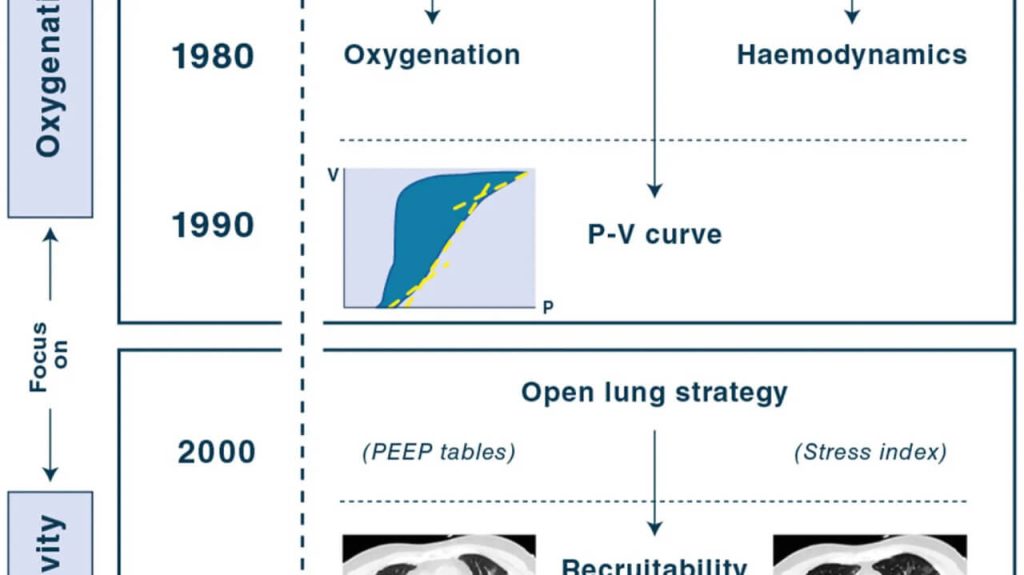
In search of the Holy Grail: identifying the best PEEP in ventilated patients

Positive end-expiratory pressure (PEEP) has been interwoven with acute respiratory distress syndrome (ARDS) since its first description by Ashbaugh et al. [1]. Thereafter, the potentially competing effects of PEEP on lung volume, gas-exchange, and hemodynamics were quickly recognized, prompting the first proposals for methods to optimize PEEP in the clinical setting. Eight years after the

,

In search of the Holy Grail: identifying the best PEEP in ventilated patients Read Post »

Mechanical Ventilation, Respiratory

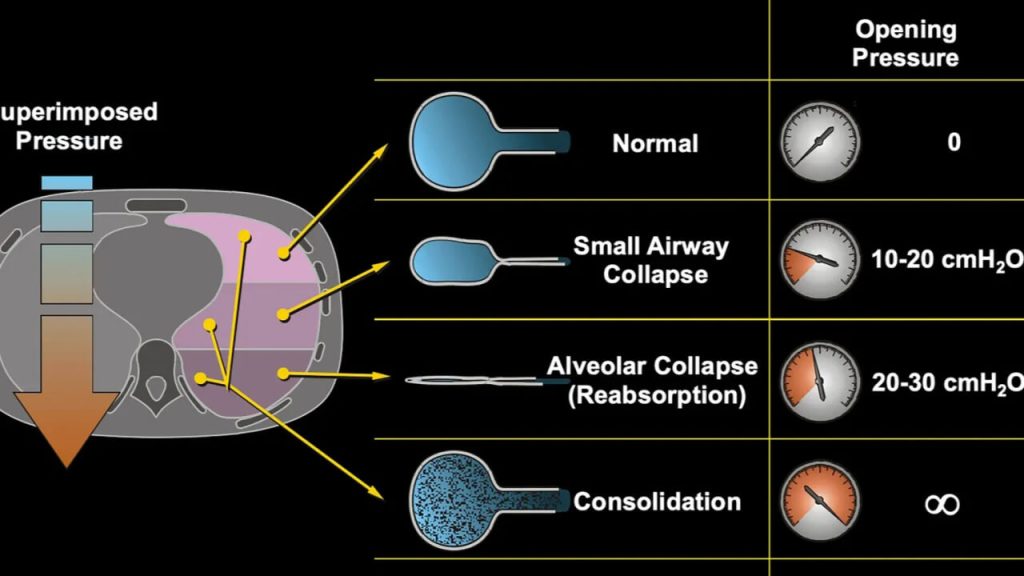
Assessment of recruitment from CT to the bedside: challenges and future directions

Abstract Assessing and quantifying recruitability are important for characterizing ARDS severity and for reducing or preventing the atelectrauma caused by the cyclic opening and closing of pulmonary units. Over the years, several methods for recruitment assessment have been developed, grouped into three main approaches: 1) Quantitative CT Scanning: This method accurately measures the amount of

, , , , , , ,

Assessment of recruitment from CT to the bedside: challenges and future directions Read Post »

Mechanical Ventilation

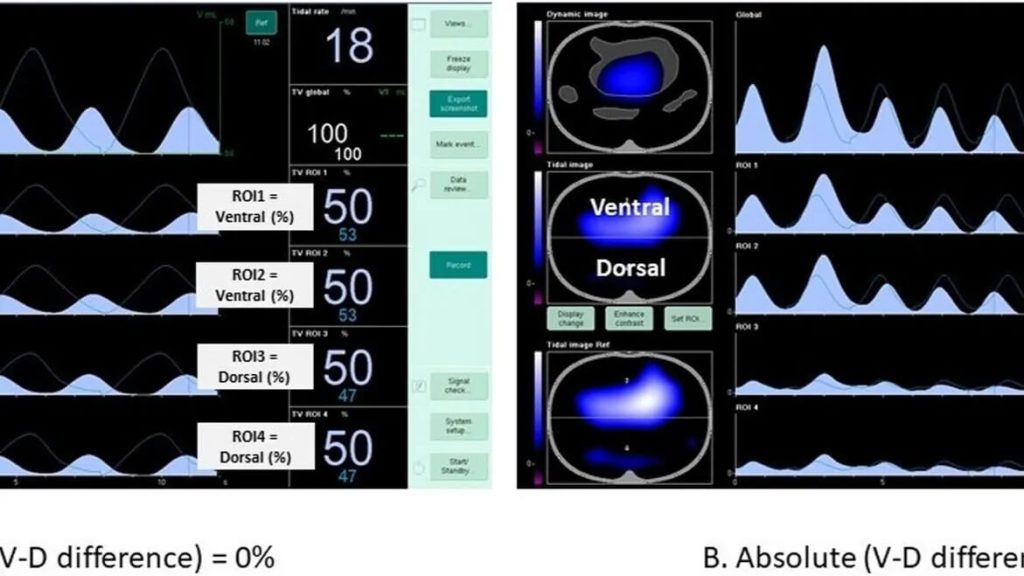
Ventilation distribution during spontaneous breathing trials predicts liberation from mechanical ventilation: the VISION study

Abstract Background Predicting complete liberation from mechanical ventilation (MV) is still challenging. Electrical impedance tomography (EIT) offers a non-invasive measure of regional ventilation distribution and could bring additional information. Research question. Whether the display of regional ventilation distribution during a Spontaneous Breathing Trial (SBT) could help at predicting early and successful liberation from MV. Study

, , ,

Ventilation distribution during spontaneous breathing trials predicts liberation from mechanical ventilation: the VISION study Read Post »

Mechanical Ventilation

Prolonged weaning from mechanical ventilation: who, what, when and how?

Abstract Weaning from invasive mechanical ventilation is an important part of the management of respiratory failure patients. Patients can be classified into those who wean on the first attempt (simple weaning), those who require up to three attempts (difficult weaning) and those who require more than three attempts (prolonged weaning). The process of weaning includes

, , ,

Prolonged weaning from mechanical ventilation: who, what, when and how? Read Post »

Mechanical Ventilation, Miscellaneous

Echocardiography in the Ventilated Patient: What the Clinician Has to Know

Abstract Heart and lung sharing the same anatomical space are influenced by each other. Spontaneous breathing induces dynamic changes in intrathoracic pressure, impacting cardiac function, particularly the right ventricle. In intensive care units (ICU), mechanical ventilation (MV) and therefore positive end-expiratory pressure (PEEP) are often applied, and this inevitably influences cardiac function. In ventilated patients,

, , , , , ,

Echocardiography in the Ventilated Patient: What the Clinician Has to Know Read Post »

Scroll to Top