Uncategorized

Uncategorized

Extracorporeal Cardiopulmonary Resuscitation—Where Do We Currently Stand?

Abstract Extracorporeal cardiopulmonary resuscitation (eCPR) is a method of acute resuscitation for patients who have suffered a cardiac arrest through the utilization of an extracorporeal membrane oxygenation (ECMO) pump. The use and efficacy of eCPR is an active area of investigation with ongoing clinical investigation across the world. Since its inception, ECMO has been utilized […]

, , ,

Extracorporeal Cardiopulmonary Resuscitation—Where Do We Currently Stand? Read Post »
Uncategorized

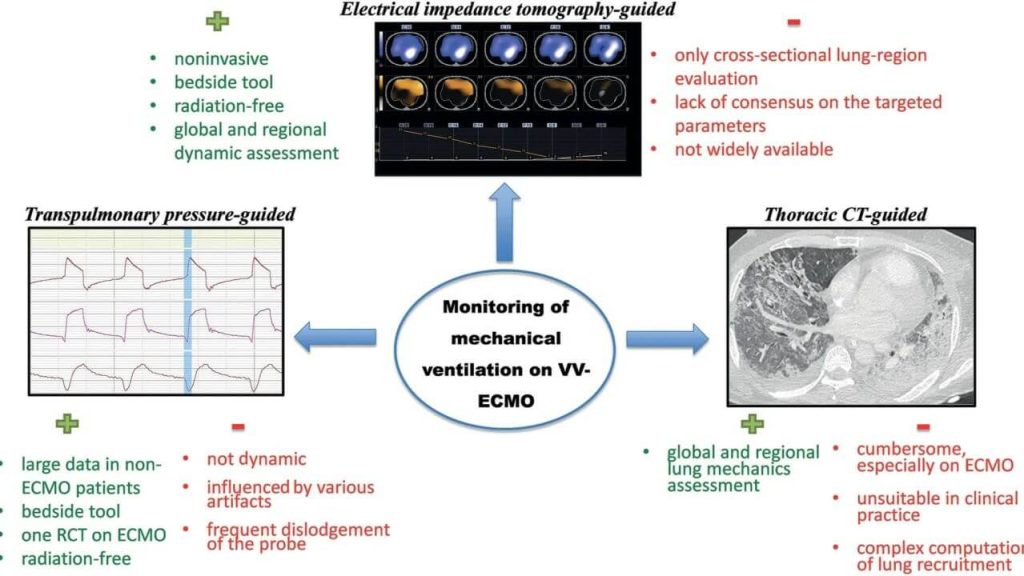
Setting and Monitoring of Mechanical Ventilation During Venovenous ECMO

Abstract This review provides insights into the management of mechanical ventilation during venovenous extracorporeal membrane oxygenation (VV-ECMO) for severe acute respiratory distress syndrome (ARDS). It focuses on strategies to minimize ventilator-induced lung injury (VILI) by employing ultra-lung-protective ventilation, exploring key parameters like tidal volume, plateau pressure, and driving pressure. Key Points Lung Rest Strategy: VV-ECMO

, , ,

Setting and Monitoring of Mechanical Ventilation During Venovenous ECMO Read Post »

Uncategorized

Electrical impedance tomography monitoring in adult ICU patients: state-of-the-art, recommendations for standardized acquisition, processing, and clinical use, and future directions

Abstract Electrical impedance tomography (EIT) is an emerging technology for the non-invasive monitoring of regional distribution of ventilation and perfusion, offering real-time and continuous data that can greatly enhance our understanding and management of various respiratory conditions and lung perfusion. Its application may be especially beneficial for critically ill mechanically ventilated patients. Despite its potential, clear

, , , ,

Electrical impedance tomography monitoring in adult ICU patients: state-of-the-art, recommendations for standardized acquisition, processing, and clinical use, and future directions Read Post »

Uncategorized

D-PRISM: a global survey-based study to assess diagnostic and treatment approaches in pneumonia managed in intensive care

Abstract Background Pneumonia remains a significant global health concern, particularly among those requiring admission to the intensive care unit (ICU). Despite the availability of international guidelines, there remains heterogeneity in clinical management. The D-PRISM study aimed to develop a global overview of how pneumonias (i.e., community-acquired (CAP), hospital-acquired (HAP), and Ventilator-associated pneumonia (VAP)) are diagnosed

, , ,

D-PRISM: a global survey-based study to assess diagnostic and treatment approaches in pneumonia managed in intensive care Read Post »

Uncategorized

Weaning of non COPD patients at high-risk of extubation failure assessed by lung ultrasound: the WIN IN WEAN multicentre randomised controlled trial

Abstract Background Postextubation respiratory failure (PRF) frequently complicates weaning from mechanical ventilation and may increase morbidity/mortality. Noninvasive ventilation (NIV) alternating with high-flow nasal oxygen (HFNO) may prevent PRF. Methods Ventilated patients without chronic obstructive pulmonary disease (COPD) and at high-risk of PRF defined as a lung ultrasound score (LUS) ≥ 14 assessed during the spontaneous breathing trial,

, , , ,

Weaning of non COPD patients at high-risk of extubation failure assessed by lung ultrasound: the WIN IN WEAN multicentre randomised controlled trial Read Post »

Uncategorized

Complexities, Benefits, Risks, and Clinical Implications of Sodium Bicarbonate Administration in Critically Ill Patients: A State-of-the-Art Review

Abstract Sodium bicarbonate has been used in the treatment of different pathologies, such as hyperkalemia, cardiac arrest, tricyclic antidepressant toxicity, aspirin toxicity, acute acidosis, lactic acidosis, diabetic ketoacidosis, rhabdomyolysis, and adrenergic receptors’ resistance to catecholamine in patients with shock. An ongoing debate about bicarbonate’s efficacy and potential harm has been raised for decades because of

, , , ,

Complexities, Benefits, Risks, and Clinical Implications of Sodium Bicarbonate Administration in Critically Ill Patients: A State-of-the-Art Review Read Post »

Scroll to Top