April 2025

Sepsis

Sepsis-induced cardiac dysfunction: mitochondria and energy metabolism

Summary of Sepsis-induced cardiac dysfunction: mitochondria and energy metabolism (Yu et al.) Abstract Summary: Yu et al. systematically reviewed the pathophysiological mechanisms underlying sepsis-induced myocardial dysfunction (SIMD), emphasizing mitochondrial dysfunction and disruptions in myocardial energy metabolism. The review highlights critical aspects, including alterations in myocardial substrates, mitochondrial damage, oxidative stress, calcium imbalance, mitochondrial DNA (mtDNA) […]

, ,

Sepsis-induced cardiac dysfunction: mitochondria and energy metabolism Read Post »
Respiratory

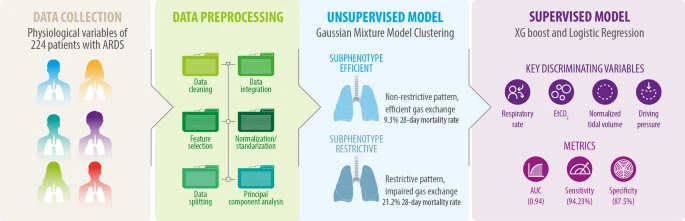
Machine learning-based identification of efficient and restrictive physiological subphenotypes in acute respiratory distress syndrome

Summary of Machine learning-based identification of efficient and restrictive physiological subphenotypes in acute respiratory distress syndrome (Meza-Fuentes et al.) Abstract Summary: Meza-Fuentes et al. utilized advanced machine learning methodologies to categorize Acute Respiratory Distress Syndrome (ARDS) into two distinct physiological subphenotypes: Efficient and Restrictive. By analyzing ventilatory mechanics and gas exchange parameters collected within the

, ,

Machine learning-based identification of efficient and restrictive physiological subphenotypes in acute respiratory distress syndrome Read Post »

Cardiovascular, Pulmonary

Right Ventricular Function in ARDS: Impact on Outcome, Respiratory Strategy and Use of VV-ECMO

Summary of Right Ventricular Function in Acute Respiratory Distress Syndrome: Impact on Outcome, Respiratory Strategy and Use of Veno-Venous Extracorporeal Membrane Oxygenation Abstract Summary: Petit et al. explore the pathophysiology of right ventricular (RV) dysfunction in Acute Respiratory Distress Syndrome (ARDS), emphasizing its significant impact on patient outcomes. The authors propose an RV-protective management strategy

,

Right Ventricular Function in ARDS: Impact on Outcome, Respiratory Strategy and Use of VV-ECMO Read Post »

Sepsis

Metabolic septic shock sub-phenotypes, stability over time and association with clinical outcome

Summary of Metabolic Septic Shock Sub-Phenotypes, Stability Over Time and Association with Clinical Outcome Abstract Summary: Antcliffe et al. examined metabolic sub-phenotypes in septic shock using metabolomic data from two clinical trials (LeoPARDS and VANISH). They identified three distinct metabolic clusters, primarily characterized by lipid metabolite levels, especially lysophospholipids. Persistence in low lysophospholipid clusters correlated

, ,

Metabolic septic shock sub-phenotypes, stability over time and association with clinical outcome Read Post »

Pulmonary

Incidence and risk factors of weaning-induced pulmonary oedema: results from a multicentre, observational study

Summary of “Incidence and risk factors of weaning-induced pulmonary oedema: results from a multicentre, observational study” Abstract This multicenter observational study evaluated the incidence and risk factors of weaning-induced pulmonary oedema (WIPO) in critically ill patients during spontaneous breathing trials (SBTs). Conducted across 13 ICUs in France, Italy, and India, the study revealed that WIPO

, ,

Incidence and risk factors of weaning-induced pulmonary oedema: results from a multicentre, observational study Read Post »

Mechanical Ventilation

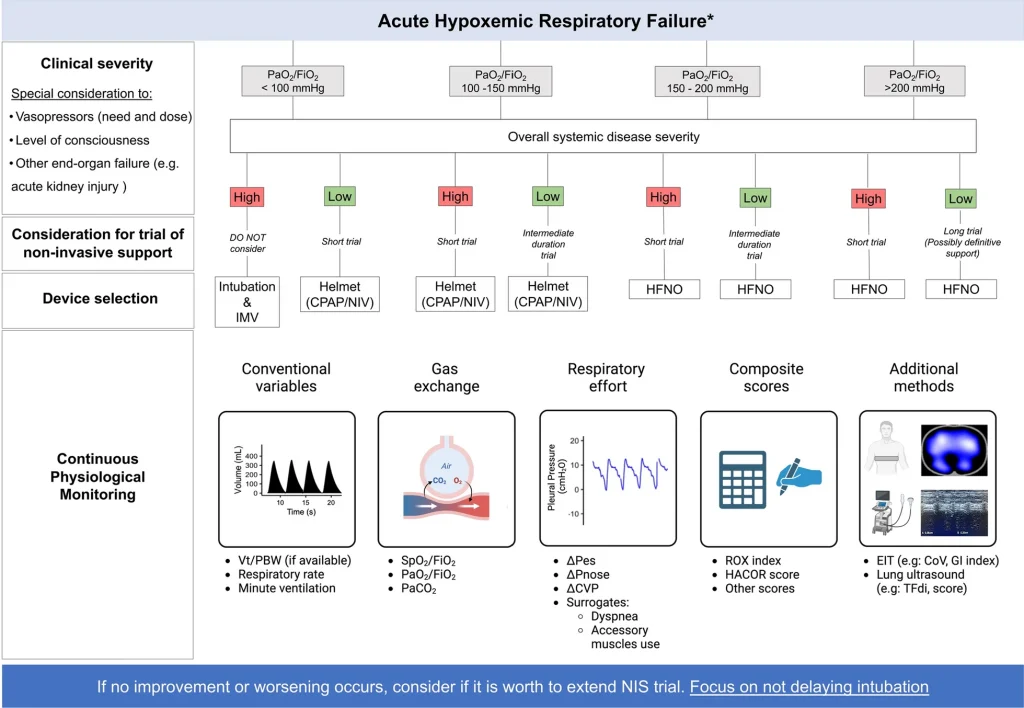
Monitoring patients with acute respiratory failure during non-invasive respiratory support to minimize harm and identify treatment failure

Summary of “Monitoring patients with acute respiratory failure during non-invasive respiratory support to minimize harm and identify treatment failure” Abstract: This review article emphasizes the importance of monitoring patients with acute respiratory failure (ARF) who are undergoing non-invasive respiratory support (NRS), such as high-flow nasal oxygen (HFNO), continuous positive airway pressure (CPAP), or non-invasive ventilation

, ,

Monitoring patients with acute respiratory failure during non-invasive respiratory support to minimize harm and identify treatment failure Read Post »

Mechanical Ventilation

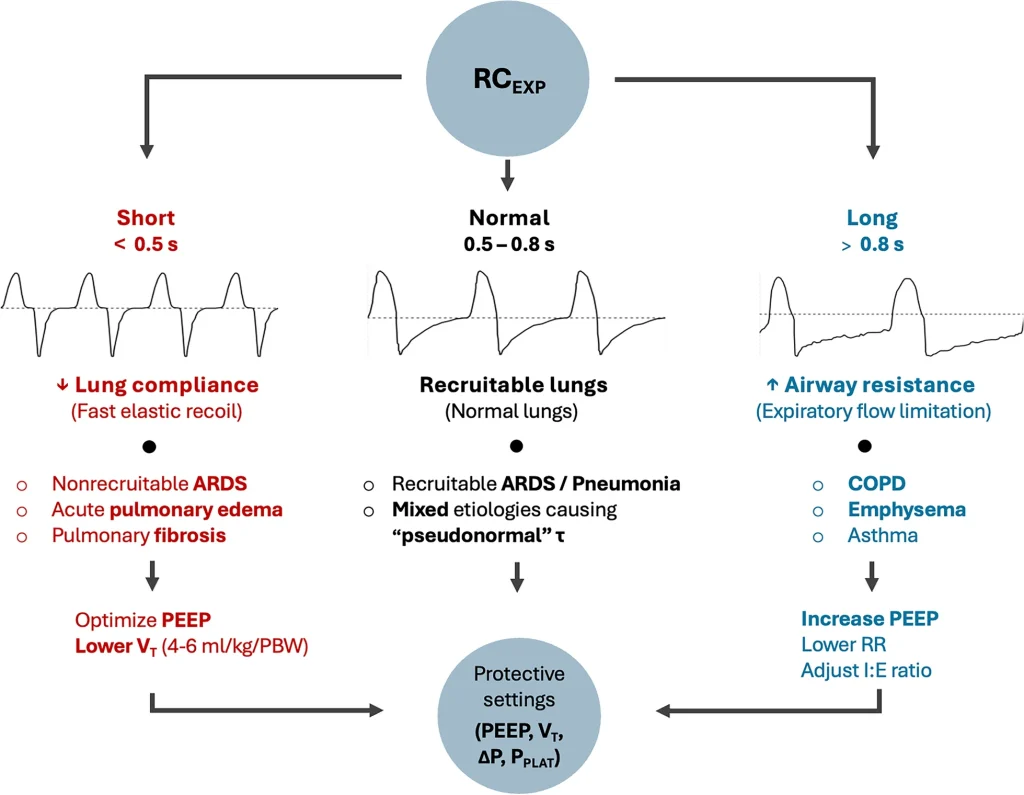
Expiratory time constants in mechanically ventilated patients: rethinking the old concept—a narrative review

Summary of “Expiratory Time Constants in Mechanically Ventilated Patients: Rethinking the Old Concept—A Narrative Review” Abstract Expiratory time constants (RCEXP) are reexamined in this comprehensive narrative review, offering new insight into their clinical application in mechanical ventilation. Initially a theoretical construct, RCEXP is now being used in advanced bedside assessments and intelligent ventilation systems. The

,

Expiratory time constants in mechanically ventilated patients: rethinking the old concept—a narrative review Read Post »

Mechanical Ventilation

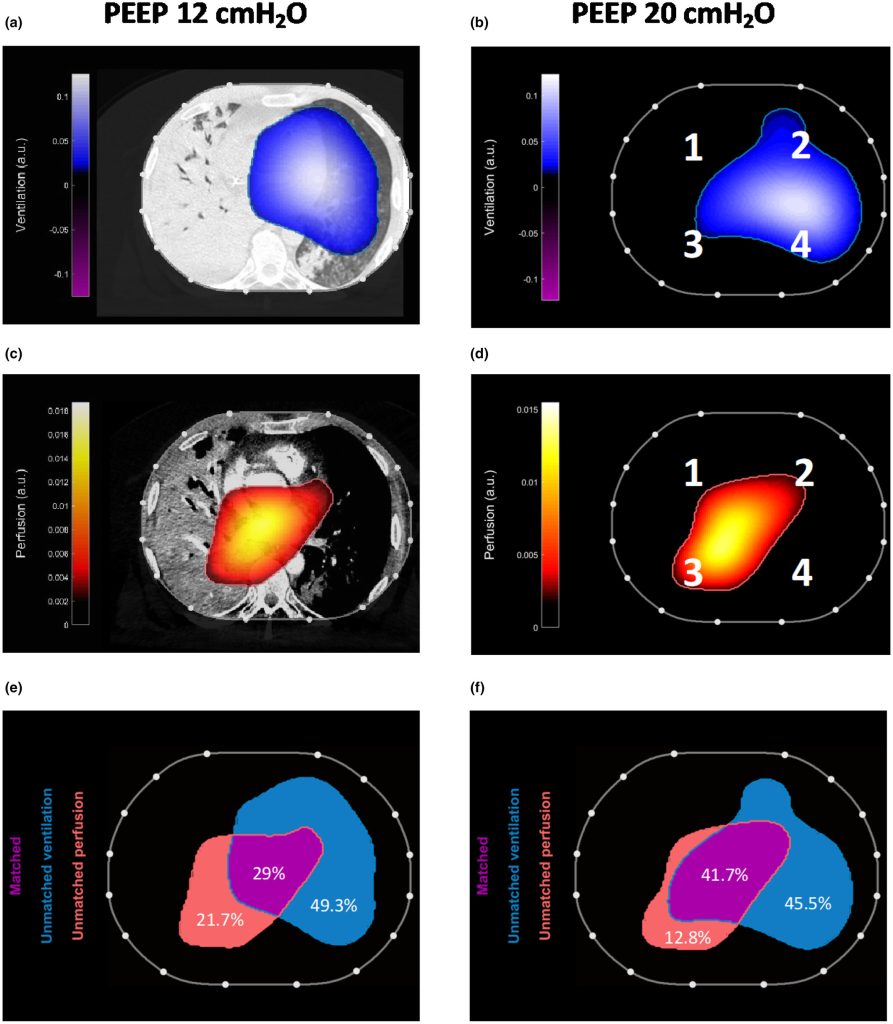
Personalized ventilation guided by electrical impedance tomography with increased PEEP improves ventilation-perfusion matching in asymmetrical airway

Summary of “Personalized ventilation guided by electrical impedance tomography with increased PEEP improves ventilation‐perfusion matching in asymmetrical airway closure and contralateral pulmonary embolism during veno‐venous extracorporeal membrane oxygenation: A case report” Abstract This case report describes a novel use of electrical impedance tomography (EIT) to guide personalized PEEP adjustments in a 54-year-old patient on ECMO

,

Personalized ventilation guided by electrical impedance tomography with increased PEEP improves ventilation-perfusion matching in asymmetrical airway Read Post »

Mechanical Ventilation

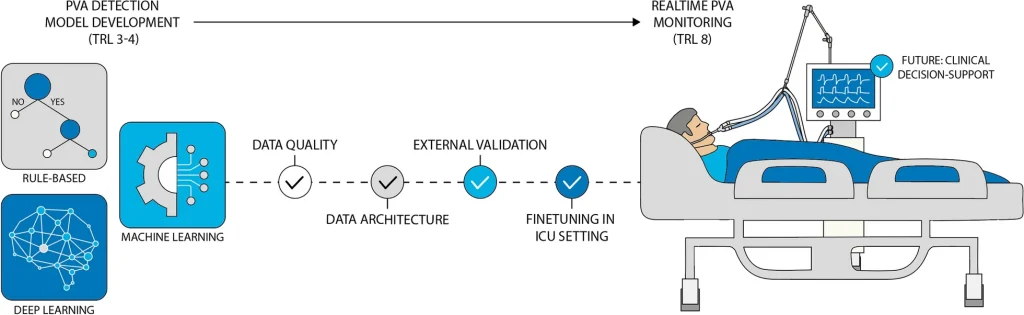
Let’s get in sync: current standing and future of AI-based detection of patient-ventilator asynchrony

Summary of “Let’s get in sync: current standing and future of AI-based detection of patient-ventilator asynchrony” Abstract Patient-ventilator asynchrony (PVA), a frequent mismatch between the patient’s breathing effort and ventilator support, can lead to adverse outcomes such as prolonged ventilation, lung injury, and diaphragm dysfunction. While visual detection is difficult and time-consuming, artificial intelligence (AI)

Let’s get in sync: current standing and future of AI-based detection of patient-ventilator asynchrony Read Post »

Mechanical Ventilation

Advances in achieving lung and diaphragm-protective ventilation

Summary of “Advances in achieving lung and diaphragm-protective ventilation” Abstract Mechanical ventilation, while lifesaving, poses risks to both lung and diaphragm integrity. This review discusses the latest evidence and technologies for monitoring and interventions that support the combined goal of lung- and diaphragm-protective ventilation (LDPV). It emphasizes noninvasive bedside strategies, optimal titration of ventilator support,

,

Advances in achieving lung and diaphragm-protective ventilation Read Post »

Scroll to Top