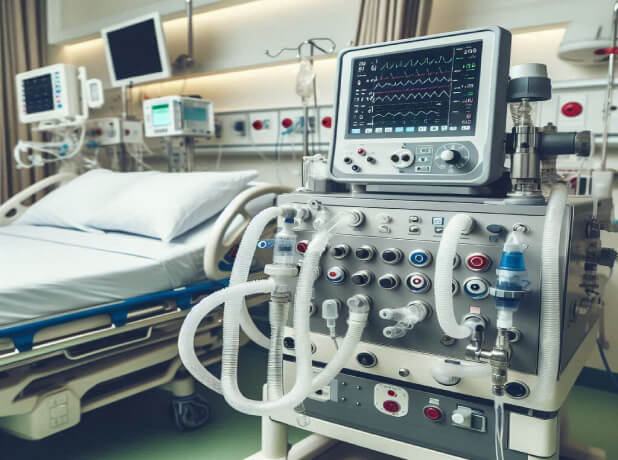
Summary of “Monitoring patients with acute respiratory failure during non-invasive respiratory support to minimize harm and identify treatment failure”
Abstract: This review article emphasizes the importance of monitoring patients with acute respiratory failure (ARF) who are undergoing non-invasive respiratory support (NRS), such as high-flow nasal oxygen (HFNO), continuous positive airway pressure (CPAP), or non-invasive ventilation (NIV). Although NRS can prevent the need for intubation and invasive mechanical ventilation (IMV), delayed recognition of treatment failure can lead to worsened outcomes due to factors like respiratory muscle fatigue, cardiovascular collapse, and patient self-inflicted lung injury (P-SILI). The authors highlight the physiological principles behind NRS, indications and contraindications, and various monitoring tools and parameters—ranging from dyspnea assessment and respiratory rate to gas exchange and esophageal pressure measurement—to guide timely intervention and minimize harm.
Key Points:
-
Role of NRS in ARF Management: Non-invasive respiratory support helps alleviate the burden on respiratory muscles, enhances oxygenation, and may prevent intubation, especially in patients with acute hypoxemic respiratory failure (AHRF), cardiogenic pulmonary edema, COPD exacerbations, and chest trauma.
-
Dangers of Prolonged NRS in Non-responders: Extended use of NRS in patients with high respiratory effort can lead to muscle fatigue, hemodynamic instability, and worse outcomes due to delayed transition to IMV.
-
Physiological Benefits of HFNO, CPAP, and NIV: HFNO reduces inspiratory resistance and dead space while providing low levels of PEEP; CPAP and NIV add airway pressure support, reduce breathing work, and improve gas exchange—especially when delivered via helmet interfaces.
-
Indications and Interface Selection: HFNO is typically first-line for AHRF with PaO₂/FiO₂ >150 mmHg. Helmet CPAP/NIV is preferable in more severe AHRF, and facemasks or full-face interfaces may be used depending on patient tolerance and clinical context.
-
Predictors of NRS Failure: High disease severity, immunosuppression, vasopressor requirement, low PaO₂/FiO₂ ratios, and high SAPS II or SOFA scores are associated with poor NRS response and increased likelihood of intubation.
-
Monitoring Tools and Indices: Key parameters include respiratory rate, tidal volume, minute ventilation, PaO₂/FiO₂ ratio, PaCO₂, esophageal pressure swings (ΔPes), central venous pressure swings (ΔCVP), nasal pressure swings (ΔPnose), and diaphragmatic thickening fraction (TFdi). Composite scores like ROX and HACOR aid in predicting NRS outcomes.
-
Gas Exchange and Carbon Dioxide Dynamics: Both oxygenation and ventilation status (e.g., SpO₂/FiO₂ ratio and PaCO₂ levels) are critical in evaluating NRS efficacy, especially for guiding escalation decisions.
-
Effort Monitoring and P-SILI Risk: Direct and surrogate markers of inspiratory effort (e.g., ΔPes, ΔCVP, ΔPnose) are instrumental in detecting patients at risk of P-SILI or diaphragm injury due to overexertion during NRS.
-
Decision-making for Escalation: Early improvements or deteriorations in clinical and physiological markers within the first 1–2 hours of NRS are key in determining whether to continue or escalate therapy.
-
Need for Standardized Protocols and Future Tools: While current indices and tools provide guidance, the field requires further validation studies and development of non-invasive, practical bedside technologies for real-time effort and ventilation monitoring.

Conclusion: Non-invasive respiratory support provides a valuable bridge in managing ARF without immediate intubation. However, it requires meticulous patient selection, close physiological monitoring, and timely recognition of failure to prevent adverse outcomes. Tailoring NRS through continuous evaluation of effort, gas exchange, and comfort can reduce the risks of P-SILI and delayed intubation. Future research should prioritize the standardization and validation of monitoring protocols and emerging tools to enhance patient-specific care.


Watch the following video on “Non-invasive respiratory support” by ISICEM
Javier Amador-Castañeda, BHS, RRT, FCCM, PNAP
Interprofessional Critical Care Network (ICCN)
Take Advantage of This Resource
I encourage you to explore this growing library of articles and leverage it to stay informed on the latest in critical care. Visit the collection today at: https://perfusfind.com/ic/
This is another step in making high-quality, evidence-based information easily accessible to the critical care community. As always, thank you for your continued support!
As always, don’t forget to like, share, and subscribe. See you on the other side!
Open Access This article is licensed under a Creative Commons Attribution 4.0 International License, which permits use, sharing, adaptation, distribution and reproduction in any medium or format, as long as you give appropriate credit to the original author(s) and the source, provide a link to the Creative Commons licence, and indicate if changes were made. The images or other third party material in this article are included in the article’s Creative Commons licence, unless indicated otherwise in a credit line to the material. If material is not included in the article’s Creative Commons licence and your intended use is not permitted by statutory regulation or exceeds the permitted use, you will need to obtain permission directly from the copyright holder. To view a copy of this licence, visit http://creativecommons.org/licenses/by/4.0/.