January 2025

Sepsis

Mortality in septic patients treated with short-acting betablockers: a comprehensive meta-analysis of randomized controlled trials

Abstract Background Treatment with short-acting betablockers in septic patients remains controversial. Two recent large multicenter trials have provided additional evidence on this therapeutic approach. We thus performed a meta-analysis, including the most recent data, to evaluate the potential impacts of treatment with short-acting betablockers on mortality in adult septic patients. Methods The data search included […]

, , , , ,

Mortality in septic patients treated with short-acting betablockers: a comprehensive meta-analysis of randomized controlled trials Read Post »

Uncategorized

Weaning of non COPD patients at high-risk of extubation failure assessed by lung ultrasound: the WIN IN WEAN multicentre randomised controlled trial

Abstract Background Postextubation respiratory failure (PRF) frequently complicates weaning from mechanical ventilation and may increase morbidity/mortality. Noninvasive ventilation (NIV) alternating with high-flow nasal oxygen (HFNO) may prevent PRF. Methods Ventilated patients without chronic obstructive pulmonary disease (COPD) and at high-risk of PRF defined as a lung ultrasound score (LUS) ≥ 14 assessed during the spontaneous breathing trial,

, , , ,

Weaning of non COPD patients at high-risk of extubation failure assessed by lung ultrasound: the WIN IN WEAN multicentre randomised controlled trial Read Post »

Mechanical Ventilation, Miscellaneous

How we use ultrasound in the management of weaning from mechanical ventilation

Difficult weaning from invasive mechanical ventilation is associated with adverse clinical outcome and increased use of limited health care resources. Difficult weaning, characterized by failure of multiple spontaneous breathing trails (SBTs), can result from several causes, including impaired function of lung, heart, and respiratory pump [1]. In this editorial, we discuss how ultrasound may facilitate

, , ,

How we use ultrasound in the management of weaning from mechanical ventilation Read Post »

Circulatory

Anticoagulation management during veno-venous ECMO support because of ARDS: Single-center experience

Abstract   Background Patients with severe acute respiratory distress syndrome (ARDS) show a high mortality rate of up to 60 %. In such cases, extracorporeal membrane oxygenation (ECMO) support is often required, which would necessitate anticoagulation therapy, predominantly with heparin. Some bleeding events occurred more frequently in patients during the COVID-19 pandemic who were on venovenous

, , , , ,

Anticoagulation management during veno-venous ECMO support because of ARDS: Single-center experience Read Post »

Circulatory

ECMO-weaning facilitated by neurally adjusted ventilatory assist (NAVA): a case for principal clarification

Abstract The use of veno-venous extracorporeal membrane oxygenation (VV-ECMO) has become increasingly prevalent, particularly in respiratory disease pandemics such as H1N1-influenza and SARS-CoV-2. This surge has emphasized the importance of clear therapy recommendations, improved accessibility to ECMO technology, established ECMO teams, and structured networks to ensure access to specialized care throughout the course of the

, , , , , ,

ECMO-weaning facilitated by neurally adjusted ventilatory assist (NAVA): a case for principal clarification Read Post »

Miscellaneous

Increased sound levels in the cardiac ICU are associated with an increase in heart rate, blood pressure, and sedation

Abstract   Background: Several organizations including the Environmental Protection Agency, World Health Organization and American Academy of Pediatrics recommend that hospital sound levels not exceed 45 decibels. Yet, several studies across multiple age groups have observed higher than recommended levels in the intensive care setting. Elevated sound levels in hospitals have been associated with disturbances

, ,

Increased sound levels in the cardiac ICU are associated with an increase in heart rate, blood pressure, and sedation Read Post »

Uncategorized

Complexities, Benefits, Risks, and Clinical Implications of Sodium Bicarbonate Administration in Critically Ill Patients: A State-of-the-Art Review

Abstract Sodium bicarbonate has been used in the treatment of different pathologies, such as hyperkalemia, cardiac arrest, tricyclic antidepressant toxicity, aspirin toxicity, acute acidosis, lactic acidosis, diabetic ketoacidosis, rhabdomyolysis, and adrenergic receptors’ resistance to catecholamine in patients with shock. An ongoing debate about bicarbonate’s efficacy and potential harm has been raised for decades because of

, , , ,

Complexities, Benefits, Risks, and Clinical Implications of Sodium Bicarbonate Administration in Critically Ill Patients: A State-of-the-Art Review Read Post »

Circulatory, Miscellaneous

Exercise and cardiac rehabilitation after LVAD implantation

Abstract Left ventricular assist devices (LVAD) have improved mortality and quality of life for patients with end-stage heart failure by providing an alternative to cardiac transplant or as a bridge to transplantation. The improvement in functional capacity however is minimal to modest depending on the right ventricular function, optimal hemodynamics on LVAD therapy, and comorbidities.

, ,

Exercise and cardiac rehabilitation after LVAD implantation Read Post »

Miscellaneous

How I perform diaphragmatic ultrasound in the intensive care unit

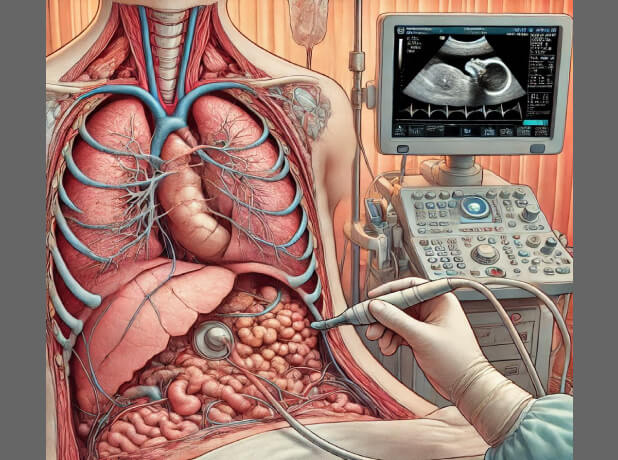
The diaphragm is a thin, dome-shaped muscle, compris-ing a costal and crural part, and a non-contracting central tendon. Muscle fiber activation shortens and thickens the diaphragm in the zone of apposition, moving the dome caudally. Diaphragm function, defined as the ability to contract and generate pressure, has substantial reserve capacity. However, clinically significant diaphragm weak-ness,

,

How I perform diaphragmatic ultrasound in the intensive care unit Read Post »

Miscellaneous

Left diaphragmatic ultrasound in the intensive care unit: practical considerations and alternative approaches

We read with great interest the recent article by Her-mans et al. on diaphragmatic ultrasound, which provides a detailed guide on both methodology and clinical appli-cations [1]. This article has significantly enhanced our understanding of diaphragmatic ultrasound, especially for its application in intensive care unit (ICU) [2]. We would like to offer some additional considerations

,

Left diaphragmatic ultrasound in the intensive care unit: practical considerations and alternative approaches Read Post »

Scroll to Top