Pulmonary

Cardiovascular, Pulmonary

Right Ventricular Function in ARDS: Impact on Outcome, Respiratory Strategy and Use of VV-ECMO

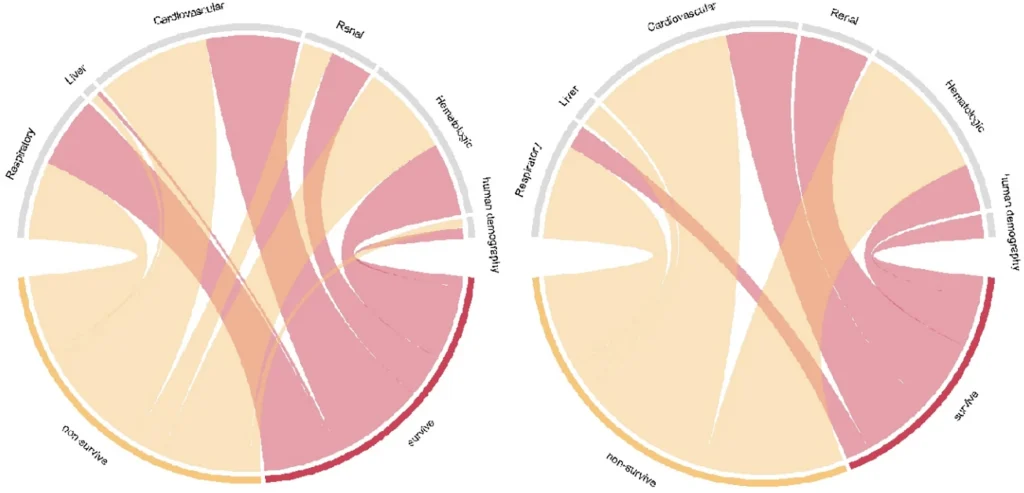
Summary of Right Ventricular Function in Acute Respiratory Distress Syndrome: Impact on Outcome, Respiratory Strategy and Use of Veno-Venous Extracorporeal Membrane Oxygenation Abstract Summary: Petit et al. explore the pathophysiology of right ventricular (RV) dysfunction in Acute Respiratory Distress Syndrome (ARDS), emphasizing its significant impact on patient outcomes. The authors propose an RV-protective management strategy […]

,

Right Ventricular Function in ARDS: Impact on Outcome, Respiratory Strategy and Use of VV-ECMO Read Post »

Pulmonary

Incidence and risk factors of weaning-induced pulmonary oedema: results from a multicentre, observational study

Summary of “Incidence and risk factors of weaning-induced pulmonary oedema: results from a multicentre, observational study” Abstract This multicenter observational study evaluated the incidence and risk factors of weaning-induced pulmonary oedema (WIPO) in critically ill patients during spontaneous breathing trials (SBTs). Conducted across 13 ICUs in France, Italy, and India, the study revealed that WIPO

, ,

Incidence and risk factors of weaning-induced pulmonary oedema: results from a multicentre, observational study Read Post »

Pulmonary

Advances in acute respiratory distress syndrome: focusing on heterogeneity, pathophysiology, and therapeutic strategies

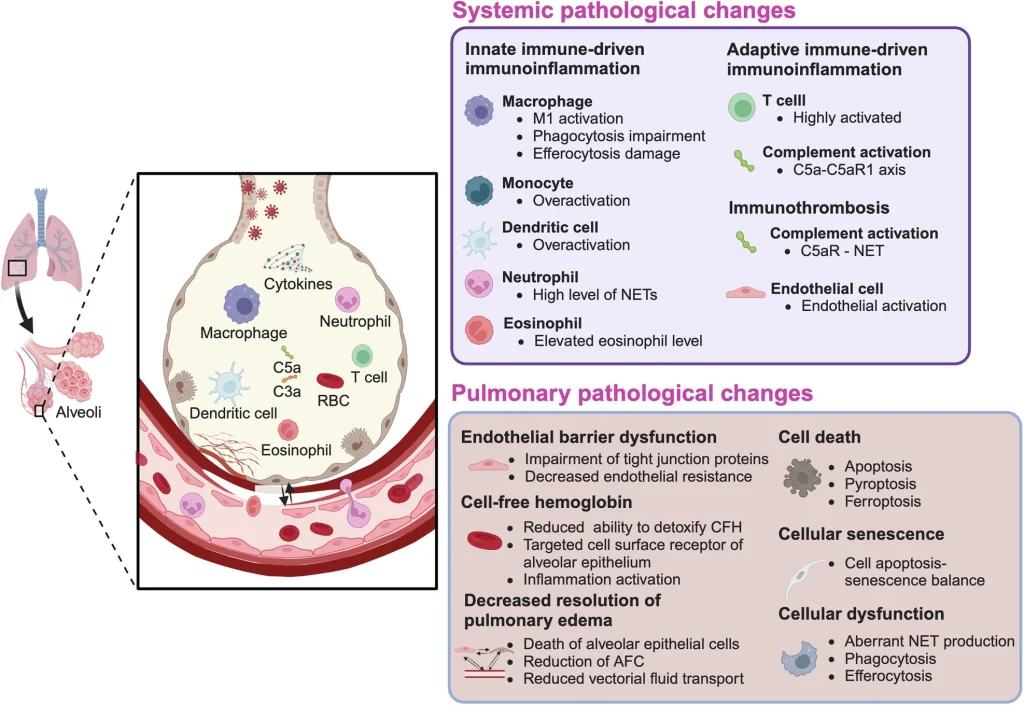
Summary of “Advances in acute respiratory distress syndrome: focusing on heterogeneity, pathophysiology, and therapeutic strategies” Abstract This review addresses the growing complexity and heterogeneity of acute respiratory distress syndrome (ARDS), emphasizing its diverse pathophysiology, evolving clinical presentations, and variable treatment responses. Despite decades of study, ARDS remains a major cause of ICU mortality. The article

, ,

Advances in acute respiratory distress syndrome: focusing on heterogeneity, pathophysiology, and therapeutic strategies Read Post »

Pulmonary

Acute Respiratory Distress Syndrome and Fluid Management: Finding the Perfect Balance

Summary of “Acute Respiratory Distress Syndrome and Fluid Management: Finding the Perfect Balance” (J. Clin. Med. 2025, 14, 2067) Abstract Acute Respiratory Distress Syndrome (ARDS) is characterized by alveolar epithelial injury leading to capillary leak and alveolar flooding. While fluid therapy is often essential in early resuscitation, excessive fluid administration may exacerbate pulmonary edema, impair

,

Acute Respiratory Distress Syndrome and Fluid Management: Finding the Perfect Balance Read Post »

Cardiovascular, Pulmonary

Navigating Heart–Lung Interactions in Mechanical Ventilation: Pathophysiology, Diagnosis, and Advanced Management Strategies in ARDS and Beyond

Summary of “Navigating Heart–Lung Interactions in Mechanical Ventilation: Pathophysiology, Diagnosis, and Advanced Management Strategies in Acute Respiratory Distress Syndrome and Beyond” Abstract: This article explores the intricate cardiopulmonary dynamics encountered in critically ill patients undergoing mechanical ventilation. It emphasizes the importance of understanding heart–lung interactions, particularly the vulnerability of the right ventricle (RV) under mechanical

Navigating Heart–Lung Interactions in Mechanical Ventilation: Pathophysiology, Diagnosis, and Advanced Management Strategies in ARDS and Beyond Read Post »

Pulmonary

Evaluating the impact of ESICM 2023 guidelines and the new global definition of ARDS on clinical outcomes: insights from MIMIC-IV cohort data

Summary of “Evaluating the Impact of ESICM 2023 Guidelines and the New Global Definition of ARDS on Clinical Outcomes: Insights from MIMIC-IV Cohort Data” Abstract In response to the newly proposed ARDS definitions by ESICM (2023) and the global consensus led by Matthay et al. (2024), this study investigates the clinical impact of these revised

,

Evaluating the impact of ESICM 2023 guidelines and the new global definition of ARDS on clinical outcomes: insights from MIMIC-IV cohort data Read Post »

Pulmonary

Anion gap predicting 90-Day mortality and guiding furosemide use in ARDS

Summary of “Anion gap predicting 90-Day mortality and guiding furosemide use in ARDS” Abstract This retrospective cohort study assessed whether the serum anion gap (AG), a marker of metabolic acidosis, could predict 90-day mortality in ARDS patients and guide furosemide use. Using the MIMIC-IV database, 11,227 patients with ARDS were analyzed. Higher AG levels correlated

, ,

Anion gap predicting 90-Day mortality and guiding furosemide use in ARDS Read Post »

Pulmonary

ARDS Subphenotypes Exhibit Different Right Ventricular-Pulmonary Arterial Coupling Profiles

Summary of “ARDS Subphenotypes Exhibit Different Right Ventricular-Pulmonary Arterial Coupling Profiles” Abstract Acute respiratory distress syndrome (ARDS) is a heterogeneous condition with distinct subphenotypes that exhibit different responses to interventions. Right ventricular-pulmonary arterial (RV-PA) coupling, a key determinant of cardiopulmonary interactions in ARDS, has not been well studied across subphenotypes. This study analyzed RV-PA coupling

,

ARDS Subphenotypes Exhibit Different Right Ventricular-Pulmonary Arterial Coupling Profiles Read Post »

Scroll to Top