
Discover our section specialized in congenital heart disease pathologies, where you can find more than 200 pathologies.
Collaboration with Prof. Daniel Tobler and University of Basel
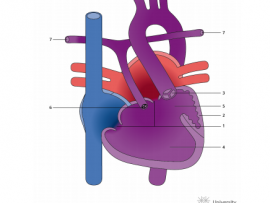


Double inlet left ventricle (DILV) is a form of functionally univentricular heart where both the left and the right atrium are connected to the morphologically left ventricle. Usually, the morphologically right ventricle is hypoplastic. The anatomic heterogeneity in the group of DILV hearts is characterized by the position of the..
Read More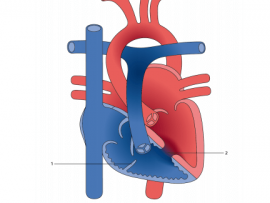
Double-chambered right ventricle (DCRV) was first described in 1858 by TB Peacock, but it is now understood to be a form of congenital heart disease wherein there is a mid-cavitary obstruction that dived the right ventricle into a high-pressure proximal portion and a low-pressure distal portion. DCRV can classify into two..
Read More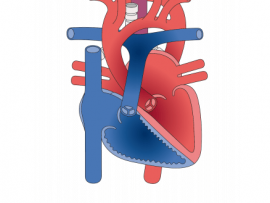
Introduction Double aortic arch is the most common type of vascular ring malformation. It involves the complete encirclement and compression of the trachea and/or esophagus by the aortic arch, its branches, or atretic ligamentous segments. Left untreated, it may lead to significant morbidity for the patient and can result in..
Read More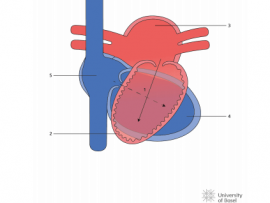
A heart with a criss-cross atrioventricular (AV) connection is a cardiopathy in which the ventricles are positioned contralaterally to the atria to which they are connected; the ventricular inflow tracts are crossed, hence the name criss-cross. In 1961 various cases of AV discordance with or without ventriculoarterial (VA) discordance were..
Read More
A heart with a criss-cross atrioventricular (AV) connection is a cardiopathy in which the ventricles are positioned contralaterally to the atria to which they are connected; the ventricular inflow tracts are crossed, hence the name criss-cross. In 1961 various cases of AV discordance with or without ventriculoarterial (VA) discordance were..
Read More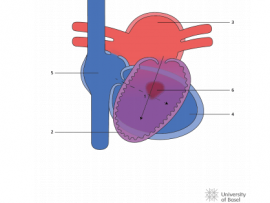
A heart with a criss-cross atrioventricular (AV) connection is a cardiopathy in which the ventricles are positioned contralaterally to the atria to which they are connected; the ventricular inflow tracts are crossed, hence the name criss-cross. In 1961 various cases of AV discordance with or without ventriculoarterial (VA) discordance were..
Read More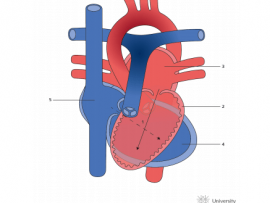
A heart with a criss-cross atrioventricular (AV) connection is a cardiopathy in which the ventricles are positioned contralaterally to the atria to which they are connected; the ventricular inflow tracts are crossed, hence the name criss-cross. In 1961 various cases of AV discordance with or without ventriculoarterial (VA) discordance were..
Read More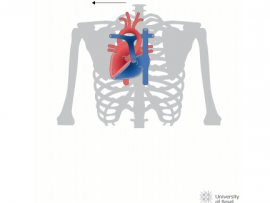
Dextroposition of the : The heart is displaced to the right (from its usual location in the left chest). There is no anatomic alteration in the heart itself, just in its location. Dextroposition occurs when the contents of the left side of the chest shove the heart to the right or when..
Read More