
Discover our section specialized in congenital heart disease pathologies, where you can find more than 200 pathologies.
Collaboration with Prof. Daniel Tobler and University of Basel


Congenitally corrected transposition of the great arteries (CCTGA) is a rare complex cardiac anomaly with a wide range of morphologic characteristics. The main underlying disorder is atrioventricular and ventriculoarterial discordance. The morphologic right ventricle functions as the systemic ventricle, and the morphologic left ventricle functions as the pulmonary ventricle. The..
Read More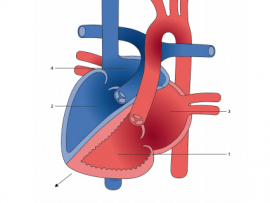
Congenitally corrected transposition of the great arteries (CCTGA) is a rare congenital cardiac anomaly defined by atrio-ventricular and ventriculo-arterial discordance. This malformation makes up less than 1% of congenital heart defects. We report here a case of a 15-year-old female who presented to our hospital with dyspnea as seen in the New..
Read More
A heart with a criss-cross atrioventricular (AV) connection is a cardiopathy in which the ventricles are positioned contralaterally to the atria to which they are connected; the ventricular inflow tracts are crossed, hence the name criss-cross. In 1961 various cases of AV discordance with or without ventriculoarterial (VA) discordance were..
Read More
Criss-cross heart is an extremely rare anomaly, characterized by an abnormal rotation of the ventricular mass along its major axis. It may be associated with any malformation of the heart segments and connections. Due to the complex structural changes and rarity of the anomaly, the rotation of ventricular axis is..
Read More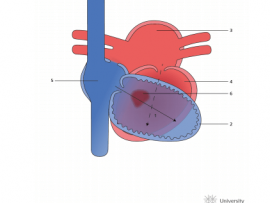
Criss-cross heart (CCH) is a rare of cardiac rotation resulting in crossing of ventricular inlets and drainage of the into contra-laterally located ventricles. The atrio-ventricular (AV) and ventriculo-arterial (VA) connections can be concordant or discordant. There can be either side-by-side or superior-inferior ventricular arrangement (superior-inferior ventricles, SIV); Lev and Rowlatt, in 1961, were the..
Read More
Criss-cross heart (CCH) is a rare of cardiac rotation resulting in crossing of ventricular inlets and drainage of the into contra-laterally located ventricles. The atrio-ventricular (AV) and ventriculo-arterial (VA) connections can be concordant or discordant. There can be either side-by-side or superior-inferior ventricular arrangement (superior-inferior ventricles, SIV); Lev and Rowlatt, in 1961, were the..
Read More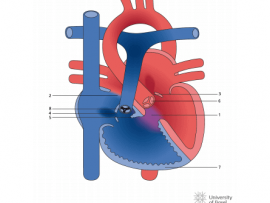
An atrioventricular septal defect (AVSD) is a heart defect in which there are holes between the chambers of the right and left sides of the heart, and the valves that control the flow of blood between these chambers may not be formed correctly. This condition is also called atrioventricular canal..
Read More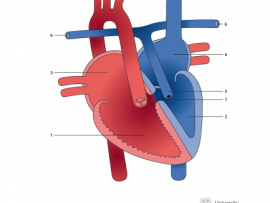
Congenitally corrected transposition of the great arteries (ccTGA) is a rare congenital heart defect. There are different subgroups according to the location of the heart in the thorax, apical position and situs.
Read More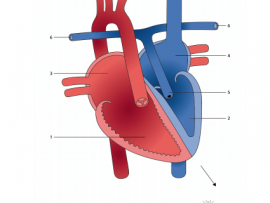
Congenitally corrected transposition of the great arteries (CCTGA) is a rare cardiac anomaly which is characterized by atrioventricular (AV) and ventriculoarterial discordance (transposition of the great arteries), representing less than one percent of all congenital cardiac diseases (–). Associated cardiac anomalies are common with CCTGA and seen in eighty percent..
Read More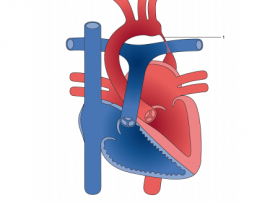
Coarctation of the aorta (CoA) is a relatively common defect that accounts for 5-8% of all congenital heart defects. Coarctation of the aorta may occur as an isolated defect or in association with various other lesions, most commonly bicuspid aortic valve and (VSD). The diagnosis of coarctation of the aorta may..
Read More