
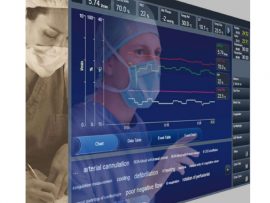

Abstract Background Continuous oxygen extraction ratio (O2ER) monitoring during cardiopulmonary bypass is an emerging strategy to support goal-directed perfusion (GDP) during heart transplantation (HT). Because donation after circulatory death (DCD)..
Read More
Abstract This study aims to assess current quality indicators and determine the added value of total area under the threshold (TAUT) and largest area under the threshold (LAUT) for risk..
Read More
Abstract Objectives Cardiopulmonary bypass (CPB) is essential to cardiac surgery but is associated with organ injury from non-physiological perfusion. Goal-directed perfusion (GDP) has emerged as a physiology-based strategy to optimize..
Read More
Abstract Goal directed perfusion (GDP) aims to maintain an O2 delivery above 270-300 ml/min/m2, during cardiopulmonary bypass. This strategy decreases the incidence of postoperative acute kidney injury. We first developed a simple..
Read More
Abstract Objectives Goal-directed perfusion strategies during cardiopulmonary bypass typically target indexed oxygen delivery thresholds to reduce acute kidney injury and other complications. This delivery-only paradigm may not fully reflect patient-specific..
Read More
Abstract Pulmonary endarterectomy (PEA) remains the curative surgical option for chronic thromboembolic pulmonary hypertension (CTEPH), a condition requiring precise cardiopulmonary bypass (CPB) management to balance cerebral protection, myocardial preservation, and..
Read More
Abstract Background Goal-directed perfusion (GDP) during cardiopulmonary bypass (CPB) commonly targets indexed oxygen delivery (DO2i), yet fixed delivery thresholds may ignore patient-specific metabolic demand. The oxygen extraction ratio (O2ER) integrates..
Read More
Abstract Background Goal-directed perfusion (GDP) during cardiopulmonary bypass (CPB) seeks to match oxygen delivery with patient-specific metabolic demand, yet determinants of oxygen demand and dynamics of oxygen extraction ratio (OER)..
Read More
Abstract Purpose Oxygen delivery (DO2) during cardiopulmonary bypass (CPB) is critical in preventing postoperative complications in adult cardiac surgery. This systematic review aimed to assess the relationship between intraoperative DO2 during..
Read More
Abstract Introduction: Indexed oxygen delivery (DO₂i) is a critical parameter in cardiopulmonary bypass (CPB) management. Traditional goal-directed perfusion (GDP) protocols use fixed DO₂i thresholds, typically derived from normothermic conditions. However,..
Read More
Abstract Purpose Cardiac surgery associated acute kidney injury (CSA-AKI) is a frequent and severe complication. Goal Directed Perfusion (GDP) during cardiopulmonary bypass (CPB) has been developed to reduce post-operative complications,..
Read More
Abstract Background Although goal-directed perfusion (GDP) during cardiopulmonary bypass (CPB) has been discussed extensively in adult studies, no pediatric indexed oxygen delivery (Do2i) thresholds are universally accepted, and no pediatric..
Read More
Abstract Objective: Extracorporeal circulation (ECC) is generally based on standards established in the last decade. In recent years, a concept of perfusion management during ECC, goal-directed perfusion (GDP), has emerged..
Read More
Abstract Background: Cardiopulmonary bypass (CPB) techniques are becoming minimally invasive in clinical practice. The literature describes various extracorporeal techniques which seek to eliminate air-blood contact and reduce both hemodilution and the..
Read More
Abstract Background Acute kidney injury (AKI) is a common complication following cardiopulmonary bypass (CPB) which can affect morbidity and mortality. Goal-directed perfusion (GDP) intended to avoid the nadir oxygen delivery..
Read More
Abstract Metabolism management plays an essential role in extracorporeal technologies. There are different metabolic management devices integrated to extracorporeal devices; the most commonly used and accepted metabolic target in adult..
Read More