


Abstract Extracorporeal cardiopulmonary resuscitation (ECPR) has emerged as a promising strategy for selected patients with refractory cardiac arrest, improving survival and the likelihood of favorable neurological outcomes. However, neurological prognostication..
Read More
Abstract Background Refractory ventricular fibrillation/ventricular tachycardia (VF/VT) out-of-hospital cardiac arrest (OHCA) carries poor survival with conventional resuscitation. Extracorporeal cardiopulmonary resuscitation (ECPR) improves outcomes in selected patients; however, time to reperfusion..
Read More
Abstract Background Extracorporeal cardiopulmonary resuscitation (ECPR) is a time-critical intervention for selected patients with refractory cardiac arrest. Survival depends on minimizing low-flow duration before ECPR initiation. Timely deployment requires organizational..
Read More
Abstract Objectives Extracorporeal cardiopulmonary resuscitation (ECPR) is increasingly employed for patients with refractory cardiac arrest, yet optimal criteria for patient selection remain poorly understood. Pre-cannulation lactate and pH values are..
Read More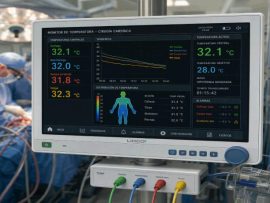
Abstract Aim Early downward temperature drift is a common event of pre-hospital extracorporeal cardiopulmonary resuscitation (e-CPR), since prehospital extracorporeal membrane oxygenation (VA-ECMO) circuits often lack heat-exchangers. However, whether this core..
Read More
Abstract Extracorporeal membrane oxygenation (ECMO) during cardiopulmonary resuscitation (ECPR) is a lifesaving technology that has been widely described for in-hospital cardiac arrest in children with underlying cardiac disease. However, data..
Read More
Abstract Liver transplantation (LT) is an established therapy for patients with end-stage liver disease. Advances in surgical technique, anesthetic management, and standardization of perioperative care have significantly improved outcomes, making..
Read More
Abstract Objectives Recent randomized controlled trials comparing extracorporeal cardiopulmonary resuscitation (ECPR) with conventional cardiopulmonary resuscitation (CCPR) reveal mixed outcomes; however, current data support an association between ECPR and neurologically intact..
Read More
Abstract Background Cardiac arrest impacts more than 500,000 people in the United States annually. Overall, cardiac arrest, particularly when it occurs outside of a hospital, is associated with low rates..
Read More
Abstract Extracorporeal cardiopulmonary resuscitation for refractory out‐of‐hospital cardiac arrest is increasingly used, with survival rates up to ≈30% reported in select highly organized systems, although outcomes vary widely across programs...
Read More
Abstract Background Readiness for venoarterial-extracorporeal membrane oxygenation (VA-ECMO) decannulation after extracorporeal cardiopulmonary resuscitation (ECPR) for out-of-hospital cardiac arrest (OHCA) remains poorly defined. Objectives The objective of the study was to..
Read More
Abstract The expanding use of extracorporeal cardiopulmonary resuscitation (ECPR) has introduced new clinical scenarios at the intersection of extracorporeal life support and organ donation. Current donor classification systems do not..
Read More
Abstract Background Extracorporeal Cardiopulmonary Resuscitation (ECPR) is increasingly considered for prehospital cardiac arrest management; however, its impact on resuscitation performance remains unclear. This study aimed to determine whether integrating an..
Read More
Abstract Cardiac arrest is a leading cause of global mortality, with low survival rates despite advances in resuscitation science. Reported survival ranges from 8% to 34% for out-of-hospital and in-hospital..
Read More
Abstract Objectives: To evaluate the cost-effectiveness of implementing an extracorporeal cardiopulmonary resuscitation (ECPR) strategy for refractory out-of-hospital cardiac arrest (OHCA) compared with current practice in Singapore, where it is not..
Read More
Abstract Background: Extracorporeal cardiopulmonary resuscitation (ECPR) can improve outcomes following refractory out-of-hospital cardiac arrest (OHCA); however, access is constrained by geography and resources. This study compared two strategies against the..
Read More
Abstract Extracorporeal cardiopulmonary resuscitation (ECPR) is an emerging rescue strategy for select patients with refractory out-of-hospital cardiac arrest (OHCA). Mobile ECPR programs aim to reduce low-flow time by initiating extracorporeal..
Read More
Abstract Pediatric patients undergoing cardiac catheterization are at risk of major adverse events, including cardiac arrest and the need for extracorporeal membrane oxygenation support. The primary aim of this study..
Read More
Abstract Background Despite recent advancements in cardiopulmonary resuscitation (CPR), the prognosis of out-of-hospital cardiac arrest (OHCA) remains poor. Extracorporeal cardiopulmonary resuscitation (ECPR) offers potential benefits to improve outcomes of patients..
Read More
Abstract Objective Kidney injury is one of the most common complications of extracorporeal cardiopulmonary resuscitation (ECPR), yet the renoprotective effects of temperature management during ECPR remain inconclusive. This study aimed..
Read More
Abstract Objectives We sought to evaluate extracorporeal membrane oxygenation (ECMO) use for low cardiac output syndrome (LCOS) after congenital heart surgery. Our primary aims were (1) to compare hospital mortality..
Read More
Abstract Extracorporeal cardiopulmonary resuscitation (ECPR) for pediatric cardiac arrest relies on enhanced resources and time-critical decision-making. We aimed to evaluate variations in systems and clinical practice among extracorporeal membrane oxygenation..
Read More
Abstract Objective To assess how inclusion criteria from major randomized controlled trials (RCTs) of extracorporeal cardiopulmonary resuscitation (ECPR) apply within a cannulated ECPR cohort and to benchmark observed outcomes against..
Read More
Abstract Aims Extracorporeal cardiopulmonary resuscitation (ECPR) can restore circulation in refractory out-of-hospital cardiac arrest (OHCA). A trial-based analysis with a 1-year horizon showed limited cost-effectiveness of this demanding procedure. However,..
Read More
Abstract Objectives Los Angeles County initiated an extracorporeal cardiopulmonary resuscitation (eCPR) program to transport patients with refractory shockable out-of-hospital cardiac arrest (OHCA) to dedicated eCPR-capable centers (ECCs). The impact of..
Read More
Abstract Extracorporeal cardiopulmonary resuscitation (ECPR) offers a life-saving option for select patients with refractory cardiac arrest, yet a substantial proportion suffer devastating neurological injury and die despite extracorporeal support. In..
Read More
Early colonoscopy for detection of colon ischemia after extracorporeal cardiopulmonary resuscitation
Abstract Dear Editor, Extracorporeal cardiopulmonary resuscitation (ECPR) refers to the initiation of venoarterial extracorporeal membrane oxygenation (VA ECMO) during cardiac arrest to restore systemic perfusion with oxygenated blood []. Prolonged..
Read More
Abstract Introduction Survival after out-of-hospital cardiac arrest (OHCA) remains poor, particularly for refractory ventricular fibrillation/ventricular tachycardia (VF/VT). Extracorporeal cardiopulmonary resuscitation (ECPR) improves outcomes when delivered within 60 minutes of low-flow..
Read More
Abstract Differential oxygenation may complicate extracorporeal cardiopulmonary resuscitation (ECPR) either due to the initial pathology or subsequent lung injury. The dual circulation phenomenon inherent to peripheral venoarterial extracorporeal membrane oxygenation..
Read More
Abstract Extracorporeal cardiopulmonary resuscitation (ECPR) involves cannulation and initiation of venoarterial extracorporeal membrane oxygenation, offering enhanced perfusion during refractory cardiac arrest when conventional cardiopulmonary resuscitation fails. The use of ECPR..
Read More