


Abstract Background: Del Nido cardioplegia (DNC) has extensively been used for pediatric population undergoing cardiac surgery. However, its use in adult cardiac surgeries have been limited thus, its benefits are..
Read More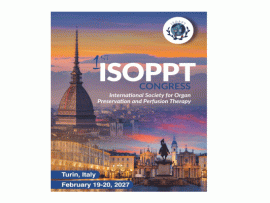
International Society for Organ Preservation and Perfusion Therapy (ISOPPT) 1st isoppt congress Date: February 19th-20th, 2027 Venue: Turin, Italy CONGRESS PRESIDENT: Renato Romagnoli
Read More
Abstract Background Acute type A aortic dissection (ATAAD) is a surgical emergency associated with high mortality. While patient-related risk factors are well-established, beliefs persist regarding the influence of lunar phases,..
Read More
27th October 2026, 16:00-17:30 CET Reducing Anticoagulation in ECMO Moderators: Mark Davidson, Nina Buchtele Speakers and Schedule: 16:00 | Introduction Mark Davidson (United Kingdom), Nina..
Read More
Dear colleagues, members and friends, The EuroELSO Team and faculty are delighted to invite you to the EuroELSO Congress in Vienna, taking place from April 28th to May 1st, 2027,..
Read More
Abstract Over half a century ago, modelling and simulation of human cardiopulmonary physiology emerged as a research methodology, comparable to laboratory experiments and clinical studies. However, teaching fundamental physiological modelling..
Read More
Abstract Background: Pediatric cardiac surgery requiring cardiopulmonary bypass (CPB) is associated with high transfusion rates. While transfusions increase risks of adverse events, existing evidence cannot differentiate whether risks arise from..
Read More
Abstract Background Neurological complications are among the most serious adverse events in patients receiving extracorporeal membrane oxygenation (ECMO). Brain injury during ECMO is associated with increased mortality, long-term neurological deficits..
Read More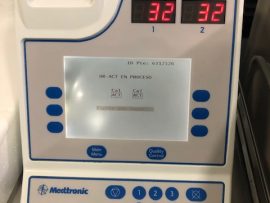
Abstract Objectives To evaluate whether an activated clotting time (ACT)-guided, formula-based anticoagulation strategy supported by viscoelastic coagulation monitoring (ROTEM) improves perioperative coagulation management and reduces bleeding compared with standard weight-based..
Read More
Abstract Objective To describe the application of a cell saver device (CSD) to manage blood loss in dogs and cats. Study design Retrospective study. Animals A total of 102 client-owned..
Read More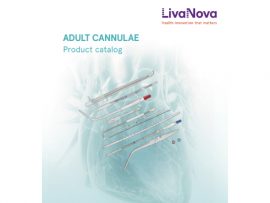
Abstract Background Veno-Venous Extracorporeal Membrane Oxygenation (VV-ECMO) (VV-ECMO) and Veno-Artial Extracorporeal Membrane Oxygenation (VA-ECMO) have become evidence-based therapy options for patients with most severe heart and/or lung failure. Cannulas continue..
Read More
Abstract Objectives: To describe the rate, characteristics, and outcomes of pediatric extracorporeal cardiopulmonary resuscitation (ECPR) for in-hospital cardiac arrest (IHCA) in Japan and evaluate temporal trends. Design: Retrospective cohort using..
Read More
Abstract Operating room personnel are exposed to biological hazards such as needlestick injuries and blood and body fluid exposure, which pose risks of bloodborne infections. However, many of these incidents..
Read More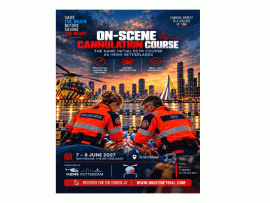
Take part in an intensive and interactive course designed for a small group of participants. Maximum 40 participants with 10 simulation stations. The course will be the same as used..
Read More
Join up to 400 healthcare professionals for an international congress featuring an engaging scientific programme, inspiring speakers and opportunities to meet and exchange experiences with colleagues. Lunch on both days..
Read More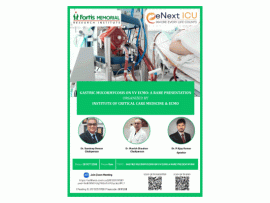
We are pleased to announce an upcoming academic session on “Gastric Mucormycosis on VV ECMO: A Rare Presentation”, organized by the Institute of Critical Care Medicine & ECMO, in..
Read More
Abstract Background Postcardiopulmonary bypass (CPB) bleeding is partly driven by impaired thrombin generation. Recent trials suggest differing clinical effects of fresh frozen plasma (FFP) and prothrombin complex concentrate (PCC), but..
Read More
Abstract Extracorporeal membrane oxygenation (ECMO) is an invaluable tool in cardiac surgery. In pediatric patients, it is almost exclusively deployed by congenital cardiac surgeons who are sufficiently trained. Pediatric ECMO..
Read More
Abstract Support with veno-venous extracorporeal membrane oxygenation (VV-ECMO) can be considered for patients with severe (combined) hypoxemia and hypercapnia. By adjusting sweep gas flow (SGF), blood oxygenation and correction of..
Read More
Abstract Background Venoarterial extracorporeal membrane oxygenation (VA-ECMO) is often combined with other temporary mechanical circulatory support (tMCS) in cardiogenic shock, yet combination-specific outcomes remain poorly defined. We compared temporal trends,..
Read More
Abstract Donation following the confirmation of death based on circulatory criteria has proven to be a valuable strategy for increasing the availability of organs for transplantation. However, the standard super-rapid..
Read More
Abstract Background: Myocardial ischemia–reperfusion during cardiac surgery is associated with complex metabolic alterations that reflect both myocardial injury and recovery. This prospective study aimed to characterize intraoperative lactate, pH, and..
Read More
Abstract Background Veno-venous extracorporeal membrane oxygenation (VV ECMO) candidacy decisions are made under substantial uncertainty and are inconsistent. With a team including economist decision-scientists, we applied Regret Theory to hypothesize..
Read More
Abstract Background Survivors of extracorporeal membrane oxygenation (ECMO) may experience persistent physical, cognitive, psychological, social, and quality-of-life impairments after intensive care unit (ICU) discharge. However, the core components of early..
Read More
Abstract Objectives To compare clinical outcomes of venoarterial (VA) extracorporeal membrane oxygenation (ECMO) combined with mechanical thrombectomy (MT) versus VA-ECMO alone in high-risk pulmonary embolism (PE). Design Systematic review and..
Read More
Abstract Background/Objectives: Postoperative bleeding remains a major complication following coronary artery bypass grafting (CABG), contributing to transfusion requirements, reintervention, and morbidity. The objective of this study was to assess the..
Read More
Abstract Extracorporeal life support provides temporary cardiorespiratory support for patients with severe, potentially reversible cardiac and/or respiratory failure refractory to conventional measures. Its application has broadened across a wide spectrum..
Read More
Abstract Objective To determine whether colloid choice within the cardiopulmonary bypass (CPB) priming strategy independently modifies the perioperative acid-base trajectory. Design Preplanned analysis of a single-center, double-blind, 3-arm randomized controlled..
Read More
Abstract Plastics serve multiple functions in an industrialized society, including major applications in all aspects of healthcare such as single use syringes, coatings and implantable devices. Plastics break down into..
Read More
Abstract Unmeasured anions are commonly detected in critically ill patients, yet their nature remains unclear. We examined whether endothelial glycocalyx degradation may be related to this unexplained anionic burden through..
Read More