


Transposition of the great arteries (TGA) is a pediatric cardiac congenital defect arising from an embryological discordance between the aorta and pulmonary trunk. During cardiac development, the conotruncal septum spirals..
Read More
Taussig-Bing anomaly is a rare congenital heart malformation that was first described in 1949 by Helen B. Taussig (1898–1986) and Richard J. Bing (1909–). Although substantial improvement has since been..
Read More

Double outlet right ventricle (DORV) is a heterogeneous group of abnormal ventriculoarterial connections where, by definition, both great arteries (pulmonary artery and aorta) arise primarily from the morphologically right ventricle...
Read More
Double-outlet right ventricle (DORV) and subaortic ventricular septal defect (VSD) is defined anatomically as a defect where the entire pulmonary trunk and at least half of the aorta arises from..
Read More
The clinical, hemodynamic, angiocardiographic and pathologic findings are presented in an infrequent but surgically correctable type of double outlet right ventricle. This study is based on six cases, one with..
Read More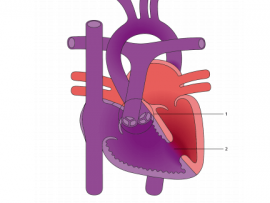
Since Kirklin described the first successful correction of double-outlet right ventricle (DORV), surgical repair has been extended to more complex forms of the malformation . In 1972, Lev and Bharati introduced..
Read More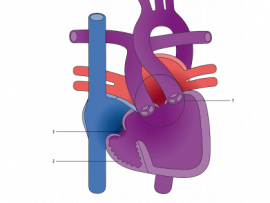
Double-outlet left ventricle (DOLV) is a rare congenital cardiac malformation in which both great arteries originate entirely or predominantly from the morphologic left ventricle. DOLV occurs most commonly in the..
Read More
Double outlet right ventricle (DORV) is a rare congenital heart defect, meaning it’s a condition a baby is born with. In DORV, the pulmonary artery and the aorta — the..
Read More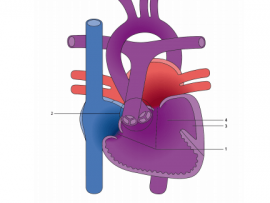
Double outlet right ventricle (DORV) is a . There is a malformation of the fetus heart in the womb leading to the right ventricle that has the two major arteries, namely..
Read More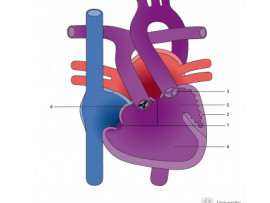
Double inlet left ventricle (DILV) is a heart defect that is present from birth (congenital). It affects the valves and chambers of the heart. Babies born with this condition have..
Read More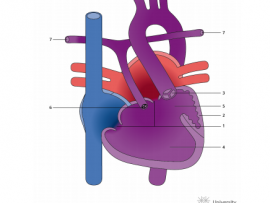


Double inlet left ventricle (DILV) is a form of functionally univentricular heart where both the left and the right atrium are connected to the morphologically left ventricle. Usually, the morphologically..
Read More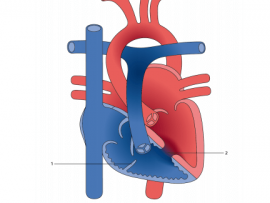
Double-chambered right ventricle (DCRV) was first described in 1858 by TB Peacock, but it is now understood to be a form of congenital heart disease wherein there is a mid-cavitary..
Read More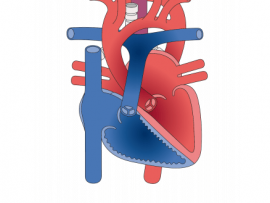
Introduction Double aortic arch is the most common type of vascular ring malformation. It involves the complete encirclement and compression of the trachea and/or esophagus by the aortic arch, its..
Read More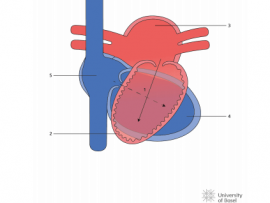
A heart with a criss-cross atrioventricular (AV) connection is a cardiopathy in which the ventricles are positioned contralaterally to the atria to which they are connected; the ventricular inflow tracts..
Read More
A heart with a criss-cross atrioventricular (AV) connection is a cardiopathy in which the ventricles are positioned contralaterally to the atria to which they are connected; the ventricular inflow tracts..
Read More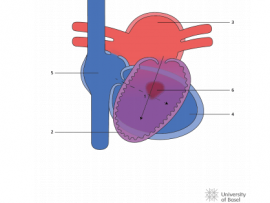
A heart with a criss-cross atrioventricular (AV) connection is a cardiopathy in which the ventricles are positioned contralaterally to the atria to which they are connected; the ventricular inflow tracts..
Read More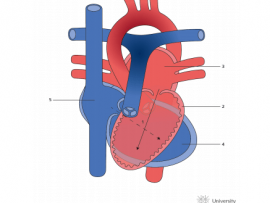
A heart with a criss-cross atrioventricular (AV) connection is a cardiopathy in which the ventricles are positioned contralaterally to the atria to which they are connected; the ventricular inflow tracts..
Read More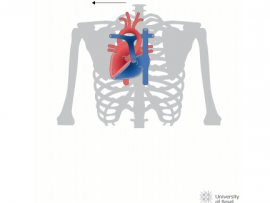
Dextroposition of the : The heart is displaced to the right (from its usual location in the left chest). There is no anatomic alteration in the heart itself, just in its location...
Read More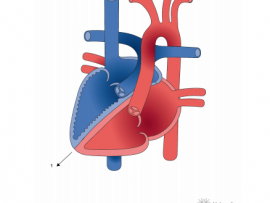
Dextrocardia is a rare congenital disorder in which the heart resides on the right side of the thoracic cavity. It is often associated with other development anomalies and, in most..
Read More
Unroofed coronary sinus syndrome (URCS) is a rare cardiac anomaly in which a communication occurs between the coronary sinus and the left atrium as a result of the partial or..
Read More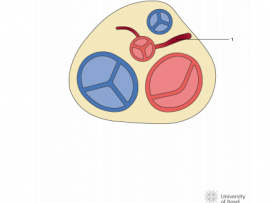
Coronary artery fistulas (CAFs) are abnormal communications of coronary arteries whereby venous circuits bypass the normal capillaries within the myocardium. CAFs are rare, and most affected patients are asymptomatic. However,..
Read More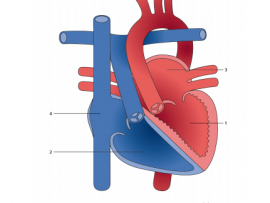
Congenitally corrected transposition of the great arteries (CCTGA) is a rare heart defect in which the heart’s lower half is reversed. It is also called L-TGA. It is different from..
Read More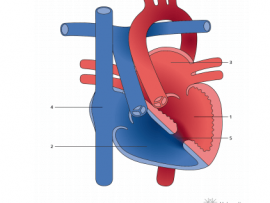
Congenitally corrected transposition of the great arteries (CCTGA) is a rare congenital heart lesion with varied morphological presentation and can often by asymptomatic. A failing systemic right ventricle (RV) or..
Read More
Congenitally corrected transposition of the great arteries (CCTGA) is a rare congenital heart lesion with varied morphological presentation and can often by asymptomatic. A failing systemic right ventricle (RV) or..
Read More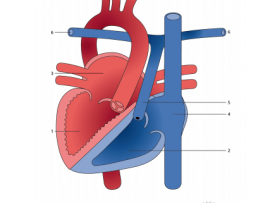
Congenitally corrected transposition of the great arteries (CCTGA) is a rare congenital cardiac anomaly defined by atrio-ventricular and ventriculo-arterial discordance. This malformation makes up less than 1% of congenital heart defects...
Read More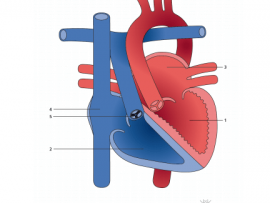
Congenitally corrected transposition of the great arteries (CCTGA) is a rare congenital cardiac anomaly defined by atrio-ventricular and ventriculo-arterial discordance. This malformation makes up less than 1% of congenital heart defects...
Read More
Congenitally corrected transposition of the great arteries (CCTGA) is a rare congenital cardiac anomaly defined by atrio-ventricular and ventriculo-arterial discordance. This malformation makes up less than 1% of congenital heart defects...
Read More