
Double outlet right ventricle (DORV) with subaortal ventricular septal defect (VSD)
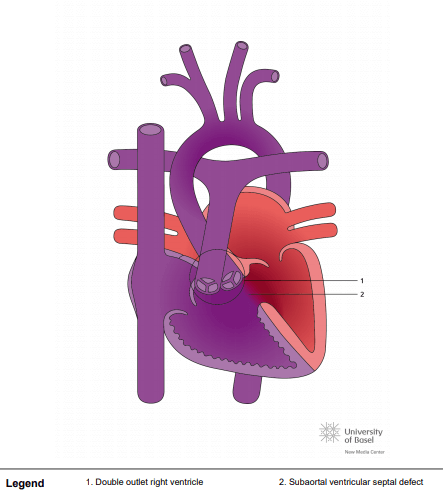

Double-outlet right ventricle (DORV) and subaortic ventricular septal defect (VSD) is defined anatomically as a defect where the entire pulmonary trunk and at least half of the aorta arises from the right ventricle (RV) and the VSD is most closely aligned with the aorta. The surgical management of DORV and subaortic VSD usually results in a 2 ventricle repair where the left ventricular outflow is diverted via the VSD to the aorta. Pulmonary and/or subpulmonary obstruction is found in a large portion of these patients and requires relief at the time of repair. Resection of subpulmonary muscular obstruction with right ventricular outflow augmentation with a patch is required in most to eliminate the obstruction. Important anatomic features to consider in constructing the left ventricular outflow tunnel include the prominence of the conal septum, tricuspid valve attachments to conal septum, and the distance between the pulmonary and tricuspid valves. Operative mortality is low and long-term complications and need for reoperation is uncommon. This report describes the surgically relevant anatomic features and operative techniques.