Invasive mechanical ventilation

Mechanical Ventilation

Bridging the gap: Enhancing synchrony in mechanical ventilation

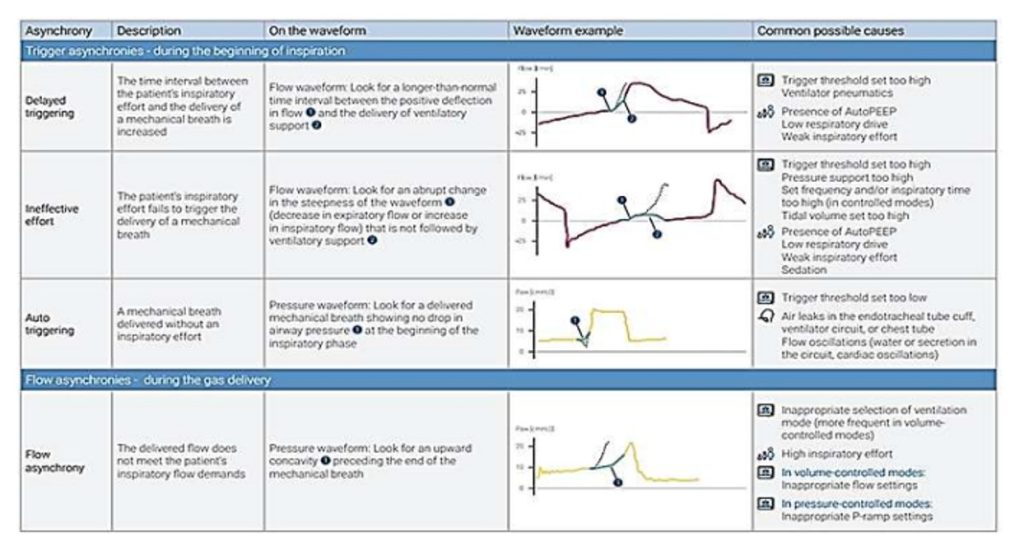
Summary This review extensively analyzes the physiological control mechanisms of ventilation and their interaction with mechanical ventilators, highlighting advanced technologies aimed at improving patient-ventilator synchrony. Ventilator dyssynchrony—defined as a mismatch between patient respiratory effort and ventilator support—remains prevalent, contributing significantly to adverse outcomes, including prolonged ventilation, diaphragm dysfunction, extended ICU stays, and increased mortality. The […]

Bridging the gap: Enhancing synchrony in mechanical ventilation Read Post »
Mechanical Ventilation

What every paediatrician needs to know about mechanical ventilation

Abstract Invasive mechanical ventilation (MV) is one of the most practiced interventions in the intensive care unit (ICU) and is unmistakably lifesaving for children with acute respiratory failure (ARF). However, if delivered inappropriately (i.e. ignoring the respiratory system mechanics and not targeted to the need of the individual patient at a specific time point in

, , , , ,

What every paediatrician needs to know about mechanical ventilation Read Post »

Mechanical Ventilation, Pharmacological Insights in Critical Care

Pressure support, patient effort and tidal volume: a conceptual model for a non linear interaction

Abstract Pressure support ventilation (PSV) is a form of assisted ventilation which has become frequently used, with the aim of partially unloading the patient’s inspiratory muscles. Both under- and over-assistance should be avoided to target a lung- and diaphragm- protective ventilation. Herein, we propose a conceptual model, supported by actual data, to describe how patient

, ,

Pressure support, patient effort and tidal volume: a conceptual model for a non linear interaction Read Post »

Scroll to Top