Can Patients Safely Exercise With a Speaking Valve in Place?
Abstract: This randomized crossover-controlled study evaluated 20 ICU patients with tracheostomies performing in-bed cycle ergometry with versus without a speaking valve (SV). Safety was assessed via lung aeration using electrical impedance tomography (EIT), vital signs, and patient experience.
Key Insights:
- Safety: No adverse events occurred in either group. SpO₂ remained >96% and HR <100 bpm throughout.
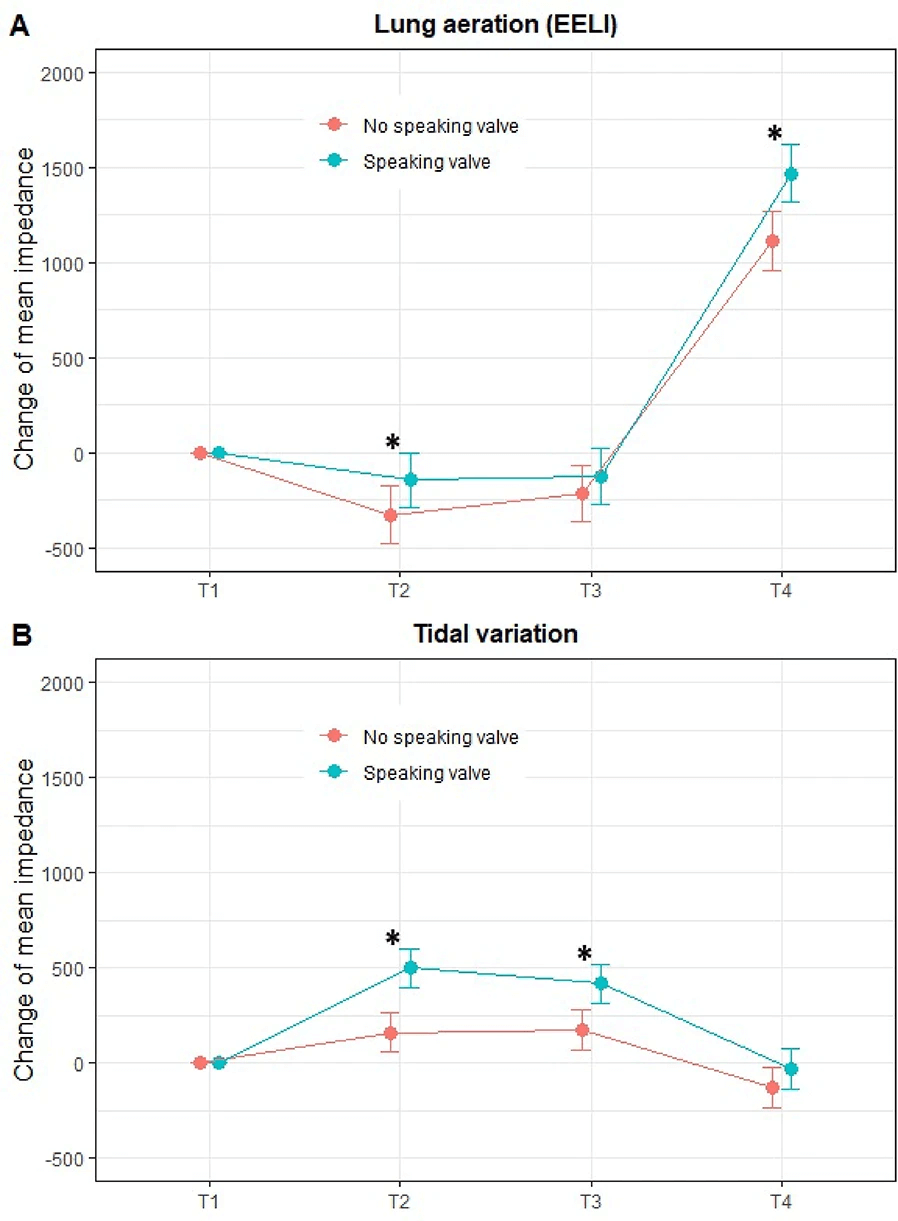
- Lung aeration: Both groups showed reduced aeration during exercise, but loss was smaller and recovery greater with SV in situ.
- Tidal variation: Increases were significantly larger with SVs, suggesting better ventilation distribution.
- Patient preference: 83% preferred exercising with SVs, citing improved ability to communicate needs and ask questions.
- Performance: Exercise tolerance was similar with or without SV, indicating no physiologic downside to SV use.
Why This Matters: Patients with tracheostomies often have SVs removed during exercise due to safety concerns. This study demonstrates SV use during exercise is safe, improves lung recruitment, and enhances communication.
Conclusion: Tracheostomized patients can safely exercise with SVs in place, benefiting both physiology and autonomy.
Take-Home for Clinicians:
- Keep SVs in place during ICU exercise unless contraindicated.
- Expect improved lung aeration and communication with no added risk.
- Incorporate SV-assisted exercise into ICU rehabilitation protocols.
Discussion Question: Should SVs become the default standard for exercise in tracheostomized ICU patients to maximize both safety and engagement?

Open Access This article is licensed under a Creative Commons Attribution 4.0 International License, which permits use, sharing, adaptation, distribution and reproduction in any medium or format, as long as you give appropriate credit to the original author(s) and the source, provide a link to the Creative Commons licence, and indicate if changes were made. The images or other third party material in this article are included in the article’s Creative Commons licence, unless indicated otherwise in a credit line to the material. If material is not included in the article’s Creative Commons licence and your intended use is not permitted by statutory regulation or exceeds the permitted use, you will need to obtain permission directly from the copyright holder. To view a copy of this licence, visit http://creativecommons.org/licenses/by/4.0/.