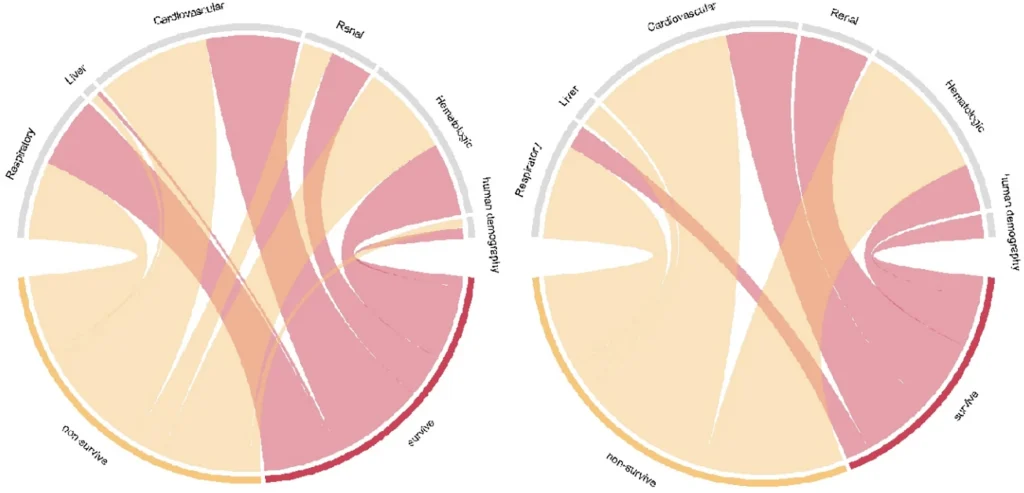
Summary of “ARDS Subphenotypes Exhibit Different Right Ventricular-Pulmonary Arterial Coupling Profiles”
Abstract
Acute respiratory distress syndrome (ARDS) is a heterogeneous condition with distinct subphenotypes that exhibit different responses to interventions. Right ventricular-pulmonary arterial (RV-PA) coupling, a key determinant of cardiopulmonary interactions in ARDS, has not been well studied across subphenotypes. This study analyzed RV-PA coupling in two previously established ARDS subphenotypes using invasive hemodynamics from the FACTT trial. Findings demonstrate that subphenotype B, characterized by higher inflammation and disease severity, exhibited worse RV-PA coupling, with implications for ARDS management strategies.
Key Points
-
ARDS Subphenotypes and RV-PA Coupling: Two ARDS subphenotypes (A and B) were classified using k-means clustering on clinical variables, with subphenotype B showing higher systemic inflammation and worse outcomes.
-
Study Cohort and Data Source: A secondary analysis of 313 patients from the FACTT trial was conducted, including only those assigned to pulmonary artery catheterization, allowing for detailed invasive hemodynamic assessments.
-
Pulmonary Artery Pulsatility Index (PAPi) as a Key Marker: PAPi, a measure of RV function, was significantly lower in subphenotype B (1.33 vs. 1.65), indicating worse RV-PA coupling and higher right ventricular dysfunction risk.
-
Effective Arterial Elastance (Ea) Differences: Subphenotype B exhibited higher Ea (0.60 vs. 0.44), reflecting increased pulmonary vascular resistance and reduced pulmonary artery compliance.
-
Association with Pulmonary Hemodynamics: Patients in subphenotype B had significantly higher pulmonary artery systolic, mean, and diastolic pressures, contributing to RV strain.
-
Higher PEEP in Subphenotype B: Patients in subphenotype B received higher PEEP levels (median 10 vs. 8 cmH₂O), although no interaction between PEEP and RV-PA coupling was observed.
-
No Difference in Cardiac Index: Despite differences in pulmonary pressures and elastance, cardiac index was not significantly different between subphenotypes, suggesting compensatory RV adaptation.
-
Increased Mortality in Subphenotype B: The 90-day mortality rate was higher in subphenotype B (36% vs. 26%), reinforcing the clinical relevance of RV-PA coupling differences.
-
No Effect of Fluid Management Strategy on RV-PA Coupling: Liberal vs. conservative fluid strategies did not significantly modify RV-PA coupling differences between subphenotypes.
-
Clinical Implications for ARDS Management: Recognizing ARDS subphenotypes with differential RV-PA coupling profiles may help guide right heart-protective interventions, including tailored use of vasodilators, prone positioning, and ECMO.
Conclusion
This study demonstrates that ARDS subphenotype B, associated with greater inflammation and disease severity, exhibits worse RV-PA coupling, as indicated by lower PAPi and higher Ea. These findings highlight the importance of individualized ARDS management strategies that account for right ventricular function and pulmonary vascular load. Future research should focus on incorporating RV-PA coupling assessments into ARDS phenotyping and evaluating targeted cardiopulmonary interventions.

Open Access This article is licensed under a Creative Commons Attribution 4.0 International License, which permits use, sharing, adaptation, distribution and reproduction in any medium or format, as long as you give appropriate credit to the original author(s) and the source, provide a link to the Creative Commons licence, and indicate if changes were made. The images or other third party material in this article are included in the article’s Creative Commons licence, unless indicated otherwise in a credit line to the material. If material is not included in the article’s Creative Commons licence and your intended use is not permitted by statutory regulation or exceeds the permitted use, you will need to obtain permission directly from the copyright holder. To view a copy of this licence, visit http://creativecommons.org/licenses/by/4.0/.