


Abstract Background Venoarterial extracorporeal membrane oxygenation (VA-ECMO) is often combined with other temporary mechanical circulatory support (tMCS) in cardiogenic shock, yet combination-specific outcomes remain poorly defined. We compared temporal trends,..
Read More
Abstract Objectives To compare clinical outcomes of venoarterial (VA) extracorporeal membrane oxygenation (ECMO) combined with mechanical thrombectomy (MT) versus VA-ECMO alone in high-risk pulmonary embolism (PE). Design Systematic review and..
Read More
Abstract A 37-year-old patient (gravida 10, para 0–1–8-0) with class III obesity, obstructive sleep apnoea requiring continuous positive airway pressure and previous pulmonary emboli presented at 19 + 6 weeks' gestation with severe..
Read More
Abstract Objective: To evaluate the response of various oxygenation indices to the oxygen challenge test (OCT), prior to decannulation, in neonates supported with VA ECMO for respiratory indications, and to..
Read More
Abstract Upper-body peripheral arterial return is used during veno-arterial extracorporeal membrane oxygenation (VA-ECMO), but its clinical tradeoffs versus femoral return are uncertain. We reviewed observational studies comparing upper-body to femoral..
Read More
Abstract Veno-arterial extracorporeal membrane oxygenation (ECMO) is used to support patients with high-risk pulmonary embolism (HR-PE) with cardiogenic shock, but data on mid- and long-term outcomes after reperfusion remain limited...
Read More
Abstract Veno-arterial extracorporeal membrane oxygenation (VA-ECMO) has become an accepted treatment modality for refractory cardiogenic shock (CS). However, its use is limited to tertiary centers due to resource allocation, education,..
Read More
Abstract Observational studies comparing Impella and venoarterial extracorporeal membrane oxygenation (VA-ECMO) in cardiogenic shock have reported inconsistent findings. We performed an updated systematic review and meta-analysis, with exploratory matched-cohort analyses..
Read More
Abstract Venoarterial extracorporeal membrane oxygenation (V-A ECMO) is a technique used to provide short-term circulatory and respiratory support in patients with refractory cardiogenic shock and cardiac arrest who do not..
Read More
Abstract Cerebral injury remains a major contributor to morbidity and mortality in VA‑ECMO patients. Disruption of cerebral autoregulation during extracorporeal support may predispose to neurological damage. This prospective study evaluated..
Read More
Abstract An obese female patient with ischemic cardiomyopathy was placed on venoarterial extracorporeal membrane oxygenation (VA-ECMO) for cardiogenic shock after in-hospital cardiac arrest. Despite biventricular recovery by day 3, VA-ECMO..
Read More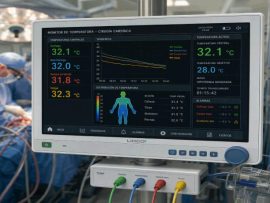
Abstract Aim Early downward temperature drift is a common event of pre-hospital extracorporeal cardiopulmonary resuscitation (e-CPR), since prehospital extracorporeal membrane oxygenation (VA-ECMO) circuits often lack heat-exchangers. However, whether this core..
Read More
Abstract Introduction In patients with prior valve replacement requiring venoarterial extracorporeal membrane oxygenation (VA ECMO), there is a risk of prosthetic valve thrombosis (PVT) due to intracardiac stasis. We describe..
Read More
Abstract Patients supported with peripheral femoral venoarterial extracorporeal membrane oxygenation (VA-ECMO) frequently face the challenge of determining the optimal timing for weaning trials, as no universally standardized bedside method is..
Read More
Abstract Background: Conflicting data exist regarding the survival benefit of mechanical left ventricular (LV) unloading in patients receiving peripheral venoarterial extracorporeal membrane oxygenation (VA-ECMO) for refractory cardiogenic shock (CS). In..
Read More
Abstract Background/Objectives: Evidence on outcomes after repeat VA-ECMO in adults remains limited. This study aimed to compare survival and post-discharge functional outcomes between adults requiring a second VA-ECMO run and..
Read More
Abstract Background: Numerous studies have demonstrated that both cardiopulmonary bypass (CPB) and extracorporeal membrane oxygenation (ECMO) are often associated with adverse outcomes or immune dysregulation when platelet counts decline during..
Read More
Abstract Background Levosimendan is often given during venoarterial extracorporeal membrane oxygenation (VA-ECMO) support with the intention of facilitating weaning. The available evidence, however, has been derived largely from nonrandomized studies..
Read More
Abstract Historically, extracorporeal membrane oxygenation (ECMO) in critical illness and respiratory failure has been used cautiously in patients with morbid obesity. However, recent data show favorable mortality outcomes for higher..
Read More
Abstract Background Acute myocardial infarction complicated by cardiogenic shock (AMI-CS) carries a high risk of in-hospital death. Randomized evidence does not support routine VA-ECMO use in unselected AMI-CS populations. Objective..
Read More
Abstract Background Severe hyperoxia during venoarterial extracorporeal membrane oxygenation (VA-ECMO) has been associated with adverse clinical outcomes in observational studies. However, causal evidence and optimal oxygen targets remain uncertain. Hyperoxia..
Read More
Abstract Background Veno-arterial extracorporeal membrane oxygenation (VA ECMO) provides temporary mechanical circulatory support, primarily for patients with compromised cardiac function. In individuals supported on femoral VA ECMO with concurrent pulmonary..
Read More
Abstract Background Optimal timing of venoarterial extracorporeal membrane oxygenation (VA-ECMO) decannulation in pediatric patients with congenital or acquired heart disease remains challenging, particularly when myocardial recovery is uncertain. Some centers..
Read More
Abstract Background This study aimed to evaluate in-hospital mortality and to identify predictors of mortality in coronary artery bypass grafting (CABG) patients receiving veno-arterial extracorporeal membrane oxygenation (VA-ECMO) support. Methods..
Read More
Abstract Patients undergoing salvage cardiac surgery experience markedly elevated mortality, often exceeding the risk predicted by the Society of Thoracic Surgeons Predicted Risk of Mortality score. These patients are typically..
Read More
Abstract Background Readiness for venoarterial-extracorporeal membrane oxygenation (VA-ECMO) decannulation after extracorporeal cardiopulmonary resuscitation (ECPR) for out-of-hospital cardiac arrest (OHCA) remains poorly defined. Objectives The objective of the study was to..
Read More
Abstract Background Determination of brain death/death by neurologic criteria (BD/DNC) in patients supported with extracorporeal membrane oxygenation (ECMO) is particularly challenging due to extracorporeal carbon dioxide clearance, which may interfere..
Read More
Abstract Left ventricular (LV) overload is a recognized complication of venoarterial extracorporeal membrane oxygenation (VA-ECMO), but pediatric decompression remains technically challenging and poorly standardized. The atrial flow regulator (AFR) (Occlutech) is..
Read More
Abstract Venoarterial extracorporeal membrane oxygenation (VA-ECMO) is increasingly used for providing adequate organ support in cardiogenic shock. While the intervention provides circulatory and respiratory support in the critical stage, it..
Read More
Abstract Background This study aimed to evaluate in-hospital mortality and to identify predictors of mortality in coronary artery bypass grafting (CABG) patients receiving veno-arterial extracorporeal membrane oxygenation (VA-ECMO) support. Methods..
Read More