


Abstract Background Extracorporeal membrane oxygenation, although lifesaving, is invasive. Complications affecting all body systems mandate reevaluation of goals of care. When extracorporeal membrane oxygenation is nonbeneficial, planning for de-escalation/decannulation to..
Read More
Abstract Extracorporeal membrane oxygenation (ECMO) is a life-saving intervention for critically ill children. However, decisions regarding discontinuation due to poor prognosis remain ethically complex. While outcomes after successful weaning are..
Read More
Abstract Background Decannulation from venovenous extracorporeal membrane oxygenation (ECMO) at the earliest safe opportunity would be expected to improve patient outcomes. Currently, the manner in which clinicians liberate patients from..
Read More
Abstract Background Optimal timing of venoarterial extracorporeal membrane oxygenation (VA-ECMO) decannulation in pediatric patients with congenital or acquired heart disease remains challenging, particularly when myocardial recovery is uncertain. Some centers..
Read More
Abstract Background Readiness for venoarterial-extracorporeal membrane oxygenation (VA-ECMO) decannulation after extracorporeal cardiopulmonary resuscitation (ECPR) for out-of-hospital cardiac arrest (OHCA) remains poorly defined. Objectives The objective of the study was to..
Read More
Abstract Introduction Mortality in patients receiving Extracorporeal Membrane Oxygenation (ECMO) is partly attributable to unanticipated hemodynamic instability after elective decannulation, termed weaning-related shock (WRS). This study explored the etiology of..
Read More
Abstract OBJECTIVE Extracorporeal membrane oxygenation (ECMO) is a vital support for pediatric patients with severe cardiac or pulmonary failure. However, post-decannulation complications, particularly involving carotid artery ligation (CAL) or carotid..
Read More
Abstract This retrospective single-center study evaluated adults with cardiogenic shock supported with veno-arterial extracorporeal membrane oxygenation (VA ECMO) from 2011 to 2023 to identify predictors of in-hospital mortality among those..
Read More
Abstract Background ECMO-associated coagulopathy is a common phenomenon in patients undergoing ECMO therapy. However, data on coagulation trajectories in the post ECMO decannulation period are limited. This study aimed to..
Read More
Abstract Assessment of readiness for venoarterial extracorporeal membrane oxygenation (VA ECMO) weaning relies on hemodynamic and metabolic parameters of cardiac and respiratory functions. Lactate clearance, inotropic support, and echocardiographic criteria,..
Read More
Abstract Objectives: In neonates, the carotid artery can be ligated or reconstructed at the time of decannulation from venoarterial extracorporeal membrane oxygenation (VA-ECMO). However, there is a paucity of data..
Read More
Abstract Objectives: Decannulation after pediatric extracorporeal life support (ECLS) may be accompanied by arterial reconstruction. There is a paucity of data on arterial morphology following reconstruction. We sought to characterize..
Read More
We present an enhanced percutaneous decannulation technique for a patient undergoing veno-arterial extracorporeal membrane oxygenation. This innovative approach uses two distinct percutaneous vascular devices, offering a more reliable and more..
Read More
Abstract Purpose Fever is frequent after extracorporeal membrane oxygenation (ECMO) decannulation. We aimed to evaluate the incidence of post-decannulation fever and describe its causes. Methods Adult ECMO patients who were..
Read More
Abstract Background Clinical blood resources are scarce and autologous blood transfusion for extracorporeal membrane oxygenation (ECMO) withdrawal is less studied. Objectives To assess the use of staged autotransfusion during ECMO..
Read More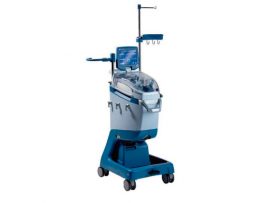
Abstract Background Clinical blood resources are scarce and autologous blood transfusion for extracorporeal membrane oxygenation (ECMO) withdrawal is less studied. Objectives To assess the use of staged during decannulation. Methods The study..
Read More
Abstract Background: Venovenous extracorporeal membrane oxygenation (VV-ECMO) is a therapy for patients with refractory respiratory failure. The decision to decannulate someone from extracorporeal membrane oxygenation (ECMO) often involves weaning trials..
Read More
Abstract Objective Although (ECLS) has increasingly been used for the of patients with (CS), the outcomes of those successfully weaned from support remain poorly defined. Methods Of 510 venoarterial ECLS CS patients at..
Read More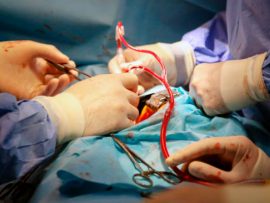
Abstract Decannulation of patients on peripheral veno-arterial extracorporeal membrane oxygenation (VA ECMO) typically involves femoral arterial cutdown and surgical arteriotomy closure in an operating room under general anesthesia. However, this..
Read More
Abstract Percutaneous cannulation improved femoro-femoral veno-arterial Extracorporeal Membrane Oxygenation (VA-ECMO) results, reducing infectious complications, but remains limited by vascular complications related to the arterial decannulation. Several techniques were described to perform a percutaneous decannulation..
Read More
Abstract Purpose A survival gap between weaning from venoarterial-extracorporeal membrane oxygenation (VA-ECMO) and the hospital discharge has been consistently reported. The aim of this study is to investigate the clinical..
Read More
ABSTRACT In 1952, John Gibbon performed the first successful cardiac procedure using cardiopulmonary bypass, which turned out to be one of the most important clinical advances of that year. Cardiopulmonary..
Read More