


Abstract Objective: Adenosine pretreatment reduces injury caused by ischemia-reperfusion. To investigate the hypothesis that adenosine pretreatment would modulate injury induced by cardiopulmonary bypass (CPB) and myocardial ischemia/reperfusion, we conducted a randomized controlled trial on the effects of adenosine pretreatment in children undergoing surgery to repair congenital heart defects. Methods: Children undergoing surgery..
Read More
Abstract Introduction: Evidence suggests the high capability of non-invasive assessment of the End-tidal carbondioxide (ETCO2) in predicting changes in arterial carbon dioxide pressure (PCO2) following major surgeries in children. We aimed to compare EtCO2 values measured by capnography with mainstream device and EtCO2 values assessed by arterial blood gas analysis before..
Read More
Abstract Objectives:To determine the optimal antithrombotic agent choice, timing of initiation, dosing and duration of therapy for paediatric patients undergoing cardiac surgery with cardiopulmonary bypass. Methods:We used PubMed and EMBASE to systematically review the existing literature of clinical trials involving antithrombotics following cardiac surgery from 2000 to 2020 in children..
Read More
Abstract Objectives Cardiopulmonary bypass (CPB) predisposes young children to coagulopathy. The authors evaluated possible effects of CPB priming fluids on perioperative bleeding in pediatric cardiac surgery. Design Meta-analysis and systematic review of previously published studies. Setting Each study was conducted in a surgical center or intensive care unit. Participants Studies..
Read More
Abstract Disclaimer: This extracorporeal life support organization guideline describes the preparation for and undertaking of transport and retrieval of patients on extracorporeal membrane oxygenation (ECMO). The guideline describes useful and safe practice put together by an international multidisciplinary team with extensive experience in the field of ECMO and ECMO transport...
Read More
Abstract Perfusion education programs use simulation to provide students with clinical skills prior to entering the operating room. To teach the psychomotor execution of skills in a simulation lab requires a list of validated skills and deconstructed sub-steps to fully optimize adult learning. A list of the fundamental skills of..
Read More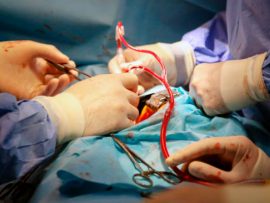
Abstract Background: Systemic inflammatory response syndrome (SIRS) is a common complication after cardiac surgery. There are no definite optimal glycemic threshold for pediatric patients receiving open-heart surgery with CPB. The study aimed to investigate the optimal cardiopulmonary bypass (CPB) glucose in patients undergoing cardiac surgery. Methods: We enrolled children with..
Read More
Abstract Objectives: To present the recommendations and consensus statements with supporting literature for plasma and platelet transfusions in critically ill neonates and children undergoing cardiac surgery with cardiopulmonary bypass or supported by extracorporeal membrane oxygenation from the Transfusion and Anemia EXpertise Initiative–Control/Avoidance of Bleeding. Design: Systematic review and consensus conference..
Read More
Abstract Importance Oxygen supplementation is a cornerstone treatment in pediatric critical care. Accumulating evidence suggests that overzealous use of oxygen, leading to hyperoxia, is associated with worse outcomes compared with patients with normoxia. Objectives To evaluate the association of arterial hyperoxia with clinical outcome in critically ill children among studies using varied..
Read More
Abstract Extracorporeal membrane oxygenation (ECMO) is a rescue treatment used in children and adults with reversible cardiorespiratory failure. The role of ECMO is not fully established in pediatric sepsis. In this retrospective single-center study, we aimed to investigate risk factors and survival in pediatric septic shock supported with peripheral cannulation ECMO. All..
Read More