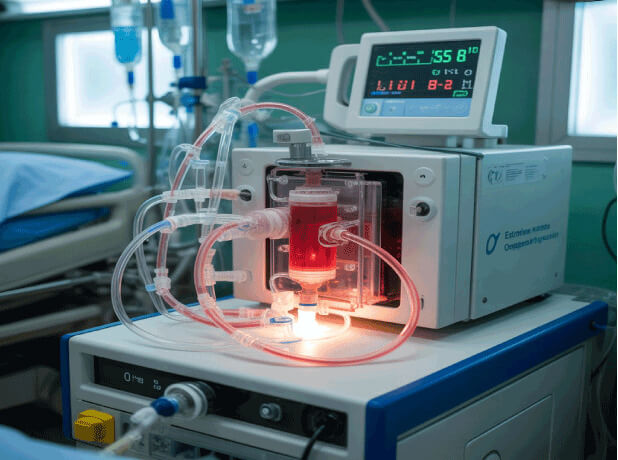

Extracorporeal membrane oxygenation (ECMO) and endovascular balloon occlusion of the aorta (REBOA) have been reported to manage hemodynamics and reduce blood loss and transfusion requirements during high-risk abdominal surgeries. We investigated whether a venoarterial ECMO perfusion system with small-bore femoral arterial and venous cannulas (8F/10F) and endovascular hemorrhage control devices placed in the aorta and inferior vena cava (REBOAVC) can prolong the duration of survivable occlusion in a porcine hemorrhage model. Pigs underwent 30% controlled hemorrhage with subsequent supraceliac/suprahepatic REBOAVC (90 minutes full occlusion) with (n = 10) or without (n = 3) ECMO. Balloon deflation was followed by immediate transfusion of hemorrhaged blood and a 3 hour reperfusion/critical care period. A subset of ECMO pigs (n = 5) underwent hemofiltration with an Oxiris filter. Extracorporeal membrane oxygenation pigs showed greater survival (90% vs. 0%), improved lactate clearance (3.7 ± 0.8 vs. 13.7 ± 1.8 mmol/L), decreased norepinephrine requirement (18 ± 5 vs. 56 ± 3 μg/kg), and reduced histologic jejunum and kidney ischemia scores versus no ECMO (p < 0.05). Hemofiltration successfully managed hyperkalemia, decreased systemic inflammatory cytokine levels, and aided in acid-base correction from ischemia-reperfusion injury during resuscitation. Small-bore cannulas provided sufficient perfusion to distal organs in a porcine model suggesting that an integrated ECMO-REBOAVC-hemofiltration system has the potential to improve survivability for prolonged occlusion time.
