
Extracorporeal Membrane Oxygenation Ouroboros: A Rare Cause of Mass Recirculation During Femoro-Jugular Venovenous ECMO

Abstract
A 53 year old female was referred to our quaternary center for venovenous extracorporeal membrane oxygenation (ECMO) retrieval. Following a brief admission for a cosmetic procedure, she had represented to a regional hospital with severe hypoxemic respiratory failure, secondary to human metapneumovirus, further exacerbated by aspiration on intubation.
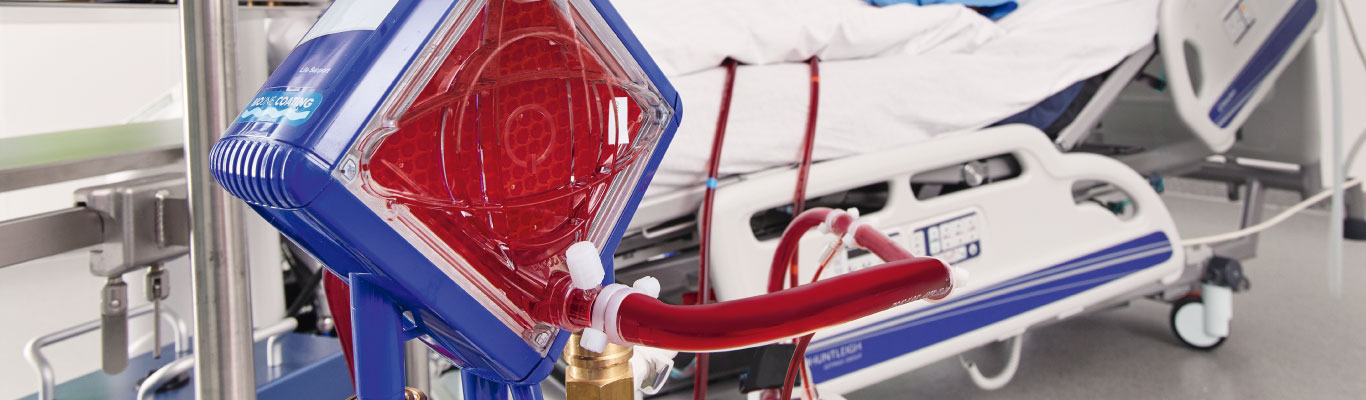
Venovenous ECMO was initiated with transesophageal echocardiography guidance resulting in a final configuration of V29/55fvr svc – V19/21jr a. As per institutional practice, bicaval access drainage was used with the return cannula tip sitting in the right atrium. One week postinitiation, there was substantial native lung recovery permitting a wean to relatively low levels of ECMO support (ECBF ~ 2.8 LPM, SGFR 2 L FdO2 0.8), and the patient was nearing decannulation. Following a patient roll, the mixed venous saturations displayed on the Cardiohelp console were seen to increase dramatically to 99.9%, accompanied by a positive venous pressure (Pven) not normally encountered during the course of ECMO (Figure 1A), and loss of color differential between access and return limbs of the ECMO circuit (Figure 1B). Chest x-ray and transoesophageal echocardiogram (ECHO) demonstrated migration of the return cannula inside the larger access cannula lumen (Figure 1C), forming a continuous loop of recirculation reminiscent of the Orouboros; the serpent depicted biting its own tail in Greek mythology. Recirculation describes a significant proportion of artificially oxygenated return blood being redrawn into the access limb of the circuit, rather than mixing with the native circulation, limiting VVECMO efficiency, and producing spuriously high access saturations (mixed venous oxygen saturations (SvO2)). Under echo imaging guidance the access cannula was repositioned into the low inferior vena cava, and the SvO2 fell promptly to <60%, with return of the expected color gradient between access and return cannula. To our knowledge, this is a novel description of gross recirculation resulting from invagination of the return cannula within the access cannula.