


Abstract Objectives To determine whether low pre- or post-bypass antithrombin (AT) activity identifies adult cardiac surgery patients at increased risk of adverse outcomes in settings where plasma transfusion is rare...
Read More
Abstract Background Considerable variability persists in coagulation management during cardiopulmonary bypass (CPB) supported cardiac surgery. This survey aimed to describe contemporary reported practices across international settings. Methods A cross-sectional, web-based..
Read More
Abstract Physiological anticoagulants are essential regulators of coagulation, and their deficiency shifts hemostasis toward a prothrombotic state, increasing the risk of venous thromboembolism. The main physiological anticoagulants, antithrombin (AT), protein..
Read More
Abstract Objectives The hemostatic system in neonates and infants with congenital heart disease is distinct as a result of developmental and disease-specific factors, necessitating population-specific periprocedural evaluation and antithrombotic management...
Read More
Abstract Physiological anticoagulants are essential regulators of coagulation, and their deficiency shifts hemostasis toward a prothrombotic state, increasing the risk of venous thromboembolism. The main physiological anticoagulants, antithrombin (AT), protein..
Read More
Abstract Objectives To evaluate whether an activated clotting time (ACT)-guided, formula-based anticoagulation strategy supported by viscoelastic coagulation monitoring (ROTEM) improves perioperative coagulation management and reduces bleeding compared with standard weight-based..
Read More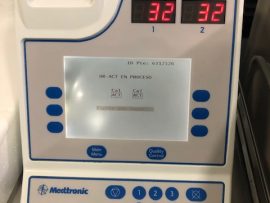
Abstract The International Society on Thrombosis and Haemostasis (ISTH) recently published a survey on the management of unfractionated heparin (UFH), which revealed substantial heterogeneity in practice and highlighted the need..
Read More
Abstract Heparin-induced thrombocytopenia (HIT) represents a high-risk perioperative challenge in patients undergoing cardiac surgery. Although unfractionated heparin remains the standard anticoagulant for cardiopulmonary bypass (CPB), its use in patients with..
Read More
Abstract Unfractionated heparin (UFH) exposure before cardiac surgery is ubiquitous. Patients who undergo urgent coronary surgery have almost invariably received intravenous UFH, and patients who undergo elective surgery receive it..
Read More
Abstract The International Society on Thrombosis and Haemostasis (ISTH) recently published a survey on the management of unfractionated heparin (UFH), which revealed substantial heterogeneity in practice and highlighted the need..
Read More
Abstract Background Heart transplant recipients often face the clinical dilemma of coexisting bleeding and thrombotic risks postoperatively. Conventional anticoagulation monitoring parameters (e.g., platelet count, fibrinogen, D‑dimer, and anti‑Xa activity) frequently..
Read More
Abstract Objectives Activated clotting time (ACT) is widely used to monitor intraoperative anticoagulation with unfractionated heparin (UFH) during vascular surgery, but the most informative ACT-derived metric and the optimal approach..
Read More
Abstract BACKGROUND: Validation of the Quantra QPlus sonorheometry cartridge (Hemosonics Corporation) in cardiac surgical patients is limited. The primary aim of our study was to quantify the accuracy of the..
Read More
Abstract Objectives To describe perioperative transfusion rates, hospital variability, temporal trends, and the association between red blood cell (RBC) transfusion and predefined risk factors in Dutch cardiac surgery. Design Nationwide..
Read More
Abstract Background Postoperative bleeding is a common and potentially life-threatening complication following cardiac surgery, often exacerbated by multifactorial coagulopathy from cardiopulmonary bypass, hypothermia, and platelet dysfunction. While fresh frozen plasma..
Read More
Abstract Unfractionated heparin (UFH) has long been an anticoagulant of choice. Despite the increasing use of low molecular weight heparin derivatives and more recently direct oral anticoagulants, UFH is still..
Read More
Abstract Background Frozen plasma (FP) is the standard haemostatic therapy after cardiopulmonary bypass, but recent trials indicate that FP is inferior to four-factor prothrombin complex concentrate (PCC). Citrate content may..
Read More
Abstract Objectives To determine whether individualized heparin dosing guided by a heparin dose-response (HDR) curve is noninferior to conventional weight-based dosing in achieving target activated clotting time (ACT) of ≥480..
Read More
Abstract This study describes the development and preliminary validation of an integrated clinical decision support application (Cardiac Critical Care Advisor Pro, CCA Pro v6.0) that combines viscoelastic coagulation analysis, arterial..
Read More
Abstract Perioperative bleeding remains a major complication in cardiac surgery and is associated with increased morbidity, mortality, and transfusion requirements. While patient blood management strategies and goal-directed hemostatic therapies have..
Read More
Abstract Clot-fibrinolysis waveform analysis (CFWA) enables the simultaneous assessment of coagulation and fibrinolytic functions within a short timeframe. We evaluated the effects of commonly used anticoagulants on coagulation–fibrinolysis balance using..
Read More
Abstract Introduction Critically ill ECMO patients face high bleeding risks from anticoagulation and other factors. Although viscoelastic tests, like ROTEM, are widely used to assess hemostasis, evidence for their superiority..
Read More
Abstract Introduction Standard anticoagulation protocols for patients with trauma-related acute respiratory distress syndrome (TR-ARDS) undergoing venovenous extracorporeal membrane oxygenation (VV-ECMO) are often inapplicable due to high bleeding risks. This study..
Read More
Abstract Objectives To quantify the incidence of Quantra QPlus clot time ratio (CTR) elevation (>1.4) in cardiac surgical patients with suspected postoperative coagulopathy and to investigate the correlation between CTR..
Read More
Abstract Objectives Antiphospholipid syndrome (APS) is an autoimmune prothrombotic disorder that complicates anticoagulation during cardiovascular surgery requiring cardiopulmonary bypass (CPB). This systematic review aimed to characterize the anticoagulation monitoring strategies..
Read More
Abstract Objectives To evaluate postoperative residual and reappearing heparin activity after low-dose, titration-guided protamine reversal following cardiopulmonary bypass (CPB) in elective coronary artery bypass grafting (CABG). Design Prospective, controlled clinical..
Read More
Abstract A critical aspect of cardiopulmonary bypass (CPB) is achieving full anticoagulation to prevent thrombosis and consumptive coagulation (CCA). Systemic anticoagulation with heparin during CPB should be completely neutralized by..
Read More
Abstract Heparin-induced thrombocytopenia (HIT) is an immune-mediated adverse drug reaction characterized by thrombocytopenia and a high risk of thrombosis. Patients with HIT and a need for cardiac surgery with cardiopulmonary..
Read More
Abstract Background In patients receiving extracorporeal membrane oxygenation (ECMO), standard practice is full-dose intravenous unfractionated heparin (UFH) targeting an activated partial thromboplastin time of 2·0–2·5 times baseline to reduce thrombotic..
Read More
Abstract Hospital-acquired infection (HAI) is a major complication in pediatric patients on extracorporeal membrane oxygenation (ECMO) and continuous renal replacement therapy (CRRT). Infection detection is challenging, as traditional inflammatory markers..
Read More