


Abstract Circulating compounds such as drugs and nutritional components might adhere to the oxygenator fibers and tubing during ECMO support. This study evaluated the amount of nutritional supplements adsorbed to..
Read More
Abstract The COVID-19 pandemic significates an enormous number of patients with pneumonia that get complicated with severe acute respiratory distress syndrome (ARDS), some of them with refractory hypercapnia and hypoxemia..
Read More
Abstract Background: Delirium is a frequent complication after cardiac surgery and is associated with a higher incidence of morbidity and mortality and a prolonged hospital stay. However, knowledge of the variables..
Read More
Abstract Acute type A aortic dissection (ATAAD) is a life-threatening event that requires immediate surgical treatment. Improvements in surgical treatment, graft technology, organ protection and imaging techniques have led to..
Read More
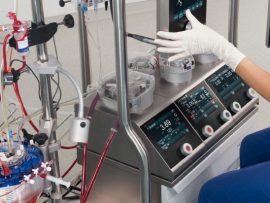
Abstract OBJECTIVES Cardiopulmonary bypass in cardiac surgery has been associated with several deleterious effects including haemodilution and systemic inflammation. Modified ultrafiltration (MUF) has been well established in paediatric..
Read More
Abstract Hyperthermic intraperitoneal chemotherapy (HIPEC) has been shown to be an effective treatment for peritoneal tumors; whether preventive HIPEC after radical resection for T4 stage colon adenocarcinoma could decrease peritoneal..
Read More
Abstract Total anomalous pulmonary venous connection (TAPVC) is a rare congenital cardiac malformation, and prenatal detection of TAPVC malformation remains a challenging. TAPVC can be easily missed or misdiagnosed in..
Read More
Abstract This review provides a comprehensive overview of the past 25+ years of research into the development of left ventricular assist device (LVAD) to improve clinical outcomes in patients with..
Read More
Abstract Congenital long QT syndrome (LQTS) is characterised by heart rate corrected QT interval prolongation and life-threatening arrhythmias, leading to syncope and sudden death. Variations in genes encoding for cardiac..
Read More
[pdf-embedder url="https://perfusfind.com/wp-content/uploads/2021/05/CribSheet-PE-1.91_compressed.pdf" title="CribSheet PE 1.91_compressed"] Pulmonary Embolism Treatment Overview
Read More
Abstract A wide QRS complex tachycardia (WCT) is defined as a tachycardia with QRS duration of >120 ms. Distinguishing between the different potential causes of a WCT can have important..
Read More
Abstract Background Diagnosis of heparin-induced thrombocytopenia (HIT) requires pre-test probability assessment and dedicated laboratory assays. Objective To develop a pre-test score for HIT. Design Observational; analysis of prospectively collected data..
Read More
Abstract Background In the Île-de-France region (henceforth termed Greater Paris), extracorporeal membrane oxygenation (ECMO) for severe acute respiratory distress syndrome (ARDS) was considered early in the COVID-19 pandemic. We report..
Read More
Abstract Even after the introduction of extracorporeal cardiopulmonary resuscitation (ECPR), survival after cardiac arrest remains poor. Excess release of vasoactive cytokines may be a reason for cardiovascular instability and death..
Read More
Abstract Hypercoagulability in coronavirus disease 2019 (COVID-19) may aggravate disease severity during hospitalization but the reported survival benefits from anticoagulation (AC) vary among studies. We performed a literature research to..
Read More
Abstract Purpose Intranasal insulin administration may improve cognitive function in patients with dementia and may prevent cognitive problems after surgery. Although the metabolic effects of intranasal insulin in non-surgical patients have been studied, its influence on glucose..
Read More
Abstract Background The benefit of red blood cell (RBC) transfusion in anemic critically-ill patients with cardiovascular disease is uncertain, as is the optimal threshold at which RBC transfusion should be..
Read More
Abstract Thrombosis is a potentially life-threatening complication in veno-arterial extracorporeal membrane oxygenation (ECMO) circuits, which may originate from the drainage cannula due to unfavorable blood flow dynamics. This study aims to..
Read More
Abstract Objective To examine the altitude differences in the optimal perfusate oxygenation (PpO2) in patients who underwent cardiac surgery. Methods We included children (aged 1 month to 18 years) with surgically repaired between..
Read More
Abstract OBJECTIVES Cardiopulmonary bypass in cardiac surgery has been associated with several deleterious effects including haemodilution and systemic inflammation. Modified ultrafiltration (MUF) has been well established in..
Read More
Abstract Objectives To investigate the prevalence and quantity of aortic valve calcium (AVC) in two large cohorts, stratified according to age and lipoprotein(a) (Lp(a)), and to assess the association between Lp(a)..
Read More
Abstract Background Myocardial protection is crucial for successful revascularization; multiple doses mixtures have been the cornerstone in adults. Del Nido cardioplegia (DLN CP) is used in pediatric population and in..
Read More
La Asociación Latinoamericana de Perfusión es una entidad diferente y totalmente independiente, que responde las necesidades de los perfusionistas de nuestra región. Es un lugar deseable para el encuentro, la..
Read More
Abstract Background Post-traumatic stress disorder (PTSD) is a common long-term outcome after intensive care of critical illness. Objectives Assess the prevalence and factors associated to PTSD after veno-arterial extracorporeal membrane..
Read More
Abstract It is now 50 years since the development of the first pericardial valve in 1971. In this time significant progress has been made in refining valve design aimed at..
Read More
Abstract Objective The coronavirus disease (COVID‐19) increases the respiratory complications and carries a higher mortality in the immediate postoperative period. The aim of this study was to analyze the outcomes..
Read More
Abstract Background and Aim of the Study Many studies support that the no‐touch (NT) procedure can improve the patency rate of vein grafts. However, it is not clear that the..
Read More
Abstract Background and Aim Although bicuspid aortic valve (BAV) anatomy might influence aortic aneurysm development, BAV‐related root involvement still lacks standardized surgical management. We aimed to evaluate late clinical outcomes..
Read More
Abstract Objectives Peripartum cardiomyopathy (PPCM) is a form of systolic heart failure occurring toward the end of pregnancy or in the period after delivery. Lack of myocardial recovery or therapy‐refractory..
Read More