


Abstract Extracorporeal membrane oxygenation (ECMO) is a therapy used in severe cardiopulmonary failure. Blood is pumped through an artificial circuit exposing it to nonphysiologic conditions, which promote platelet activation and..
Read More
Abstract Background and Objectives Heparin-induced thrombocytopenia (HIT) is an antibody-mediated condition that leads to thrombocytopenia and possible thrombosis. Patients with HIT who require cardiac surgery pose a challenge as high..
Read More
Abstract Postoperative coagulopathic bleeding is common in cardiac surgery and is associated with increased morbidity and mortality. Ideally, real-time information on in-vivo coagulation should be available. However, up to now..
Read More
Abstract Objectives: Evaluating whether there is a clinical benefit of using extracorporeal cytokine adsorption therapy in two indications. Design: Systematic review. Setting: Search on four databases, Medline, Embase, The Cochrane..
Read More
Abstract Objective Dysregulation of local nitric oxide (NO) synthetases occurs during and reperfusion associated with , (DHCA), and reperfusion. Rapid fluctuations in local occurring in neonates and infants probably contribute to inflammation-induced microglial activation..
Read More
Abstract Cardioplegia is used to induce cardiac arrest in order to facilitate cardiac surgery in patients supported by cardiopulmonary bypass. It is administered directly into the coronary vessels after the..
Read More
Abstract Background The effectiveness and safety of non-heparin anticoagulants for the treatment of heparin-induced thrombocytopenia (HIT) are not fully established, and the optimal treatment strategy is unknown. In a systematic..
Read More
Abstract Purpose: Purpose: Condensation that clogs the hollow fibers of the oxygenation and accumulation of plasma leaks reduces oxygenated lung capacity. In this study, artificial We evaluated whether monitoring changes..
Read More
Abstract Introduction: The contribution of fluid temperature to the effect of crystalloid fluid bolus therapy (FBT) in post-cardiac surgery patients is unknown. We evaluated the hemodynamic effects of FBT with..
Read More
Abstract Background Several aquatic organisms such as loaches have evolved unique intestinal breathing mechanisms to survive under extensive hypoxia. To date, it is highly controversial whether such capability can be..
Read More
Abstract Objective Timing and causes of hospital mortality in adult patients undergoing veno-arterial extracorporeal membrane oxygenation (V-A ECMO) have been poorly described. Aim of the current review was to investigate..
Read More
Abstract Objectives: Cardiac surgery using cardiopulmonary bypass frequently provokes a systemic inflammatory response syndrome. This can lead to the development of low cardiac output syndrome (LCOS). Both of these can..
Read More
Abstract Introduction Cardiopulmonary bypass (CPB) is a common procedure to maintain body perfusion during cardiac surgery. It is associated with a systemic inflammatory response, hemostasis and circulatory dysfunction that can..
Read More
Abstract Background: Due to the substantial improvement in survival among pediatric patients undergoing congenital heart surgery, reducing early and long-term morbidity is becoming the major focus of care. Blood transfusion is..
Read More
Abstract The outbreak of the novel coronavirus pandemic (COVID-19) has resulted in dramatic changes to the conduct of surgery both from a patient management perspective and in protecting healthcare providers...
Read More
Abstract Background We sought to determine differences in the circulating metabolic profile of infants with or without acute kidney injury (AKI) following cardiothoracic surgery with cardiopulmonary bypass (CPB). Methods We..
Read More
Abstract Background Cerebral autoregulation mechanisms help maintain adequate cerebral blood flow (CBF) despite changes in cerebral perfusion pressure. Impairment of cerebral autoregulation, during and after cardiopulmonary bypass (CPB), may increase..
Read More
Abstract The importance of teamwork in health care delivery and patient safety is increasingly being recognized and has benefitted substantially by adopting a human factors' perspective and approach. The scientific..
Read More
Abstract Objectives: Cardiopulmonary bypass surgery is complicated by metabolic acidosis, microvascular dysfunction, and capillary leak. The glycocalyx—a layer of proteins and sugars lining the vascular endothelium—is degraded during cardiopulmonary bypass...
Read More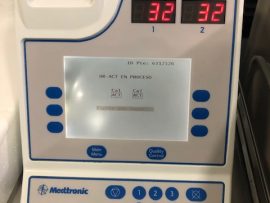
Abstract Background Recurrent observation of clot in the cardiopulmonary bypass circuit after the administration of a protamine test dose (PTD) prompted concern over the effects of PTDs on patient activated..
Read More
Abstract Systemic hypertension (HTN) is a recognized complication of veno-venous (VV) extracorporeal membrane oxygenation (ECMO) in children. We sought to determine the prevalence and associated features of HTN in a..
Read More
Abstract A prospective, observational single-center study was carried out. Pediatric patients undergoing congenital heart defect surgery were evaluated before, during, and after surgery. At each time point, sublingual microcirculation and..
Read More
Abstract Introduction: Neurologic complications of open thoracic aortic surgery are devastating problems in patients with severely diseased aortas. This study aimed to clarify whether directing the aortic cannula tip toward..
Read More
Abstract Objective Custodiol-HTK (Custodiol-HTK Koheler Chemie, GmbH, Bensheim, Germany) causes fluctuations in serum sodium levels, , and is associated with postoperative seizures. We investigated the influence of scavenging right atrial effluent during..
Read More
Abstract Objective: The aim of this study was to evaluate outcome measures between our standard multidose cardioplegia protocol and a del Nido cardioplegia protocol in congenital heart surgery patients. Methods:..
Read More
Abstract Objective after cardiac surgery can be difficult to assess, often requiring invasive measurements. Bioelectrical impedance vector analysis (BIVA) is based on patterns of resistance (R) and reactance (Xc), corrected..
Read More
Abstract Introduction: Minimally invasive aortic valve replacement (MIAVR) requires changes in cannulation strategy and cardiopulmonary bypass (CPB) management when compared to the conventional approach (CAVR). We aimed at evaluating if..
Read More
Abstract In vitro hemolysis testing is commonly used to determine hemocompatibility of ExtraCorporeal Membrane Oxygenation (ECMO). However, poor reproducibility remains a challenging problem, due to several unidentified influencing factors. The..
Read More
Abstract A substantial part of COVID-19-patients suffers from multi-organ failure (MOF). We report on an 80-year old patient with pulmonary, renal, circulatory, and hepatic failure. We decided against the use..
Read More
Abstract Hemoadsorption was used in a 59-year-old patient with an acute type A aortic dissection, who was on rivaroxaban and dual antiplatelet therapy with clopidogrel and acetylsalicylic acid. Our aim..
Read More